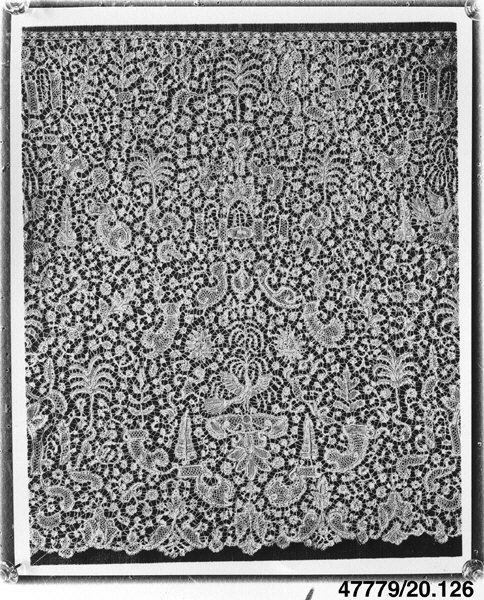
The Flounce Reconfigured: Deconstructive Lace and the SS26 Silhouette
In the lexicon of avant-garde couture, the flounce has long been relegated to the periphery of decorative whimsy—a frill, a ruffle, a mere afterthought of femininity. Yet, for Zoey Fashion Laboratory’s SS26 collection, the flounce is reborn as a primary structural agent, a dynamic force that redefines the very architecture of the garment. This analysis dissects the flounce as a standalone study, tracing its evolution from a passive ornament to an active, sculptural protagonist. The subject is the flounce, but its origin is the Global Frontier—a conceptual territory where cultural boundaries dissolve, and material innovation meets futuristic silhouette engineering. The chosen material, bobbin lace, is not a nostalgic nod to traditional craftsmanship but a radical substrate for deconstructive aesthetics. Through this lens, the flounce becomes a tool for volumetric manipulation, kinetic tension, and spatial redefinition, challenging the body’s relationship with fabric in the coming season.
Deconstructive Aesthetics: The Flounce as Structural Fracture
The avant-garde imperative of deconstruction demands that we interrogate the flounce’s historical role. Traditionally, the flounce implies excess—fabric that cascades in repetitive, predictable waves. In SS26, Zoey Fashion Laboratory subverts this by treating the flounce as a fracture rather than a flourish. Bobbin lace, with its intricate, openwork geometry, is cut, spliced, and reassembled into flounces that do not merely fall but propel outward. The lace is not a surface decoration; it is a structural lattice that creates negative space. Each flounce is engineered to disrupt the garment’s silhouette, introducing asymmetrical volumes that seem to defy gravity. Consider a jacket where the flounce emerges from a single shoulder, not as a soft ruffle but as a rigid, cantilevered plane of lace. The bobbin lace’s threads are tensioned to maintain a sharp edge, creating a flounce that is both fragile and unyielding—a paradox central to deconstructive couture. This approach echoes the work of Rei Kawakubo, but Zoey pushes further by using the flounce to expose the garment’s internal architecture: seams are left raw, lace edges are unfinished, and the flounce itself becomes a window into the construction process. The result is a silhouette that feels incomplete yet deliberate, a study in controlled chaos.
Futuristic Silhouettes: The Flounce as Kinetic Architecture
The SS26 season demands silhouettes that anticipate the future—not through overt sci-fi references, but through a reimagining of how fabric interacts with movement. The flounce, when crafted from bobbin lace, becomes a kinetic architectural element. Unlike rigid materials like metal or plastic, lace offers fluidity; yet, bobbin lace’s structural density allows for precise control. Zoey Fashion Laboratory exploits this duality to create flounces that shift between states: static when at rest, but dynamic when the wearer moves. Imagine a floor-length gown where the flounce is not a hemline but a spiral that wraps around the torso, expanding and contracting with each step. The bobbin lace is layered in overlapping panels, each flounce oriented at a different angle to catch light and shadow. This creates a moiré effect that blurs the boundary between garment and environment. The silhouette is not merely worn; it is inhabited, responding to the body’s biomechanics. For SS26, the flounce becomes a prosthetic extension of the wearer’s motion, a futuristic nod to wearable technology without the need for electronics. The Global Frontier origin informs this: the flounce borrows from Japanese origami, African textile draping, and European lace-making, fusing them into a hybrid form that exists outside any single tradition. The silhouette is thus a global assemblage, a testament to the dissolution of geographical fashion hierarchies.
Material Innovation: Bobbin Lace as Structural Lattice
Bobbin lace, traditionally associated with delicate doilies and bridal veils, is transformed in Zoey’s hands into a high-tensile structural material. The key innovation lies in the lace’s construction: each thread is a vector of tension, and the flounce is engineered by manipulating these vectors. For SS26, the bobbin lace is not woven but scaffolded—the threads are arranged in a honeycomb-like pattern that can be stretched or compressed. This allows the flounce to hold its shape without internal wiring or boning. The material’s lightness is deceptive; a single flounce can span over a meter without collapsing, thanks to the lace’s inherent rigidity when tensioned correctly. Zoey’s laboratory has developed a proprietary technique called “tensile lace architecture,” where the flounce is pre-stressed during production, creating a memory effect that returns the lace to its original form after deformation. This is a breakthrough for avant-garde couture, as it enables garments that are both portable and sculpturally ambitious. The flounce, therefore, is not a disposable ornament but a durable component of the garment’s structure. The material’s transparency also plays a crucial role: the flounce’s openwork allows glimpses of the body beneath, creating a layered, erogenous zone that is both revealing and concealing. In this context, the flounce becomes a veil of modernity, a lattice through which identity is filtered.
Contextual Standalone Study: The Flounce as Symbolic Currency
As a standalone study, the flounce in SS26 transcends mere fashion to become a symbolic currency of the avant-garde. It represents a departure from the hyper-commercialized trends of fast fashion, returning to the couture tradition of craftsmanship as rebellion. The flounce’s deconstructive nature challenges the viewer to reconsider what constitutes a garment’s finish. Is the flounce a boundary or a beginning? Zoey’s answer is both: it is a threshold where the garment ends and the space begins. The Global Frontier origin is crucial here—the flounce is a cultural signifier that has been stripped of its original context and reimagined as a universal language. Bobbin lace, once a marker of European peasantry or aristocracy, is now a material of global dialogue. The flounce’s futuristic silhouette is not about predicting trends but about creating new archetypes for the body in motion. For the SS26 season, this means garments that are not static objects but performative interfaces. The flounce, in its most radical form, becomes a tool for the wearer to assert agency over their spatial environment. It is a punctuation mark in the sentence of the silhouette—a emphatic, questioning, and always provocative element.
Conclusion: The Flounce as Avant-Garde Imperative
In conclusion, Zoey Fashion Laboratory’s SS26 flounce is a masterclass in deconstructive aesthetics, futuristic silhouettes, and high-concept garment architecture. By leveraging bobbin lace as a structural lattice, the flounce is elevated from ornament to architectural protagonist. Its Global Frontier origin ensures that it is not bound by any single cultural narrative, but rather exists as a hybrid form that speaks to the future of fashion. The flounce challenges the body’s relationship with space, material, and movement, offering a radical redefinition of what a garment can be. As the fashion world pivots toward SS26, Zoey’s flounce stands as a definitive statement: the avant-garde is not about decoration but about disruption. The flounce is no longer a frill—it is a force.