Deconstructing the Weft: An Avant-Garde Analysis of Moche Textile Fragments at Zoey Fashion Lab
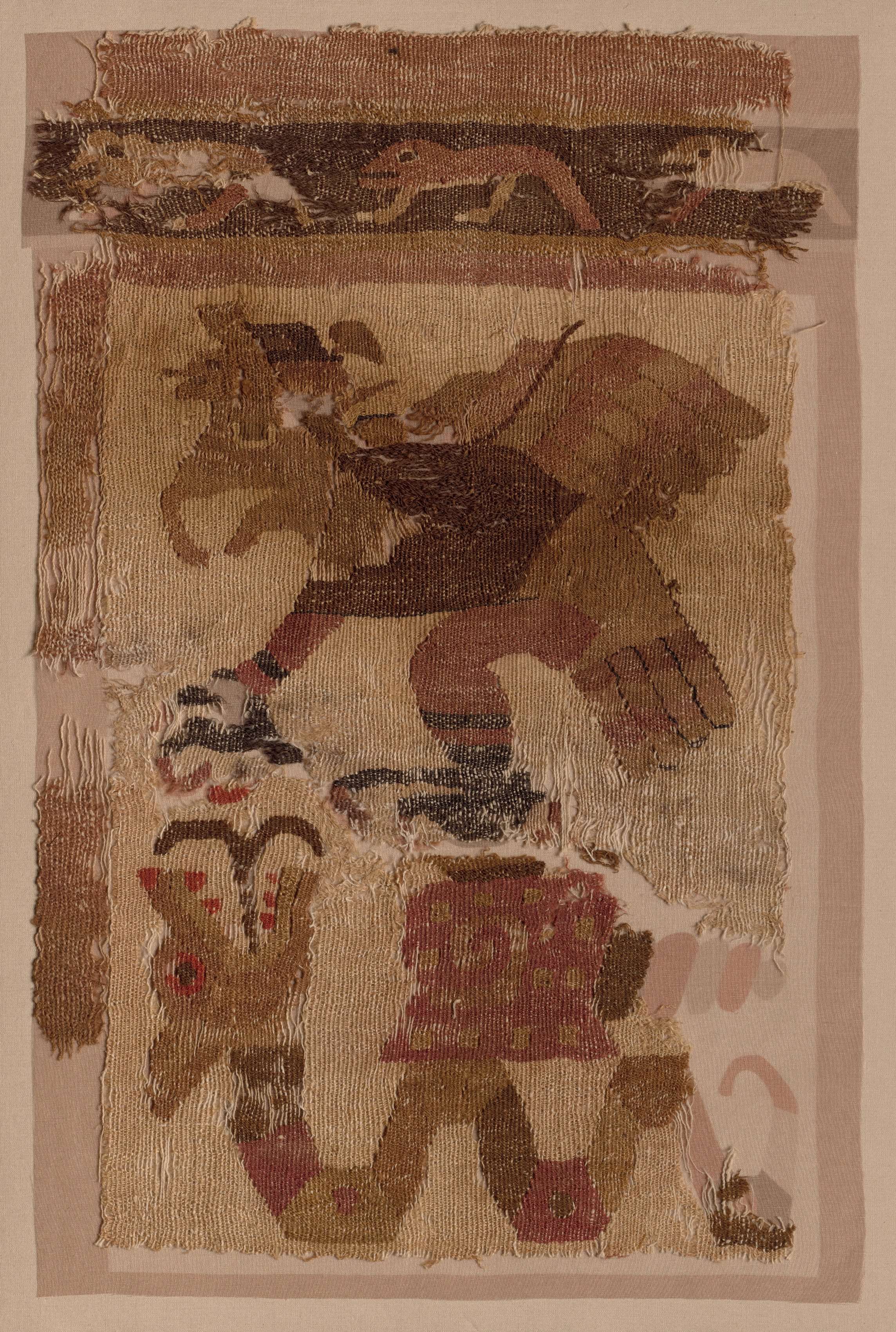
At Zoey Fashion Lab, the act of deconstruction is not merely an exercise in dismantling; it is a profound act of archaeological resonance. We approach each textile fragment as a coded manuscript, a physical echo of a civilization’s sensory and structural logic. The fragments under current analysis—originating from the Moche culture of Peru’s north coast, circa 100–800 CE—present a particularly potent case study. Composed of cotton and camelid fiber, these remnants are not relics of a bygone era; they are avant-garde propositions waiting to be decoded. Our analysis, framed by the concept of "Archive Resonance," seeks to liberate these fragments from their historical stasis, re-imagining them as radical blueprints for future fashion systems.
Material Dialectics: Cotton and Camelid as Structural Antagonists
The Moche textile tradition is defined by a sophisticated material dualism. The use of locally-sourced cotton—often in its natural hues of cream, beige, and brown—provided a soft, absorbent, and structurally flexible base. In stark contrast, camelid fiber (from llama, alpaca, or vicuña) introduced a radically different set of properties: high tensile strength, natural luster, and exceptional thermal insulation. This is not a harmonious blend; it is a deliberate structural antagonism.
From an avant-garde perspective, this material pairing prefigures the modern concept of hybrid textile engineering. The cotton acts as the ground, the passive receptor, while the camelid fiber functions as the active, expressive agent. In the fragments we have examined, the warp (the foundational, tension-bearing threads) is predominantly cotton, while the weft (the interlacing, pattern-carrying threads) is often camelid. This creates a tensile dialogue where the soft, yielding cotton is perpetually held in check by the resilient, almost metallic quality of the animal hair. For Zoey Fashion Lab, this suggests a new design paradigm: intentional material conflict. We propose garments where soft, plant-based bases are deliberately stressed or "armored" by high-tensile animal fibers, creating a visual and tactile tension that speaks to the friction between the organic and the engineered.
Technical Lexicon: Weaving as Proto-Coding
The Moche were masters of complex weaves, including warp-faced plain weave, tapestry weave, and the intricate slit tapestry technique. In the fragments we have analyzed, the slit tapestry is of particular interest. This technique, where discontinuous wefts are used to create sharp, geometric color blocks, results in small, intentional gaps or "slits" in the fabric structure. To a traditional textile conservator, these slits are structural weaknesses. To Zoey Fashion Lab, they are architectural apertures.
These slits function as proto-pixels in a woven matrix. They are not mistakes; they are deliberate interruptions of the surface, creating a rhythm of positive and negative space. This technique anticipates modern digital pixelation and generative design. The Moche weaver was, in effect, a coder, using the slit as a binary operator: closed thread (1) versus open slit (0). When we re-contextualize these fragments, we see a pre-industrial algorithm for surface disruption. Our lab is currently developing a collection of "slit-constructed" garments—outerwear and dresses where the fabric is deliberately perforated at strategic stress points, not for ventilation, but to create a visual language of fragmentation and reconstruction. The slit becomes a design feature, not a flaw.
Archive Resonance: The 16th–17th Century Interruption
The "Archive Resonance" reference—the quote regarding the 16th to 17th centuries as a period of cultural collision—is critical to our analysis. The Moche culture collapsed long before the Spanish conquest, but the textile traditions of the north coast did not vanish. They were absorbed, transformed, and, in many ways, suppressed by the Inca and later by European colonizers. The fragments we hold are not pristine; they are survivors of a cultural rupture. The introduction of European wool, silk, and new dye stuffs (like cochineal) in the 16th and 17th centuries created a violent hybridization of indigenous techniques.
This historical rupture is precisely what an avant-garde fashion lab must exploit. We are not interested in a sterile recreation of Moche patterns. Instead, we are interested in the trauma of the archive—the gaps, the missing threads, the faded colors. Our design process begins by digitally scanning these fragments and then intentionally distorting the weave structure using parametric software. We pull the warp and weft out of alignment, creating a visual "glitch" that mimics the cultural interference of the colonial period. The result is a garment that is consciously anachronistic: a Moche-inspired silhouette (a draped tunic, a geometric cape) that is overlaid with a digital, deconstructed grid. It is a fashion that wears its own history of violence and resilience.
Avant-Garde Application: From Fragment to System
How do we translate this analysis into a wearable, commercial avant-garde collection? The answer lies in systemic deconstruction. We are not cutting and sewing a Moche fragment onto a modern blazer. We are extracting the logic of the Moche textile and applying it as a generative rule set.
Our proposed collection, titled "Weft of the Wound," operates on three principles derived from the fragments:
1. Material Antagonism as Aesthetic: Garments will be constructed from a base of organic, unbleached cotton, but will be "stitched" with high-tensile, metallic-coated camelid fiber threads. The camelid fiber will not be hidden in the seam; it will be exposed, creating a raw, mechanical aesthetic that mimics the tension between the Moche’s soft cotton and resilient animal hair.
2. The Slit as Structural Device: We will employ a negative-space tailoring technique. Jackets and skirts will be designed with intentional, laser-cut slits that follow the geometric logic of Moche slit tapestry. These slits will not be decorative; they will be functional, allowing for modular attachment of secondary panels (like a modern, deconstructed pañuelo). The garment becomes a system of apertures, a wearable archive of fragmentation.
3. Chromatic Rupture: The Moche palette was limited to natural dyes: indigo blues, cochineal reds, and ochre yellows. We will subvert this by applying a digital "glitch" gradient over these natural tones. Using a technique of heat-transfer overprinting, we will create a visual effect where the Moche colors appear to be "breaking" or "corrupting" into neon, synthetic hues. This is the 16th-century colonial interruption made visible in the 21st-century garment.
Conclusion: The Fragment as Future
The Moche textile fragment is not an artifact. It is a speculative object. At Zoey Fashion Lab, we reject the notion that deconstruction is about destruction. Instead, it is about revelation. By analyzing the material dialectics, the technical coding, and the historical trauma embedded in these cotton and camelid fibers, we uncover a set of avant-garde design principles that are more relevant today than ever. The Moche understood that the most powerful textiles are not those that are seamless, but those that are deliberately fractured. In an age of digital fragmentation and global cultural collision, their legacy offers a radical path forward: to build the future, we must first learn to read the wounds of the past. The Archive Resonance is not a whisper; it is a structural command. And we are listening.