Deconstructing the Tabatière: The Louis XV Snuff Box as an Avant-Garde Artifact
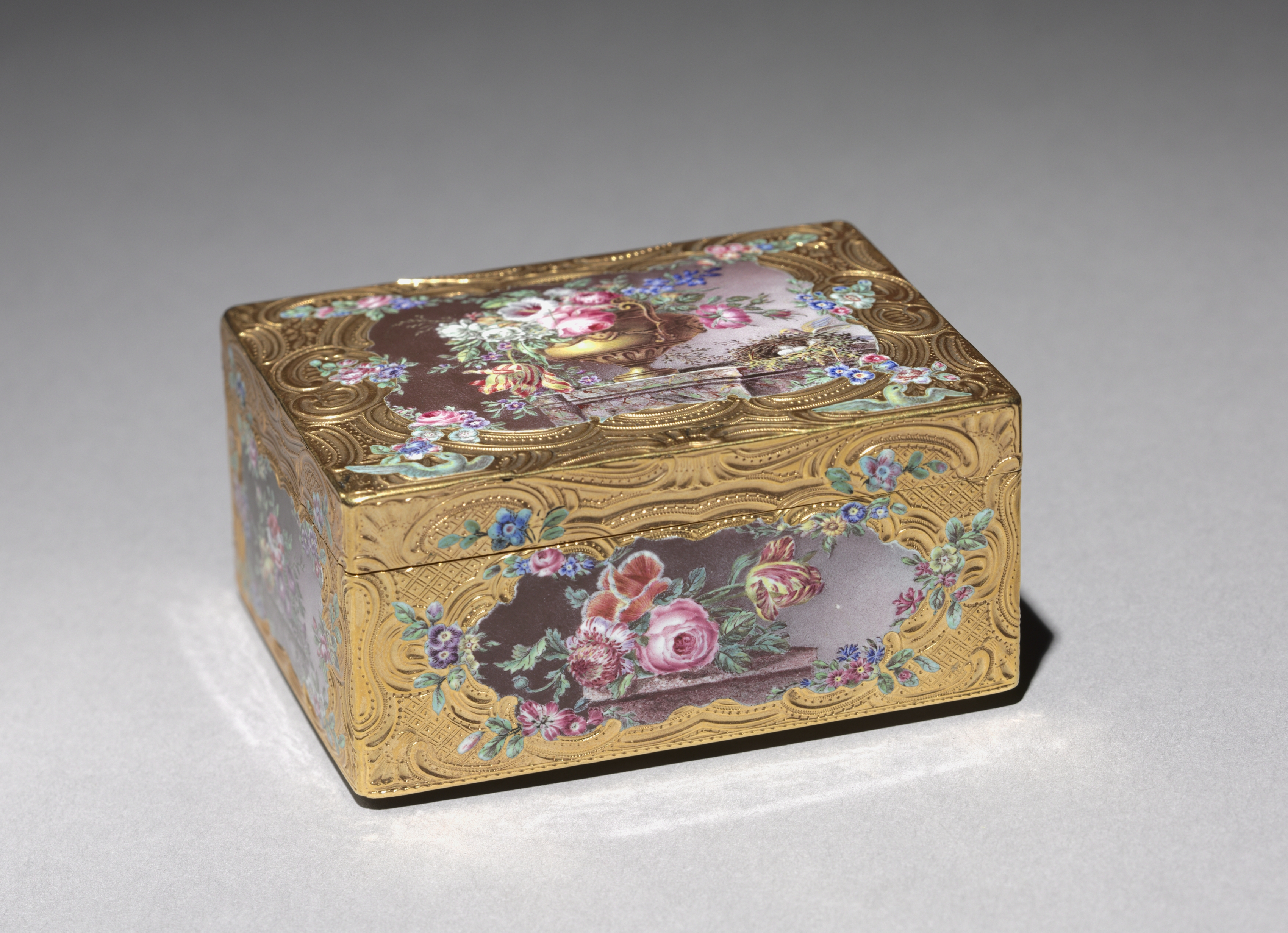
At Zoey Fashion Lab, our mission is to unearth the latent narratives embedded within historical artifacts, translating their material and symbolic languages into radical, contemporary fashion statements. The object under analysis—an 18th-century French snuff box (tabatière) in the style of Louis XV, crafted from gold and enamel—presents a paradox of profound resonance. On the surface, it is a miniature masterpiece of Rococo excess: a jewel of the ancien régime, designed for the ritualized inhalation of powdered tobacco. Yet, when viewed through the lens of our Archive Resonance framework, this object reveals itself as a dualistic talisman. It is, as our reference suggests, “a mirror with split leaves”—a liminal device that reflects both the opulent vanity of a dying aristocracy and the cold, immutable truths of mortality. For the avant-garde designer, the snuff box is not a relic to be copied, but a deconstructive blueprint for challenging the boundaries of adornment, temporality, and the body itself.
Material Theology: Gold as Gilded Mortality
The primary material of this tabatière—18-karat or higher gold—is typically read as a signifier of wealth, power, and permanence. In the Rococo court of Louis XV, gold was the skin of luxury, an unblemished surface reflecting the light of chandeliers and the gazes of the elite. However, our deconstruction begins by interrogating this surface. Gold, in its chemical inertness, is a metal that does not decay. It is eternal, yet it is also a heavy, cold, and ultimately indifferent substance. For the avant-garde fashion lab, this gold becomes a material of frozen time—a sarcophagus of value that traps the very life it was meant to celebrate.
We propose a radical recontextualization: the gold of the snuff box is not a symbol of life, but of petrified vanity. The intricate palm-leaf scrollwork (rinceaux) that adorns the box’s surface is not merely decorative; it is a form of architectural mummification. Each swirling leaf, meticulously engraved or enameled, is a gesture of control over nature, reducing organic growth to a rigid, geometric formula. In our avant-garde interpretation, this gold leafwork becomes a prototype for armored couture—a second skin that encases the wearer in a carapace of historical weight. Imagine a garment where gold-plated chainmail is overlaid with laser-cut palm fronds, each leaf a tiny, sharpened blade. The wearer is both adorned and imprisoned, a living statue of a bygone era. The snuff box teaches us that the most luxurious materials are often the most funereal.
Enamel and the Split-Leaf Mirror: The Duality of Surface
The enamel work on this tabatière is a technical marvel of the 18th century, achieved through painstaking processes of firing powdered glass onto metal. Enamel offers a vitreous, mirror-like finish that is both translucent and opaque. It is a surface that invites touch, yet resists penetration. In the context of the “mirror with split leaves,” the enamel becomes the silvered glass of our reference—a reflective plane that shows the viewer their own image, but fractured by the underlying gold scrollwork. This is not a simple mirror; it is a distorting lens of historical consciousness.
For Zoey Fashion Lab, the enamel’s split-leaf quality is a metaphor for the fragmented self of the modern subject. The snuff box user, in the 18th century, would gaze at the enamel surface, seeing their own reflection superimposed upon the gold foliage. They were both the observer and the ornament. In our avant-garde collection, we translate this into asymmetrical, mirrored panels sewn into garments. A jacket might have one sleeve covered in reflective enamel-like sequins, while the other is left raw, revealing the structural bones of the fabric. The wearer becomes a living palimpsest—a surface upon which history and identity are constantly being written and erased. The split leaf is not a flaw; it is the point of rupture where the past bleeds into the present.
Function and Ritual: The Snuff Box as a Prosthetic for Death
The primary function of the tabatière was to hold snuff—a finely ground tobacco powder inhaled for its stimulating effects. This act, so central to 18th-century social ritual, was a micro-drama of life and death. Snuff was a stimulant, a quickening of the pulse, a momentary escape from the ennui of courtly life. Yet, the box itself, often adorned with memento mori motifs (skulls, hourglasses, wilting flowers), explicitly referenced mortality. The snuff box is, therefore, a contradiction engine: a vessel for a life-enhancing substance that is housed in a monument to death.
In our avant-garde fashion analysis, this duality is translated into the concept of functional morbidity. We imagine garments that incorporate hidden compartments—pockets, pouches, or even internal structures—that hold fragile, ephemeral elements. A coat might have a small, gold-lined cavity designed to hold a single dried flower or a lock of hair. The wearer carries their own private mausoleum on their body. The act of reaching into a pocket becomes a ritualistic gesture, a moment of quiet contemplation of transience. The snuff box teaches us that the most intimate fashion objects are those that mediate between the desire for vitality and the acceptance of decay.
Scale and the Miniature: The Power of the Intimate Object
The snuff box is a miniature world, designed to be held in the palm, to be passed from hand to hand, to be hidden in a pocket or a sleeve. Its small scale is not a limitation but a source of intense power. In the 18th century, these boxes were tokens of favor, diplomatic gifts, and intimate souvenirs. They were objects of tactile intimacy, their surfaces worn smooth by countless fingers. For the avant-garde designer, this scale challenges the dominance of the monumental in fashion. We are conditioned to think of fashion as a spectacle—runway shows, billboards, grand silhouettes. The snuff box offers an alternative: fashion as a secret.
We propose a collection of micro-garments and wearable talismans that operate on this intimate scale. A brooch that is also a locket containing a microscopic landscape. A ring that opens to reveal a tiny, enameled scene of a storm. A collar that is a series of interlocking, gold-framed mirrors, each no larger than a fingernail. These objects are not meant to be seen from a distance; they are meant to be discovered by the wearer and their closest confidants. They are resonant archives of personal history, carried close to the skin. The snuff box reminds us that the most revolutionary fashion can be the smallest, the most hidden, the most intimate.
Conclusion: The Snuff Box as a Blueprint for Avant-Garde Time Travel
The 18th-century Louis XV snuff box, with its gold and enamel, its palm-leaf scrolls and its mirrored surfaces, is far more than a historical curiosity. It is a time capsule of contradictions: opulence and decay, vanity and mortality, intimacy and spectacle. For Zoey Fashion Lab, it serves as a deconstructive blueprint for an avant-garde practice that refuses to separate past from present, or ornament from meaning. By dissecting its materials, its rituals, and its scale, we unlock a vocabulary for fashion that is archaeological, philosophical, and deeply personal.
The “mirror with split leaves” is not a broken object; it is a portal. It shows us that the most beautiful surfaces are those that fracture, revealing the cold stone beneath. In our hands, this tabatière becomes a garment that is both a celebration of life and a preparation for death—a wearable memento mori for the 21st century. The avant-garde is not about the future; it is about reanimating the past with a new, sharper edge. The snuff box, deconstructed, is that edge.