The Throne of Dissolution: Reimagining the Armchair as Avant-Garde Couture for SS26
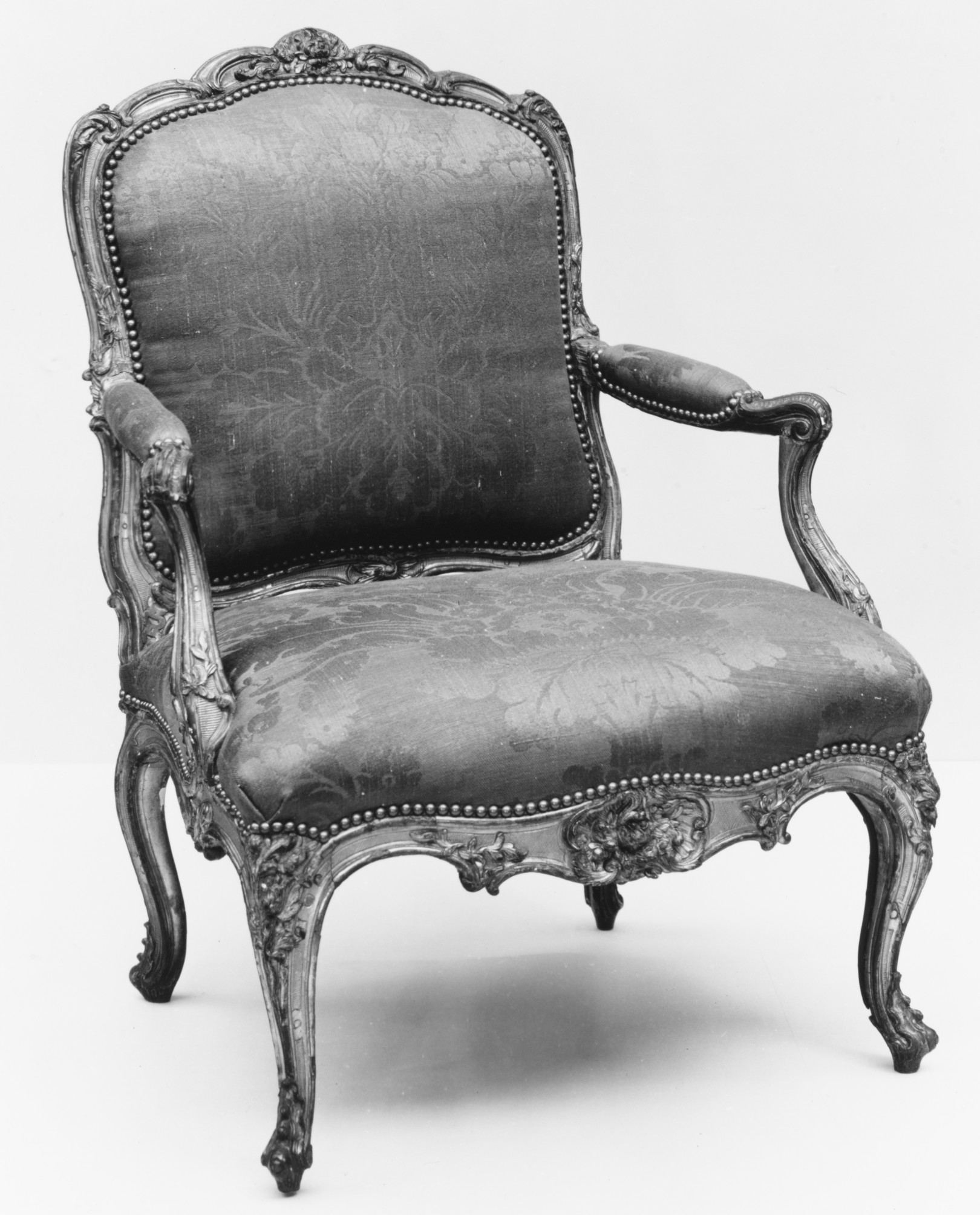
In the lexicon of high fashion, the armchair has long served as an emblem of stasis—a vessel for comfort, tradition, and the gravitational pull of domesticity. Yet, for Zoey Fashion Laboratory’s SS26 collection, we dismantle this archetype, extracting its latent architectural potential to forge a new frontier of deconstructive aesthetics. The subject—a carved and gilded wood armchair upholstered in velvet—becomes a synecdoche for the tension between ornament and decay, structure and fluidity. This analysis dissects how the armchair’s materiality and form can be transmuted into a futuristic silhouette that challenges the very ontology of garment architecture.
Deconstructing the Gilded Cage: Materiality as Narrative
The armchair’s carved and gilded wood embodies a paradox: it is both a relic of opulence and a prison of historical weight. For SS26, we propose a radical recontextualization of this material, not as a literal incorporation but as a conceptual blueprint. The gilded wood serves as a metaphor for the exoskeletal framework of the garment—a rigid, sculptural armature that defines the silhouette. Imagine a jacket where the shoulders are articulated as golden, branching tendrils, mimicking the carved flourishes of a Baroque throne. These forms are not merely decorative; they are structural innovations, engineered to support volume without weight. The wood’s gilding is reinterpreted through liquid-metal finishes on laser-cut polymer composites, allowing the garment to catch light like a reliquary while remaining malleable for movement.
The velvet upholstery, conversely, becomes the soft, subversive interior—a tactile counterpoint to the rigid exterior. In our couture iteration, velvet is not merely fabric but a biomimetic membrane, dyed in gradients of oxidized gold and bruised plum to evoke the patina of age. This duality mirrors the armchair’s own history: the velvet’s plushness suggests comfort, yet its placement within the garment—lining the interiors of exaggerated cuffs, draping asymmetrically from the waist—implies a deliberate discomfort, a refusal to settle. The result is a silhouette that oscillates between armor and vulnerability, a dialogue between the carved and the consumed.
Futuristic Silhouettes: The Armchair as Architectural Parasite
The armchair’s traditional silhouette—a high back, armrests, and a deep seat—is inverted and fragmented to create a post-humanist form. For SS26, the backrest becomes a cantilevered collar that extends beyond the shoulders, curving upward like a gilded wave. This structure, supported by a hidden carbon-fiber exoskeleton, creates a negative space between the wearer’s neck and the garment, suggesting a throne that has been hollowed out. The armrests are reimagined as detachable, articulated sleeves that can be worn as separate accessories—a nod to the armchair’s modularity. One sleeve might feature a rigid, claw-like extension in gold-leafed resin, while the other remains a soft, velvet tube, creating an asymmetry that challenges the viewer’s perception of balance.
The seat of the armchair—the locus of rest—is transformed into a floating, gravity-defying skirt. Constructed from layers of velvet and translucent organza, this skirt is pleated to mimic the folds of upholstery, but its hem is weighted with gilded chains, causing it to rise and fall with the wearer’s gait. This kinetic architecture rejects the static nature of the original object, instead embracing the fluidity of motion. The silhouette is not a replication of the armchair but a parasitic abstraction—the garment devours the chair’s form, digesting it into a new, unrecognizable entity.
Structural Innovation: The Gilded Skeleton and Velvet Flesh
At the core of this design is a hybrid construction technique that fuses traditional couture with industrial engineering. The carved and gilded wood is translated into a 3D-printed lattice of high-density polyurethane, coated in a bronze and gold leaf alloy. This lattice forms the garment’s primary structural layer, visible through strategic cutouts in the velvet. The cutouts are not arbitrary; they follow the grain of the original armchair’s carving, creating a map of the object’s DNA. The velvet, meanwhile, is treated with a thermoplastic resin that allows it to be heat-set into rigid folds, enabling the fabric to hold its own weight without internal boning. This innovation eliminates the need for traditional corsetry, instead allowing the velvet to act as both skin and skeleton.
The joining of materials is achieved through a series of magnetic clasps and tension cables, hidden within the garment’s seams. This allows the wearer to adjust the silhouette in real-time—tightening the collar to create a more severe arch, or loosening the skirt to allow for a fuller drape. The armchair’s original static permanence is thus replaced by a dynamic, interactive architecture, where the garment becomes a living object that responds to the wearer’s agency. This is not merely clothing; it is a biomechanical exoskeleton that blurs the line between furniture and fashion.
Global Frontier: The Armchair as Cultural Artifact
Drawing from the “Global Frontier” origin, this analysis situates the armchair within a transcultural context. The carved and gilded wood evokes European Baroque, but the velvet’s deep, saturated hues reference Ottoman velvets and Mughal textiles. The silhouette itself borrows from Japanese obi structures and African sculptural forms, creating a hybrid aesthetic that defies geographic categorization. The SS26 garment is thus a nomadic artifact, a throne that travels across borders, shedding its historical weight with each new iteration. The gilded elements are not static; they are designed to be patinated over time through exposure to air and touch, allowing the garment to evolve into a living archive of its own journey.
Conclusion: The Armchair as a Portal to the Future
In this avant-garde analysis, the armchair transcends its original function to become a blueprint for deconstructive couture. The carved and gilded wood and velvet upholstery are not materials to be copied but conceptual catalysts for structural innovation. For Zoey Fashion Laboratory’s SS26, the armchair is a throne of dissolution—a form that collapses under its own weight only to be resurrected as a futuristic silhouette. The garment is a rebellion against comfort, a celebration of the uncomfortable, the asymmetrical, the unresolved. It asks the wearer to inhabit a space between object and subject, between history and the horizon. This is not fashion as adornment; it is fashion as architectural intervention, a definitive statement that the future of couture lies not in replicating the past, but in dismantling it to forge something entirely new.