The Ankylosis of Light: Deconstructing the Shoe Buckle as Avant-Garde Armature for SS26
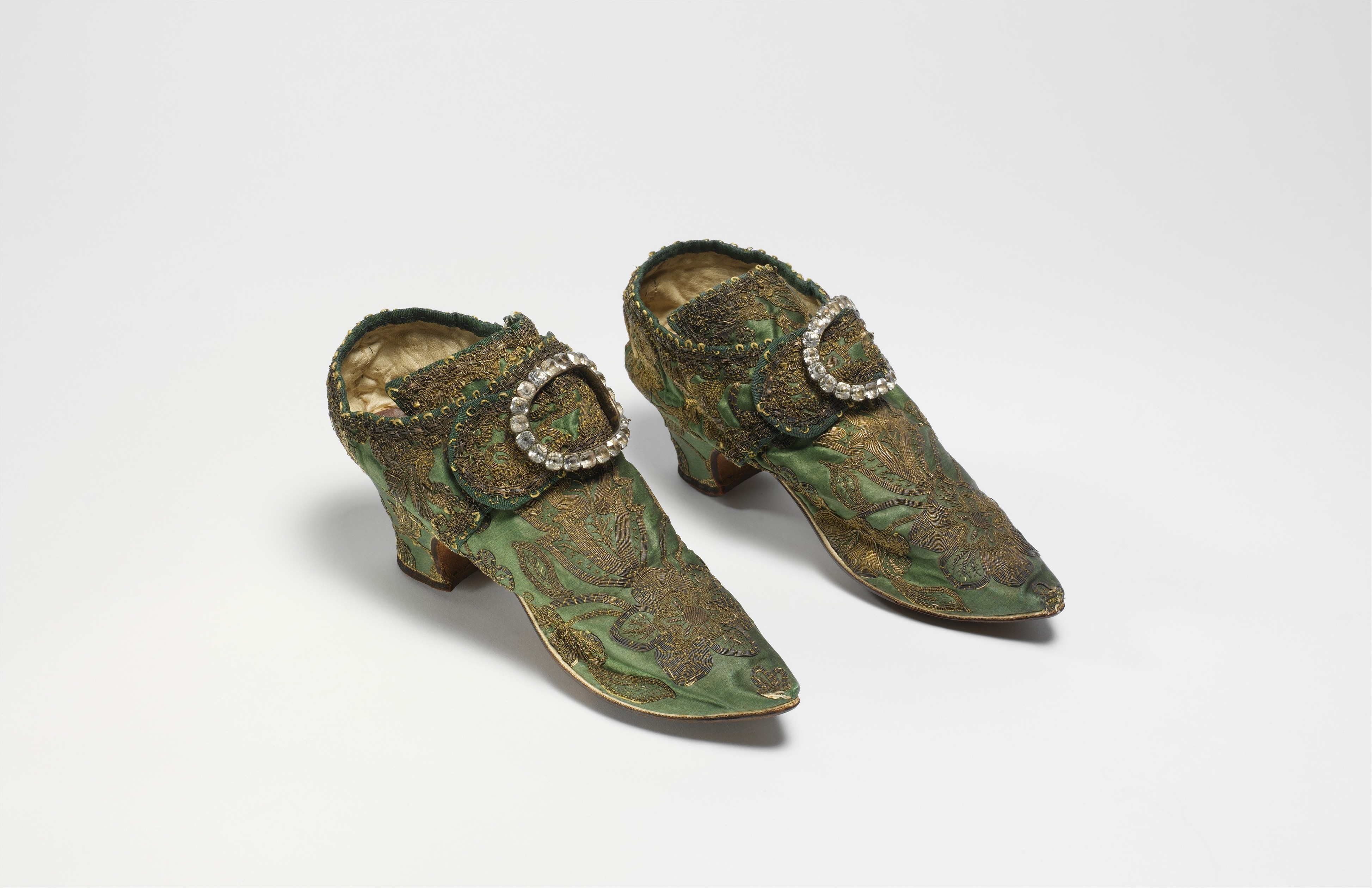
In the lexicon of footwear, the shoe buckle has long been relegated to the ornamental periphery—a functional clasp, a vintage afterthought, a signifier of bourgeois restraint. For Zoey Fashion Laboratory’s SS26 collection, we dismantle this assumption entirely. The buckle is no longer a fastener; it is a structural exoskeleton, a geometric prosthesis, and a conduit for kinetic light. This analysis dissects the shoe buckle as a standalone avant-garde study, focusing on its potential to redefine futuristic silhouettes through the interplay of metal and rhinestones. We traverse American industrial brutality and European baroque decadence to forge a new architectural language for the foot.
I. The Metal Matrix: Forging Structural Innovation from American Brutalism
The materiality of metal in SS26 is not about polish or reflection; it is about tension, torque, and suspension. Drawing from American industrial design—the raw, unapologetic steel of bridges, the skeletal frames of skyscrapers—the metal buckle becomes a load-bearing element. We reject the notion of a single, static buckle. Instead, we propose a modular system of interlocking metallic plates, each one a facet of a larger geometric whole. These are not clasps; they are articulated joints, allowing the shoe to morph and flex with the foot’s anatomy while maintaining a rigid, futuristic silhouette.
Consider the “Tension Arch” buckle: a cantilevered, brushed-steel component that arcs from the medial arch to the lateral heel, creating a floating bridge over the instep. This is not merely decorative; it redistributes weight, altering the wearer’s gait into a deliberate, architectural stride. The metal is left uncoated, its raw texture a deliberate counterpoint to the organic leather or bio-fabric of the upper. The finish is matte, almost granular, absorbing light rather than reflecting it—a nod to the dystopian, post-industrial aesthetic that defines the American avant-garde.
Structural innovation lies in the buckle’s non-linear geometry. We abandon the traditional rectangular or oval frame for asymmetrical, faceted forms—hexagonal, trapezoidal, even fractal. Each edge is sharp, each angle precise, creating a visual tension that suggests the shoe is perpetually in a state of assembly. The metal is not welded but milled from a single billet, a process that yields a seamless, monolithic presence. This is the buckle as architectural model, a miniature monument to structural integrity.
II. Rhinestone Topography: The European Baroque Reimagined as Digital Cartography
If metal provides the skeleton, rhinestones supply the neural network. European couture has long used rhinestones as symbols of opulence, but for SS26, we recontextualize them as data points on a luminous map. The rhinestone is no longer a scattered embellishment; it is a programmed constellation, meticulously placed to guide the eye across the buckle’s topography. This is a digital baroque—a fusion of 18th-century extravagance and 21st-century precision.
The “Nerve Cluster” buckle exemplifies this approach. A single, oversized metal frame—perhaps of blackened titanium—is embedded with hundreds of micro-rhinestones, each one cut with a specific facet angle to refract light in a controlled vector. These are not random; they form concentric, spiraling patterns that draw the viewer’s gaze inward, toward a central, larger stone. The effect is hypnotic, suggesting a pulsing energy source at the shoe’s core. The rhinestones are set using a micro-pavé technique, but with a deliberate irregularity—some stones are slightly elevated, others recessed, creating a tactile, almost Braille-like surface.
This is not about shimmer; it is about light as structure. The rhinestones act as photonic lenses, bending and amplifying ambient light to create a halo effect around the buckle. In a dimly lit runway space, the buckle becomes a self-illuminating artifact, a beacon of futuristic opulence. The palette is restrained: clear crystal, jet black, and a single accent of pale blue—a nod to the cold, digital glow of screens. This is European luxury stripped of its warmth, replaced by a sterile, cybernetic elegance.
III. Futuristic Silhouettes: The Buckle as a Vector of Transformation
The ultimate innovation of the SS26 shoe buckle is its ability to reshape the silhouette of the foot itself. We propose three distinct archetypes that redefine the relationship between footwear and the body.
First, the “Exoskeletal Stiletto.” Here, the buckle is not on the shoe’s surface but extends outward, forming a cantilevered heel support. A single, massive metal buckle—studded with rhinestones along its spine—wraps around the Achilles tendon and projects downward, creating a secondary, floating heel. The foot appears to hover within a metallic cage, the buckle acting as both anchor and ornament. The silhouette is aggressive, almost weaponized, with the rhinestones catching light as the wearer moves.
Second, the “Compression Boot.” This silhouette uses a series of interlocking, graduated buckles that ascend the calf, each one slightly larger than the last. The buckles are not fastened; they are suspended via transparent monofilament, creating a visual illusion of floating metal rings. Rhinestones are concentrated at the top and bottom edges, forming a luminous gradient that blurs the boundary between shoe and leg. The effect is that of a digital scan, as if the foot is being digitized into a series of data rings.
Third, the “Asymmetric Mule.” This silhouette deconstructs the buckle entirely. A single, oversized buckle—crafted from a honeycomb of metal and rhinestone—is placed off-center, covering only the lateral side of the foot. The buckle is not attached to a strap; it is magnetically anchored to the shoe’s sole, floating above the skin. The rhinestones are arranged in a fractal pattern, creating a sense of infinite regress. The silhouette is deliberately unbalanced, challenging the viewer’s perception of what a shoe should look like.
IV. The Synthesis: A New Lexicon for the Avant-Garde Foot
The shoe buckle, in this analysis, transcends its functional origins to become a symbol of structural autonomy. It is the intersection of American industrial might and European decorative excess, where raw metal becomes a canvas for photonic precision. For Zoey Fashion Laboratory’s SS26, the buckle is not an accessory; it is the primary architectural element from which the entire shoe is conceived. The foot is no longer a passive form to be shod; it is an active, generative space, reconfigured by the buckle’s geometry and light.
This is the future of avant-garde footwear: a fusion of brute force and delicate luminosity, where every clasp, every stone, every angle is a deliberate act of rebellion against the mundane. The shoe buckle has been reborn as an armature of possibility—a small, potent artifact that holds within it the promise of a new silhouette, a new materiality, and a new way of moving through the world. The SS26 collection is not about wearing a shoe; it is about inhabiting a structure. And the buckle is its keystone.