Deconstructing the Global Frontier: Bobbin Lace as an Architecture of Dissolution
In the relentless pursuit of the new, the avant-garde often finds its most potent vocabulary in the act of destruction. For SS26, Zoey Fashion Laboratory interrogates the very concept of the Fragment, not as a remnant of loss, but as a foundational unit of a future aesthetic. Our analysis dissects the paradoxical marriage of the most delicate of textiles—bobbin lace—with the most aggressive of conceptual frameworks: the Global Frontier. This is not a nostalgic revival of Victorian craft; it is a radical re-engineering of material memory, where each knot and twist becomes a structural node in a new, fragmented silhouette. The garment is no longer a whole; it is a constellation of parts, a map of a world that has been shattered and reassembled with purpose.
The Paradox of the Fragment: From Ruin to Blueprint
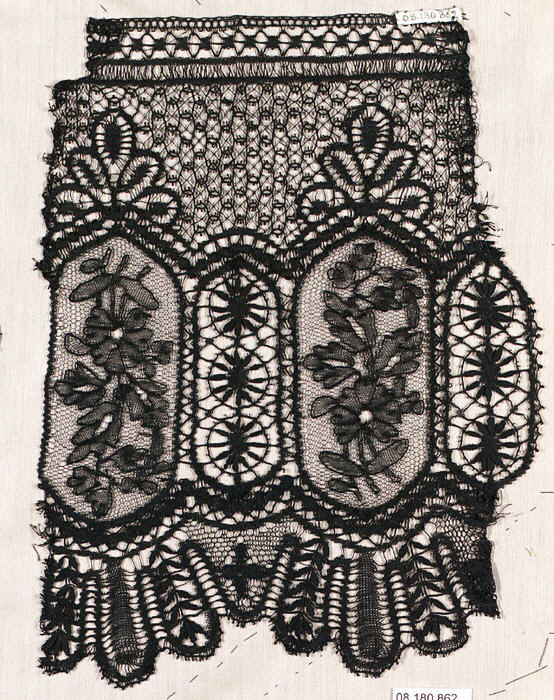
The fragment in couture has historically signified decay, the ruin of a classical ideal. In the context of the Global Frontier—a landscape of shifting geopolitical boundaries, digital nomadism, and hybrid identities—the fragment becomes a blueprint. It is the atomic unit of the new. Our analysis posits that the bobbin lace fragment is not a flaw but a feature. By isolating sections of lace—a collar, a cuff, a single intricate medallion—and suspending them within a negative space of sheer tulle or raw-edged mesh, we create a visual syntax of absence and presence. The eye is forced to complete the pattern, to imagine the whole from the part. This active participation is the cornerstone of the avant-garde experience. The fragmented lace is a cognitive trigger, a prompt for the wearer and the observer to co-author the garment’s narrative. It is a deliberate act of visual disruption, challenging the hegemony of the seamless, the finished, and the closed form.
Bobbin Lace as Structural Scaffold: Beyond the Feminine
To treat bobbin lace as merely decorative is a failure of imagination. In the Zoey Fashion Laboratory, we have reverse-engineered its structural DNA. The grid of pins, the tension of threads, the rigid geometry of the pattern—these are not soft, romantic gestures. They are the scaffolding of a new silhouette. For SS26, we propose a radical recontextualization: bobbin lace panels are treated as architectural trusses. A single, oversized sleeve, for instance, is not sewn from fabric; it is constructed from multiple, overlapping lace fragments, each one stretched over a rigid, transparent polymer frame. The result is a silhouette that is both ethereal and armored, a futuristic exoskeleton of thread. The negative space between the lace fragments becomes as important as the lace itself, creating a visual porosity that breathes and moves with the body. This is structural innovation born from material deconstruction. The lace no longer clings; it hovers. It no longer covers; it defines. The silhouette is a series of interrupted lines, a staccato rhythm of light and shadow that defies the continuous curve of traditional draping.
The Global Frontier: A Cartography of Thread
The concept of the Global Frontier demands a material language that speaks to dislocation and connection. Bobbin lace, with its deep roots in specific European regions (Bruges, Chantilly, Burano), is a map of local identity. By deconstructing it into fragments and reassembling them in a new, global context, we create a cartography of displacement. Imagine a bodice where a fragment of Flemish lace is juxtaposed with a laser-cut panel of Japanese polyester, or a skirt where a single, intact motif from a Venetian altar cloth is suspended like an artifact within a field of black, liquid-like neoprene. The fragment becomes a passport, a trace of origin that is simultaneously uprooted and re-rooted in a new, synthetic landscape. This is not cultural appropriation; it is cultural re-assembly. The Global Frontier is not a place of melting pots, but of mosaic fields, where each fragment retains its integrity while contributing to a new, unstable, and thrilling whole. The silhouette that emerges is a hybrid form—half-organic, half-mechanical—a reflection of the human condition at the edge of a new world.
Silhouette Architecture: The Asymmetry of the Fragment
The most compelling avant-garde silhouettes for SS26 are those that reject symmetry as a relic of classical order. The fragment, by its very nature, is asymmetrical. Our design language for this collection is built on a deliberate imbalance. A single, monumental sleeve of bobbin lace, extending to the floor, is counterbalanced by a bare, sculpted shoulder. A skirt is composed of a single, large lace fragment that wraps from the hip to the knee, leaving the other leg entirely uncovered. The hemline is never straight; it is a jagged, torn edge, a line of fracture. The waist is not a point of constriction but a zone of transition, where a lace fragment dissolves into a cascade of individual threads. The silhouette is not built from the inside out, but from the fragment outward. Each piece is a thesis, and the garment is a collection of theses, some in agreement, some in glorious contradiction. The resulting form is a dynamic, unstable sculpture that demands to be seen in motion, where the fragments dance and re-compose themselves with every step.
Material Alchemy: The Future of Thread
To push bobbin lace into the future, we must alter its material substrate. Traditional cotton or linen threads are too passive. For the Global Frontier, we propose a new material matrix: hybrid threads that fuse organic flax with conductive microfilaments. These threads can be programmed to change opacity or color in response to body heat or ambient light, making the fragment a living, responsive surface. Another innovation: dissolvable lattice. A bobbin lace pattern is created using a water-soluble stabilizer, and then partially dissolved, leaving only the densest, most structural parts of the pattern intact. The result is a fragment that looks as though it has been eroded by time itself—a fossil of a future garment. The material becomes a record of its own making, a testament to the process of fragmentation. This is not craft; it is material alchemy, where the thread is both the medium and the message of deconstruction.
Conclusion: The Fragment as a Manifesto
The Fragment, as interpreted through the lens of bobbin lace and the Global Frontier, is not a retreat into history. It is a leap into a new aesthetic paradigm. It is a manifesto that declares: The whole is an illusion; the part is the truth. For SS26, Zoey Fashion Laboratory presents a vision of couture where garments are not finished objects but ongoing conversations. They are maps of a world in pieces, waiting to be reassembled by the wearer. The silhouette is a question mark, the material a paradox, and the fragment a new beginning. This is the definitive avant-garde position: to build the future not from the ruins of the past, but from the most resilient, the most intricate, and the most unexpected of its parts. The bobbin lace fragment is our cornerstone, and the future is fragmented, brilliant, and ours to construct.