Deconstructing the Kabuki Avatar: Ichikawa Omezō I as a Blueprint for SS26
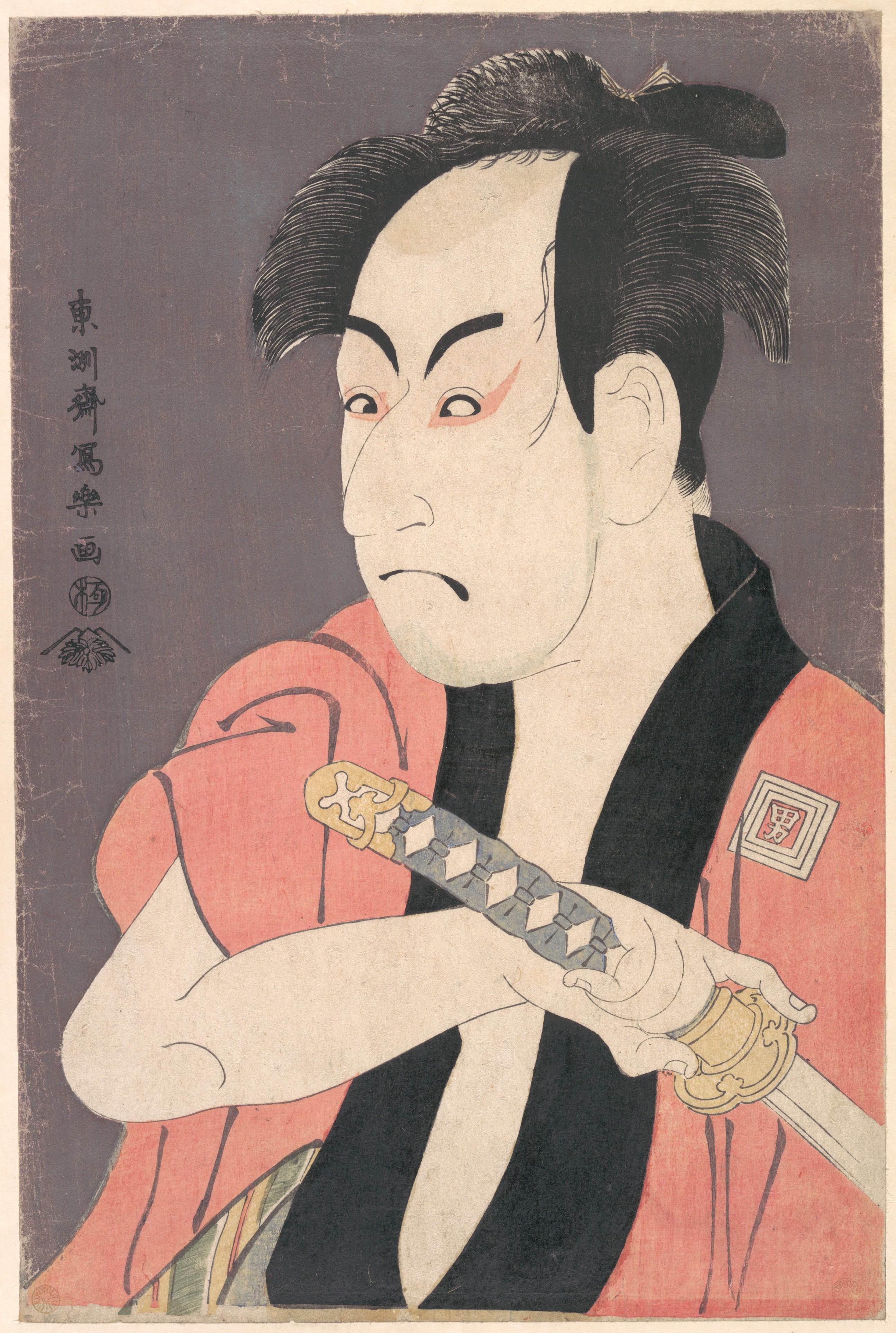
The avant-garde imperative has always been to excavate the future from the sediment of the past. In the hallowed archives of Zoey Fashion Laboratory, we do not merely observe historical artifacts; we interrogate them as proto-futuristic manifestos. The 19th-century woodblock print of Ichikawa Omezō I in the Role of Yakko Ippei is precisely such an artifact—a static image that screams with kinetic potential. This is not a costume study; it is a schematic for structural rebellion. For SS26, we will extract its latent energy to forge a new lexicon of futuristic silhouettes and structural innovation, where the actor’s frozen dynamism becomes the blueprint for wearable architecture.
The Kinetic Architecture of the Yakko Silhouette
The first point of rupture is the silhouette itself. Yakko Ippei, a low-ranking samurai’s attendant, is depicted in a moment of explosive theatricality—his body contorted, sleeves billowing, and posture defiant. This is not a static drape; it is a frozen explosion of fabric. For SS26, we translate this into a deconstructed kimono-kaftan hybrid that rejects the conventional shoulder line. The garment must appear to be caught mid-movement, as if the wearer has just spun and the fabric is still settling. We achieve this through asymmetric paneling and internal tension structures: carbon-fiber boning sewn into the seams that hold the garment in a perpetual state of torsion. The sleeves, inspired by the print’s exaggerated sode, are detached and reattached via magnetic clasps at the wrist and mid-bicep, allowing them to billow like digital wings or be locked into a sharp, aerodynamic profile. The hem is cut on a severe bias, with one side grazing the ankle and the other cropped to the mid-thigh, creating a dynamic, non-linear ground plane that echoes the actor’s unbalanced stance.
Material Alchemy: Ink, Mica, and the Digital Afterlife
The print’s materiality—ink, color, white mica on paper—offers a rich palette for textile innovation. The mica, used to create a shimmering, reflective surface on the actor’s obi and armor, is our primary muse. We will develop a liquid-metal jersey embedded with micro-ceramic platelets that catch light like the original mica dust, but with a futuristic, almost pixelated refraction. This is not a nostalgic glitter; it is a chromatic armor that shifts from gunmetal grey to electric blue as the wearer moves. The black ink lines, which in the print define the contours of the face and garment, are reinterpreted as 3D-printed structural seams. Using a flexible photopolymer, we create raised, robotic-looking “veins” that run along the garment’s surface, mimicking the bold sumi strokes. These seams are not decorative; they are load-bearing, allowing the fabric to stand away from the body in rigid, cantilevered forms. The white paper ground becomes a matte, breathable neoprene base, contrasting the reflective accents and providing a canvas for the structural interventions.
Deconstructing the Actor’s Armor: Layering and Negative Space
Ichikawa Omezō I’s costume is a masterclass in layered complexity—the kamishimo over the under-robe, the obi, the armor plates. We deconstruct this into a modular system of negative space. The traditional layering is replaced by a floating exoskeleton of laser-cut leather and recycled polycarbonate. Each piece is connected by transparent, high-tensile monofilament, creating the illusion of armor suspended in mid-air. The wearer’s skin becomes the visible under-layer, a deliberate exposure of the human form within the machine. This is structural vulnerability as power. The obi, traditionally a rigid sash, is reimagined as a kinetic belt housing a miniature gyroscope that adjusts the tension of the entire garment based on the wearer’s posture. When the wearer strikes a pose—like Yakko Ippei’s defiant stance—the belt tightens, pulling the floating panels into a sharp, protective carapace. In repose, it loosens, allowing the panels to drift apart, revealing the body beneath. This is not a costume; it is a responsive, biomechanical second skin.
Facial Architecture and the Masked Gaze
The actor’s face, rendered with exaggerated kumadori makeup, is a critical element. The bold red and black lines are not mere decoration; they are a cartography of emotion. For SS26, we translate this into wearable facial architecture. We propose a series of sculptural, detachable visors made from polished aluminum and smoked acrylic, etched with the same angular lines. These are not masks that hide; they are amplifiers of expression. The visors attach to the garment via magnetic points at the collarbone and temples, creating a continuous line from the face to the body. The eye slits are cut at severe, asymmetrical angles, forcing the viewer to engage with the wearer’s gaze from a single, powerful perspective—a direct reference to the print’s intense, confrontational stare. This is the futurism of the Kabuki gaze, where the face becomes a weapon of presence.
From Print to Performance: The Garment as Narrative Engine
Ultimately, this analysis is not about recreating a historical costume. It is about capturing the kinetic spirit of a performance that was already avant-garde in its own time. The woodblock print is a record of a fleeting moment, a freeze-frame of pure theatrical energy. Our SS26 collection for Zoey Fashion Laboratory must do the same: freeze the future. The garments will be engineered to perform—not just for the runway, but in the wearer’s daily life. Pockets are replaced with magnetic attachment points for modular accessories. Seams are left raw and reinforced with industrial-grade stitching, celebrating the beauty of construction. The color palette is restricted to the print’s core—black, white, red, and the metallic shimmer of mica—creating a cohesive, almost monochromatic statement that allows the silhouette and structure to dominate.
The Ichikawa Omezō I print is more than a reference; it is a provocation. It asks us to reconsider the relationship between the body, fabric, and space. For SS26, the answer is clear: we will not drape the body; we will build around it. We will not decorate the form; we will redefine its boundaries. The Yakko Ippei silhouette is a testament to the power of controlled chaos—a lesson we will apply to every stitch, seam, and silhouette. This is not fashion. This is architectural performance art for the body of tomorrow.