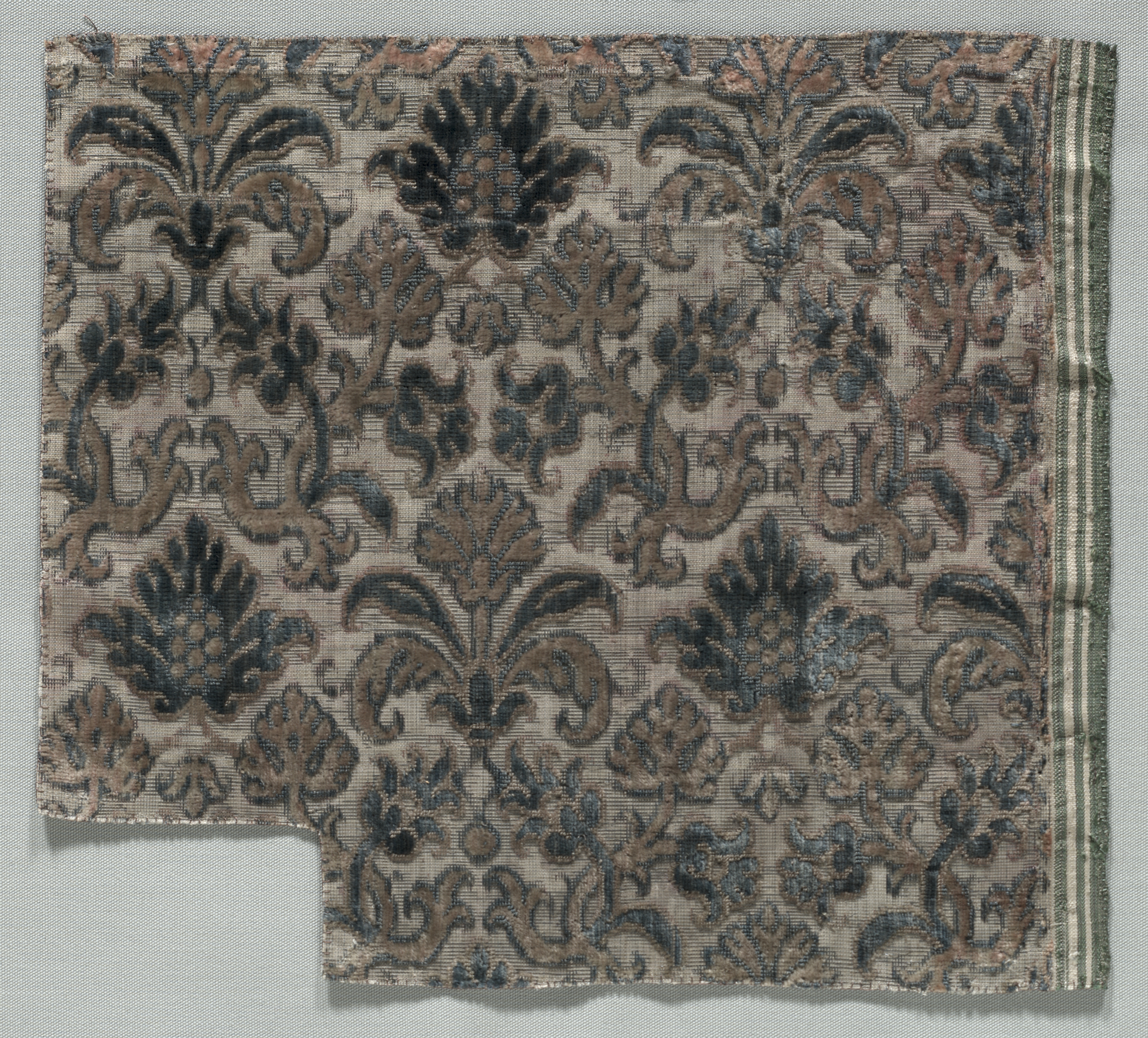
Deconstructing the Velvet Fragment: An Avant-Garde Analysis for Zoey Fashion Lab
As Chief Fabric Deconstructionist at Zoey Fashion Lab, my role is to dissect historical textiles not merely as artifacts, but as living DNA strands that can be re-coded for the future. The subject of this analysis—a 17th-century Italian velvet fragment—presents a paradox of opulence and decay, of rigid tradition and latent rebellion. This fragment, originating from the height of the Italian Renaissance textile industry, is not a relic to be preserved in a museum vitrine. Instead, it is a New DNA Strand, a genetic code waiting to be spliced, mutated, and expressed through the lens of Avant-Garde fashion. Our mission is to extract its core principles—structure, texture, light, and symbolism—and translate them into a disruptive, future-facing collection.
Technical Autopsy: The Anatomy of the Fragment
Before we can re-code, we must understand the original code. This Italian velvet, likely from Venice, Genoa, or Florence, is a masterpiece of technical weaving. The velvet pile is created through a complex process using a supplementary warp, where loops of silk are cut to create a dense, plush surface. This technique, known as cut velvet, produces a fabric of extreme depth and tactility. The ground weave—often a silk satin or taffeta—provides a contrasting, smooth base. The fragment’s condition—frayed edges, faded color, compressed pile—is not a flaw but a record of its journey. These imperfections are evidence of time, of touch, of a life lived. For the Avant-Garde designer, these are not signs of decay but of narrative potential.
The key technical features to deconstruct are:
- Pile Density and Height: The original velvet likely had a pile height of 2-5mm, creating a deep, shadowy texture. This can be reimagined using laser-cut synthetic fibers or even 3D-printed polymers to create a controlled, variable pile that can change density across a garment.
- Color and Patina: The original dye, likely derived from cochineal (crimson) or weld (yellow), has faded and oxidized. This creates a non-uniform color field—a natural gradient. We can replicate this through digital printing that mimics oxidation, or through chemical treatments that selectively age synthetic velvets.
- Structural Integrity: The silk threads are fragile, yet the weave remains remarkably cohesive. This suggests a high tensile strength in the ground weave. For Avant-Garde applications, we can use this principle to create structural draping that holds its shape without internal support, much like the original fragment’s ability to maintain its form even when damaged.
Symbolic Decoding: The Language of Luxury and Transience
The 17th-century Italian velvet was a symbol of absolute power—worn by nobility and clergy, used in palaces and churches. Its deep pile and rich color signified wealth, status, and permanence. Yet, the fragment’s current state—torn, faded, and isolated—speaks to the opposite: transience, fragility, and the passage of time. This duality is the core of our Avant-Garde re-interpretation.
We can decode this symbolism into design principles:
- Luxury as a Weapon: The original velvet was a tool of social control. Our Avant-Garde version can weaponize this luxury by using it in unexpected contexts—for example, a deconstructed velvet bodysuit worn under a transparent, industrial-grade PVC shell. The contrast between the soft, historical fabric and the cold, modern material creates a dialogue between past and future.
- Decay as Decoration: Instead of hiding the fragment’s frayed edges, we can celebrate them. Use raw-edge finishes, deliberate fraying, and laser-burned holes to create a ruin aesthetic. This is not about destruction but about revealing the beauty of impermanence—a core tenet of the Avant-Garde.
- Sacred to Profane: The velvet’s ecclesiastical origins can be subverted by applying it to streetwear silhouettes—oversized hoodies, cargo pants, or deconstructed sneakers. The sacred pile becomes a profane texture for everyday rebellion.
Avant-Garde Application: The New DNA Strand in Practice
Our goal is to create a New DNA Strand—a genetic sequence that blends the historical velvet’s essence with contemporary technology and radical design. This is not a reproduction; it is a mutation. Here are three concrete directions for Zoey Fashion Lab:
1. The Kinetic Velvet: Using shape-memory alloys or electroactive polymers, we can create a fabric that changes pile height or texture in response to body heat or movement. Imagine a dress that shifts from a smooth satin-like surface to a deep, plush velvet as the wearer’s temperature rises—a living, responsive garment. This is a direct translation of the original velvet’s depth and light play, but with a futuristic, interactive twist.
2. The Deconstructed Armor: Inspired by the fragment’s structural integrity, we can create modular velvet panels that are laser-cut into geometric shapes and then reassembled using magnetic or snap-fastener systems. The wearer can reconfigure the garment, adding or removing velvet “armor” pieces. This reflects the original velvet’s role as a status symbol, but now the status is dynamic and customizable. The frayed edges of the fragment become the raw seams of the modular system, visible and celebrated.
3. The Digital Patina: Using digital printing and embroidery, we can replicate the fragment’s faded, oxidized color palette on new materials like recycled polyester velvet. But we can go further: embed micro-LEDs or electroluminescent threads into the pile to create a glowing patina. The garment would appear to decay and regenerate in real-time, with light patterns mimicking the original dye’s fading process. This is a living archive—a fragment that continues to evolve.
Conclusion: The Fragment as Catalyst
This 17th-century Italian velvet fragment is not a dead object. It is a catalyst for innovation. By deconstructing its technical, symbolic, and material DNA, Zoey Fashion Lab can generate a new lineage of Avant-Garde design that respects the past while violently breaking from it. The fragment’s frayed edges are not endings; they are entry points for new possibilities. Its faded color is not a loss; it is a palette for digital transformation. Its dense pile is not a texture; it is a code for kinetic interactivity.
As we move forward, the question is not how to preserve the fragment, but how to re-embody its spirit in materials and forms that challenge our current understanding of fashion. The New DNA Strand is not a copy; it is a mutation—one that will evolve into something unrecognizable, yet deeply rooted in the same genetic material that once adorned the courts of Italy. This is the work of the Chief Fabric Deconstructionist: to find the future hidden in the past, and to cut it free.