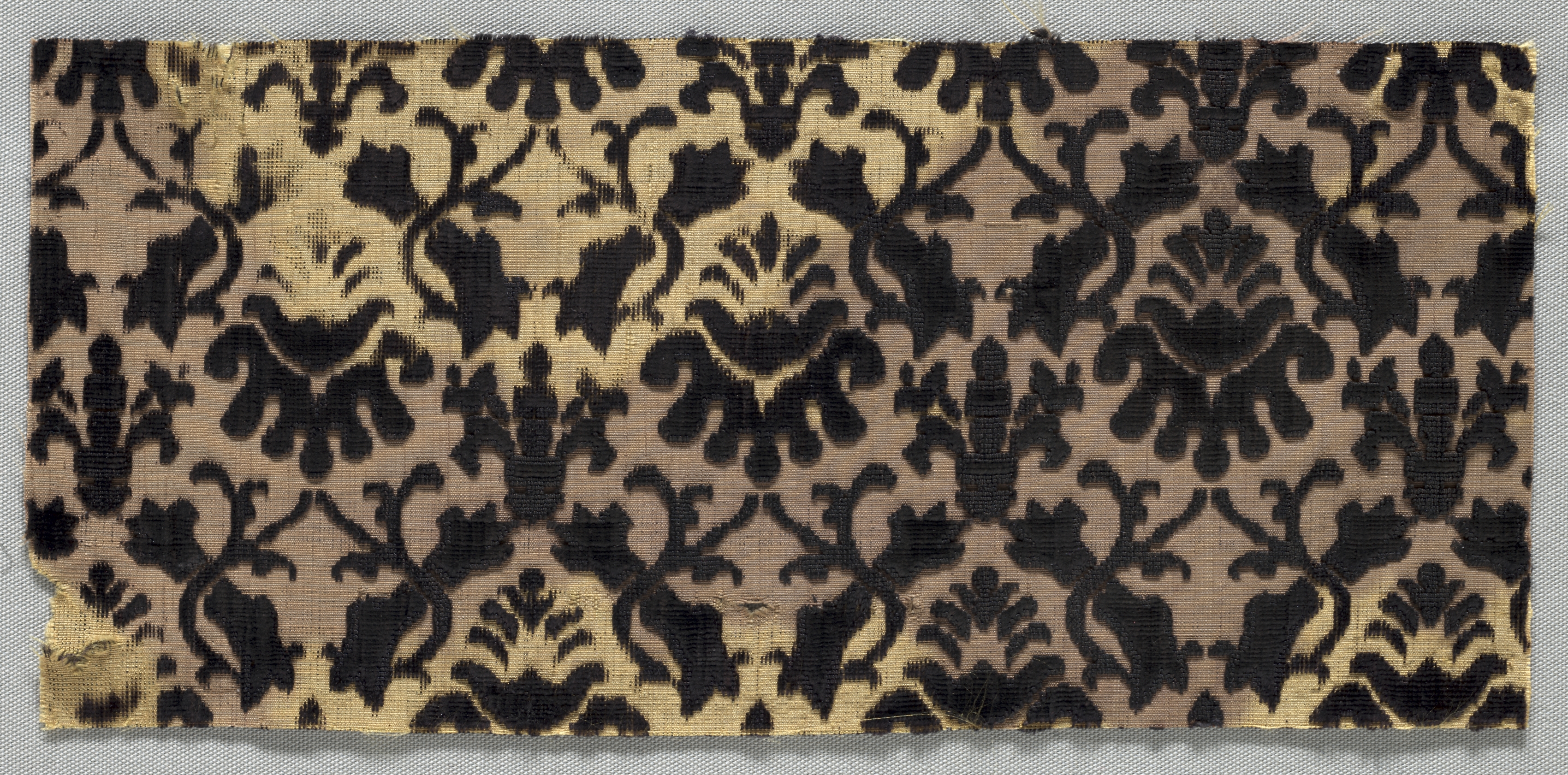
Deconstructing Velvet: A 17th-Century Italian Textile Reimagined for the Avant-Garde
At Zoey Fashion Lab, the role of the Chief Fabric Deconstructionist is to dissect, analyze, and ultimately reconstruct textiles as living artifacts—materials that carry history, technique, and potential. Our latest subject, a sample of Italian velvet from the 17th century, presents a paradox: a fabric of immense luxury, rigid tradition, and tactile opulence, yet one that yearns for radical transformation. By applying the lens of our New DNA Strand methodology—a framework that treats fabric as a genetic code to be spliced, mutated, and re-expressed—we can unlock velvet’s avant-garde future. This analysis explores the technical, historical, and sensory DNA of this velvet, and proposes a blueprint for its deconstruction into a form that challenges the boundaries of fashion.
Technical DNA: The Architecture of 17th-Century Velvet
Velvet, in its purest form, is a woven pile fabric. The 17th-century Italian specimen we examine is likely a cut velvet (velluto cesellato), produced in centers like Genoa, Venice, or Florence. Its technical DNA is defined by a complex weave structure: a warp pile is woven over rods, which are then cut to create a dense, plush surface. The ground weave is typically a silk satin or taffeta, providing a lustrous foundation. Key technical parameters include:
- Pile height and density: Approximately 2-4 mm, with a thread count of 60-80 ends per centimeter, yielding a sumptuous, almost liquid hand feel.
- Yarn composition: Primarily mulberry silk (Bombyx mori), often with metallic threads (gold or silver) woven into the ground for ecclesiastical or aristocratic garments.
- Dyeing: Natural dyes—madder for deep crimsons, woad for indigo blues, and kermes for vibrant scarlets. The specific hue of our sample is a deep, oxidized burgundy, indicative of iron-mordanted madder.
- Construction limitations: Velvet is inherently heavy, non-stretch, and prone to crushing. Its pile direction creates a distinct visual and tactile anisotropy—a “nap” that dictates how light and shadow play across the surface.
This technical DNA is a product of its time: a fabric designed for static display—for thrones, altars, and courtly robes. Its structure resists movement, prioritizing opulence over fluidity. For the avant-garde, this is not a flaw but a challenge.
Historical DNA: The Velvet as Cultural Artifact
The 17th century was velvet’s zenith. In Italy, it signified wealth, power, and religious authority. The Counter-Reformation church commissioned vast quantities for vestments and altar cloths, while nobility used it for doublets, gowns, and upholstery. The fabric’s historical DNA is encoded with narratives of labor (silk cultivation, hand-weaving), trade (the Silk Road, Venetian maritime dominance), and social hierarchy (sumptuary laws restricting velvet to the elite).
Our specimen carries the ghost of these contexts: the slight unevenness of hand-spun silk, the faint discoloration from centuries of candlelight, the stiff creases from storage in trunks. These are not imperfections; they are memory markers—evidence of a fabric that has lived. To deconstruct this velvet is to honor its history while severing it from its original function. The avant-garde imperative is to liberate the material from the weight of its own legacy.
Sensory DNA: The Tactile and Visual Experience
Velvet engages multiple senses. Its tactile DNA is defined by the contrast between the smooth, cool satin ground and the warm, dense pile. Running a hand against the nap reveals a direction-dependent friction—smooth when stroked, rough when brushed. This creates a haptic feedback loop that invites touch, yet the fabric’s fragility (pile crushing, water sensitivity) discourages wear. The visual DNA is equally complex: the pile absorbs and reflects light in a way that creates deep shadows and luminous highlights, giving velvet an almost three-dimensional depth. In our 17th-century sample, the aged burgundy hue shifts from near-black in shadow to a glowing ruby under direct light.
For the avant-garde, these sensory properties are raw material. The goal is not to preserve them but to amplify, distort, or invert them. Can we make velvet that feels like liquid metal? That becomes transparent when stretched? That changes color with body heat? The New DNA Strand approach treats sensory data as code to be rewritten.
The New DNA Strand: A Blueprint for Avant-Garde Deconstruction
The New DNA Strand is our lab’s proprietary framework for reimagining heritage textiles. It consists of three phases: Fragmentation, Recombination, and Mutation. Applied to this 17th-century velvet, the process unfolds as follows:
Phase 1: Fragmentation
We begin by physically and conceptually breaking the velvet’s original structure. This involves:
- Laser cutting the pile into irregular, organic shapes, removing the ground weave in specific zones to create a lattice of floating pile islands.
- Chemical dissolution of the silk’s sericin coating to expose the fibroin core, making the fabric more absorbent and less rigid.
- Mechanical abrasion to selectively crush the pile, creating topographical variation—valleys of flat, shiny satin and peaks of dense, matte velvet.
The result is a fabric that retains its genetic identity (silk, pile, color) but loses its cohesive form. It becomes a fragmented landscape of texture and memory.
Phase 2: Recombination
Next, we splice the fragmented velvet with contemporary materials and technologies:
- Conductive threads woven into the ground, allowing the fabric to transmit electrical signals. The pile becomes a sensor array—touch-sensitive zones that can trigger LED illumination or haptic feedback.
- Biodegradable polymers (e.g., polylactic acid) infused into the pile, making the fabric compostable while retaining its plush feel. This redefines velvet from a symbol of permanence to one of transience.
- Thermochromic microcapsules embedded in the dye, causing the burgundy hue to shift to electric blue when exposed to body heat. The fabric becomes a living canvas that responds to the wearer’s physiology.
This recombination respects the original technical DNA (silk, pile, dye) while introducing new functions that are alien to 17th-century velvet.
Phase 3: Mutation
The final phase is the most radical: we mutate the fabric’s core identity. For this project, we propose the “Velvet Void”—a garment that is neither clothing nor sculpture, but a wearable architecture of absence.
- Construction: The fragmented, recombined velvet is laser-welded into a continuous, draped form that has no seams, no fastenings, and no defined silhouette. It is a second skin that exists in a state of perpetual becoming—the wearer must negotiate its shape through movement.
- Interaction: The conductive pile senses pressure and temperature, translating them into sound (a low, resonant hum that changes pitch) and light (a pulsing glow that emanates from the crushed valleys). The garment speaks in a language of touch and heat.
- Philosophy: The “Velvet Void” rejects the historical velvet’s role as a marker of static wealth. Instead, it embodies transience, responsiveness, and entropy. The pile will crush and fade over time, the thermochromic pigments will degrade, and the polymers will biodegrade. The garment is designed to die gracefully, leaving only a ghost of its former self—a metaphor for the impermanence of all material culture.
Conclusion: Velvet as a Living Code
The 17th-century Italian velvet is not a relic to be preserved in a museum. It is a genetic code waiting to be rewritten. Through the New DNA Strand methodology, we have deconstructed its technical, historical, and sensory DNA, and recombined it with technologies and philosophies that challenge the very definition of fabric. The result—an avant-garde garment that breathes, responds, and decays—honors the velvet’s opulent past while propelling it into a future where fashion is not about permanence, but about transformation. At Zoey Fashion Lab, we do not merely deconstruct textiles; we reincarnate them.