Deconstructing the Global Frontier: The Fragment of a Sleeve as a Standalone Avant-Garde Proposition for SS26
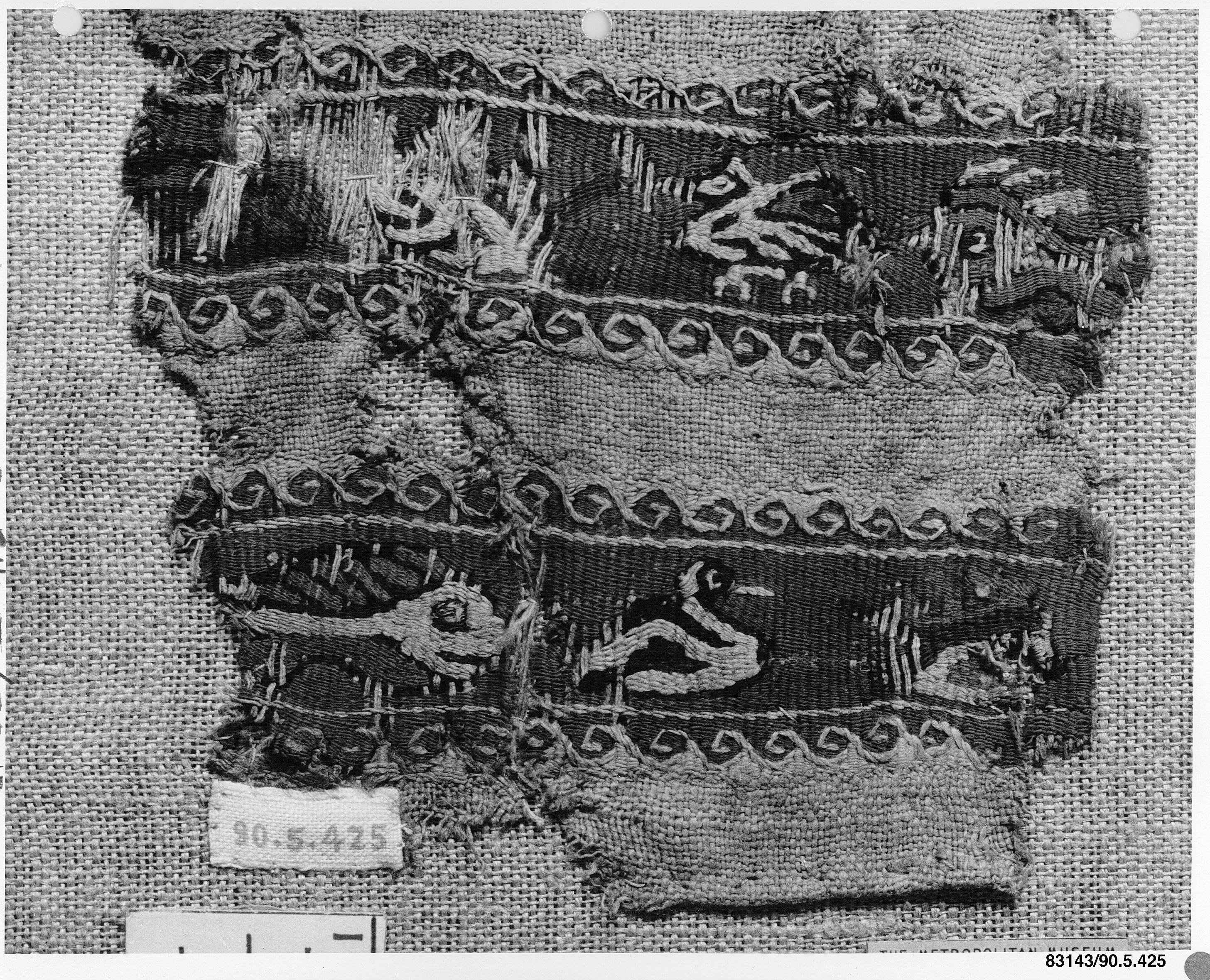
In the lexicon of avant-garde couture, the sleeve has historically been a secondary appendage—a functional conduit for movement, a decorative flourish, or a signifier of historical silhouette. At Zoey Fashion Laboratory, we reject such hierarchical complacency. For the SS26 season, we present a rigorous interrogation of the Fragment of a Sleeve, sourced from the nebulous Global Frontier. This is not a garment; it is a thesis. It is a standalone study in architectural deconstruction, a manifesto on the potential of the partial to eclipse the whole. Constructed from a dialectical marriage of wool and linen, executed in both plain weave and tapestry weave, this fragment becomes a laboratory for futuristic silhouettes and structural innovation. It challenges the very ontology of what a sleeve is, was, and could become.
The Material Dialectic: Wool, Linen, and the Tension of Texture
The material selection for this fragment is not arbitrary; it is a calculated provocation. Wool, with its inherent memory, resilience, and thermal opacity, represents the vestiges of tradition—the weight of tailoring, the comfort of the known. Linen, conversely, is the material of dissolution: its crisp drape, its tendency to crease and to breathe, speaks to the fugitive, the transient, the frontier. When woven together in a plain weave, these fibers create a baseline of structural integrity—a canvas upon which the tapestry weave imposes a narrative. The tapestry sections are not mere embellishment; they are structural interventions. They introduce points of density, of visual weight, of volumetric pause. In the fragment, these tapestry zones act as load-bearing seams, redirecting the eye and the garment’s physical tension. The interplay between the open, airy plain weave and the dense, almost sculptural tapestry creates a gradient of opacity and transparency, a visual pulse that mimics the breath of the wearer. This is not a static textile; it is a living membrane, a frontier between the body and the void.
Architectural Deconstruction: The Fragment as a Silhouette Generator
To analyze the Fragment of a Sleeve is to dismantle the very concept of silhouette. In traditional couture, a sleeve is defined by its attachment to a bodice, its relationship to a shoulder, its termination at a cuff. This fragment, however, is orphaned. It exists in a state of radical autonomy. It begins at the upper arm, but its form is not cylindrical; it is a series of asymmetrical, angular planes. The tapestry weave is deployed to create a hardened, almost exoskeletal edge along the outer curve, while the plain weave linen-wool mix on the inner seam is left soft, almost liquid. This duality generates a silhouette that is simultaneously rigid and flowing—a paradox of frozen motion. The fragment’s terminus is not a cuff but a jagged, torn edge, where the warp threads of the linen are left exposed, fraying into space. This is a deliberate act of anti-finishing. It proposes that the future of fashion lies not in completion, but in the perpetual state of becoming. The sleeve fragment becomes a prosthetic extension of the limb, a sculptural appendage that redefines the wearer’s spatial presence. It is a futuristic silhouette that rejects the human silhouette in favor of a geometric, almost cybernetic profile. The arm is no longer a limb; it is a vector.
Structural Innovation: Tension, Release, and the Tapestry Joint
The true innovation of this fragment lies in its internal structural logic. We have introduced a concept we term the "tension-release matrix." Within the tapestry weave zones, we have embedded discontinuous yarns—threads that are cut and re-woven at specific intervals. These create points of micro-tension that, when the fragment is worn, pull the fabric into predetermined folds and pleats. These are not random wrinkles; they are programmed creases. The plain weave sections, by contrast, are left unconstrained, allowing the linen-wool blend to drape freely, creating a counterpoint of release. The result is a sleeve fragment that self-sculpts in response to the wearer’s movement. When the arm is raised, the tapestry joints lock into an angular, almost origami-like structure. When the arm is lowered, the plain weave sections sag, creating a soft, almost melancholic drape. This is kinetic tailoring. Furthermore, the fragment’s attachment points are not seams but magnetic or mechanical clasps (implied in the weave structure, not visible). The fragment can be worn in multiple configurations—as a shoulder cape, a forearm gauntlet, or a detached collar. This modularity is a direct response to the Global Frontier context: a garment that is not fixed to a single geography or function, but is perpetually reconfigurable.
The Global Frontier: A Context of Dislocation and Reassembly
The Global Frontier is not a place; it is a condition. It is the liminal space between cultures, between epochs, between the digital and the physical. This fragment embodies that condition. The wool and linen, sourced from different hemispheres, are woven together in a tapestry that references both European medieval millefleurs and Andean warp-faced weaving. Yet these references are not nostalgic; they are deconstructed and reassembled into a pattern that is deliberately illegible—a cipher of globalized identity. The fragment’s frayed edges are not decay; they are ports of entry for future additions, for digital embroidery, for bioluminescent threads. It is a fragment that invites the future to complete it. In the context of SS26, this speaks to a generation that is nomadic, hybrid, and perpetually incomplete. The fragment is not a relic of a lost garment; it is a prototype for a new garment logic—one that prioritizes the part over the whole, the process over the product, the frontier over the map.
Conclusion: The Fragment as a Manifesto for the Future of Couture
The Fragment of a Sleeve from the Global Frontier is not a minor study; it is a definitive statement. It demonstrates that the most radical innovations in fashion will not come from perfecting the complete garment, but from fragmenting, re-contextualizing, and re-engineering its most basic components. The wool and linen, the plain and tapestry weaves, are not materials; they are arguments for a new materiality. The silhouette is not a shape; it is a dynamic system of tension and release. The context is not a place; it is a philosophy of perpetual disassembly. For SS26, Zoey Fashion Laboratory proposes that the sleeve is no longer a sleeve. It is a standalone entity, a wearable sculpture, a fragment of a future that has yet to be sewn together. This is the avant-garde imperative: to find the whole in the fragment, the future in the frontier, and the garment in the gesture of its own undoing.