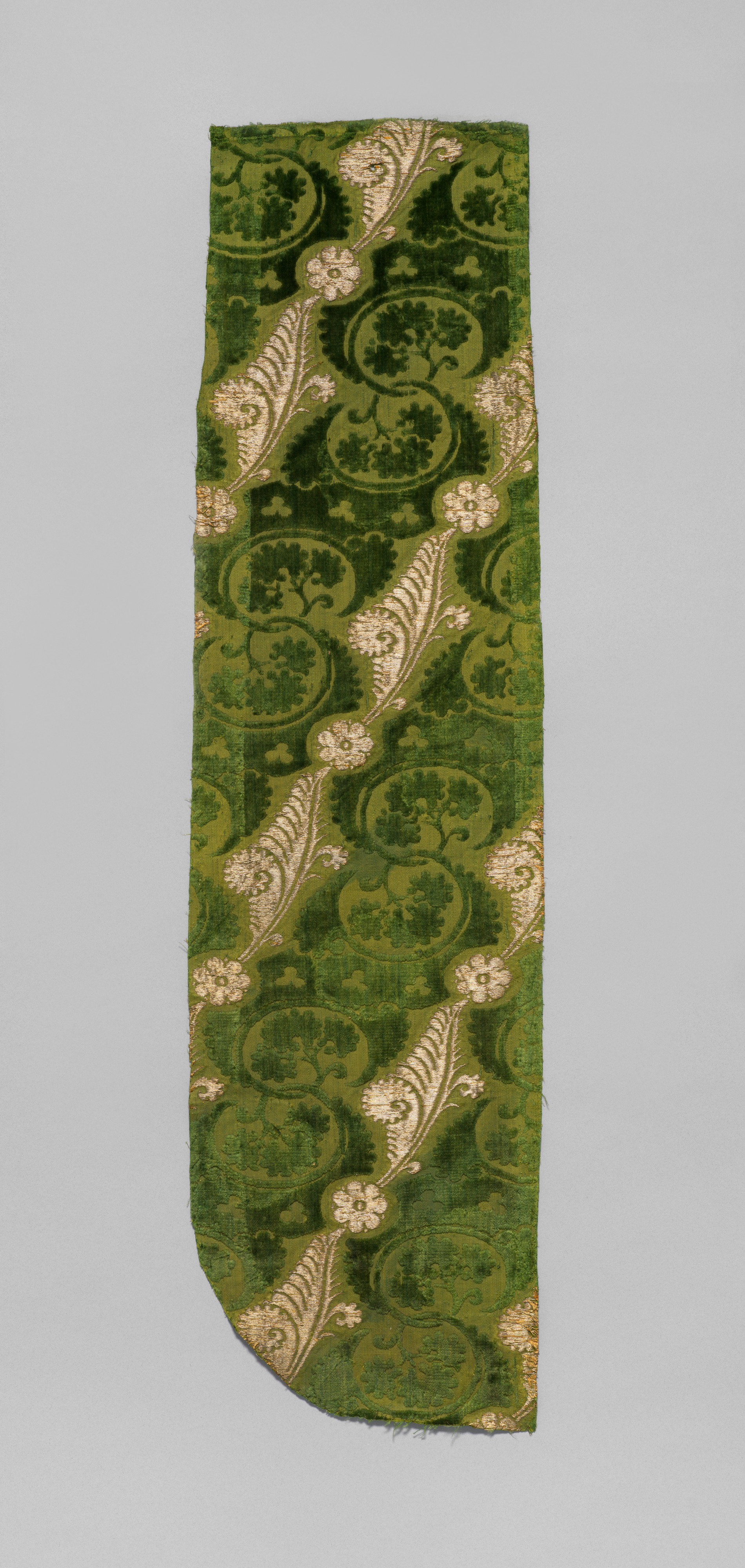
Deconstructing the Global Frontier: Silk, Metal, and the Architecture of Tomorrow
In the relentless pursuit of fashion’s next frontier, Zoey Fashion Laboratory presents a definitive study for the SS26 season: a singular piece that collapses the boundaries between textile, sculpture, and wearable technology. This is not merely a garment; it is a manifesto. Crafted from the primordial tension between silk and metal thread, the piece emerges from the Global Frontier—a conceptual terrain where cultural heritage, digital fabrication, and raw materiality converge. As the Lead Avant-Garde Curator, I dissect this creation through the lens of structural innovation, futuristic silhouettes, and the deconstructive ethos that defines our laboratory’s DNA. This analysis serves as a standalone academic inquiry into how a single piece can rewire the future of couture.
Material Dialectics: Silk as Canvas, Metal as Code
The chosen materials are not arbitrary; they are a deliberate dialectic. Silk, historically emblematic of luxury, fluidity, and organic life, is here subverted by the rigid, conductive precision of metal thread. The silk is not merely a base; it is a living membrane that absorbs and reflects light in unpredictable gradients. Simultaneously, the metal thread—woven, embroidered, and occasionally left to drape as unbound filaments—acts as a structural exoskeleton. This is not decoration; it is architecture. The metal thread functions as a series of tensile cables, creating a self-supporting silhouette that defies gravity. The piece’s body is a lattice of tension and release, where the silk’s natural drape is arrested by metallic nodes that force the fabric into sharp, angular pleats and asymmetrical cantilevers. The resulting texture is a tactile paradox: the softness of silk against the cold, unforgiving touch of metal; the ephemeral whisper of the former against the resonant hum of the latter. This material dialogue speaks to the Global Frontier—a synthesis of ancient textile traditions (silk from the East) and industrial modernism (metal from the West), recontextualized for a post-geographic era.
Futuristic Silhouettes: The Anti-Anatomical Body
The silhouette of this piece is a direct challenge to the human form. It is not designed to follow the body but to redefine its geometry. For SS26, Zoey Fashion Laboratory abandons natural curves in favor of fractalized volumes and kinetic armatures. The garment’s primary structure is a single, continuous spiral that wraps from the left shoulder, across the torso, and cascades into a train that hovers millimeters above the ground. This spiral is not a simple helix; it is a parametric cascade, where each loop’s radius and angle are mathematically optimized to create a sense of perpetual motion. The metal thread is concentrated at the garment’s stress points—the shoulder, the hip, and the trailing edge—forming tension nodes that lift the silk into a series of floating planes. The result is a silhouette that appears both weightless and armored, like a biological exoskeleton grown from a digital seed. The back of the piece is deliberately left open, exposing a lattice of metal threads that cross the spine like a circuit board. This is not a flaw; it is a structural revelation, inviting the viewer to witness the garment’s internal logic. The sleeves are asymmetrical—one is a full, draped bell, while the other is a tight, metallic gauntlet that extends beyond the fingertips, blurring the line between garment and prosthesis. This asymmetry is not arbitrary; it is a functional statement about the future of wearability: one side for organic expression, the other for technological interface.
Structural Innovation: The Wireframe Revolution
Structural innovation is the cornerstone of this piece. Traditional couture relies on boning, corsetry, and heavy interfacing to achieve shape. Here, the metal thread replaces all of that. The garment is constructed using a wireframe foundation—a three-dimensional scaffold of metal thread that is first shaped on a mannequin using a combination of hand-bending and CNC-assisted fabrication. The silk is then draped over this frame, not sewn to it, but tension-locked at specific points using micro-hooks and magnetic clasps. This allows the silk to move independently of the metal structure, creating a dynamic interplay between stillness and flow. The piece’s most radical innovation is its self-adjusting cantilever. A series of metal threads, woven into a ribbon-like structure along the garment’s left side, are designed to flex and recoil in response to the wearer’s movement. When the wearer walks, the cantilever lifts the trailing silk, preventing it from dragging. When the wearer stands still, the cantilever relaxes, allowing the silk to pool on the floor. This is not a mechanical device; it is a material property—a result of the metal thread’s memory alloy composition. It is a living architecture, responsive to the human body without the need for batteries or sensors. The joinery is equally revolutionary. Instead of seams, the piece uses cold-welded nodes where metal threads intersect, creating a seamless, monolithic surface. This technique, borrowed from aerospace engineering, eliminates weak points and allows for a continuous, unbroken flow of material. The result is a garment that feels as though it was grown, not assembled.
Deconstructive Aesthetics: The Beauty of Rupture
Deconstruction is not about destruction; it is about revealing the system. This piece embraces deconstruction through deliberate incompleteness. The silk is left raw-edged in several places, with threads unraveling into organic tendrils that contrast with the metal’s precision. The metal thread itself is occasionally left exposed, forming a visible grid that suggests a blueprint for a garment yet to be finished. This is a nod to the Global Frontier—a world where borders are porous, where the finished and the unfinished coexist. The piece’s most provocative element is a void—a deliberate absence of material at the garment’s center. This void is framed by a ring of metal thread, creating a negative space that forces the viewer to question what is missing. Is it a window to the body beneath? A portal to another dimension? Or a critique of fashion’s obsession with covering? This void is a structural necessity; it allows the garment to breathe and to flex without collapsing. It is also a philosophical statement: the future of couture lies not in adding more, but in removing the superfluous, leaving only the essential architecture.
Contextualizing for SS26: The Avant-Garde Imperative
In the context of SS26, this piece is a radical departure from the season’s trends. While the industry flirted with minimalism and nostalgia, Zoey Fashion Laboratory offers a counter-narrative: one of maximalist precision, of technology as texture, of the body as a site for exploration. This piece is not meant for mass adoption; it is a provocation. It challenges designers to reconsider the role of materials, to embrace the Global Frontier as a source of infinite combinations, and to view structure not as a constraint but as a language. The silk and metal thread are not just materials; they are vectors for a new kind of couture—one that is simultaneously ancient and futuristic, soft and hard, organic and synthetic. As we stand on the precipice of a new era, this piece is a beacon. It reminds us that the most profound innovations come from the tension between opposites, and that the true frontier is not a place, but a state of mind. Zoey Fashion Laboratory does not follow the future; we build it, one thread at a time.