Deconstructing the Flounce: From Ornament to Architecture
The flounce, historically a subsidiary element of frivolity and feminine excess, is re-contextualized within the Zoey Fashion Laboratory lexicon as a primary structural agent. Our SS26 investigation, Global Frontier, initiates not from a sketch, but from a hypothesis: what if the flounce ceased to be an appliqué and became the very substrate of the garment? This is a move from decoration to genesis, treating the cascading, undulating form not as an addendum but as the foundational architectural principle. The flounce is liberated from its peripheral role, evolving into a dynamic, load-bearing element that dictates silhouette, movement, and spatial interaction. This analysis documents the laboratory's rigorous process of de-familiarizing this classic motif to engineer a future-facing sartorial language.
Material Alchemy: The Bobbin Lace Substrate
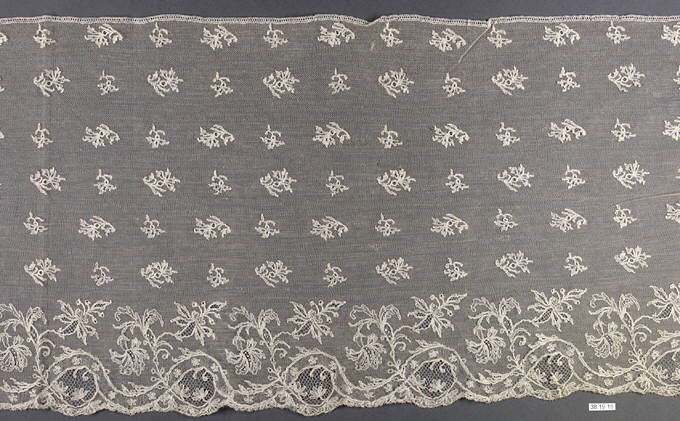
The selection of bobbin lace is a deliberate act of conceptual collision. This ancient, time-intensive craft, born of meticulous handwork and geometric precision, is thrust into a dialogue with futuristic form. We do not merely apply lace; we treat it as a technical textile with inherent structural properties. Laboratory techniques involve impregnating traditional cotton and linen threads with thermo-reactive polymers and micro-filament reinforcements. This transforms the lace from a fragile web into a malleable architectural mesh, capable of holding complex, gravity-defying shapes when heat-set. The inherent negative space of the lace pattern becomes integral to the design, creating zones of opacity and transparency that are structurally determined rather than decoratively placed. The lace is no longer a overlay; it is the skeleton and the skin.
Silhouette as Topography: The Fractured Silhouette
The SS26 silhouette rejects the monolithic. Instead, it embraces what we term the Fractured Silhouette—a form built from an aggregation of flounce-derived modules. Each flounce is engineered as an independent, sculptural unit. Through computational modeling, we analyze the stress points and fluid dynamics of traditional flounce shapes, then subject them to algorithmic distortion, asymmetric replication, and volumetric exaggeration.
One key innovation is the Inverted Cascade. Here, flounces erupt inward from the garment's periphery towards the body, creating concave shelters and tunnels of lace that obscure and reveal the form in non-linear sequences. Another is the Kinetic Armature, where rigid, resin-stiffened flounces are attached at singular pivotal points, allowing them to rotate and reconfigure around the wearer's body in motion, creating a perpetually evolving silhouette. The body does not simply wear a shape; it activates and interacts with a mobile, responsive architectural environment.
Structural Innovation: The Load-Bearing Ruffle
The core technical breakthrough lies in re-engineering the flounce's cross-section. Historically a flat or gently curled strip, our laboratory has developed a proprietary Triaxial Lattice Flounce. By fusing three layers of polymerized bobbin lace in a triangular tubular formation, we create a lightweight structural member with remarkable tensile strength. These lattice flounces can be used as cantilevered extensions, supporting their own weight and that of other garment sections far from the body's core.
This enables creations such as the Exo-Skeletal Corset, where supportive cage-like structures are composed entirely of interlocking lattice flounces, providing form without solid paneling. Similarly, in the Parabolic Gown, a series of these lattice flounces emanate from a central spine on the back, forming a self-supporting, wing-like parabola that requires no underlying crinoline or hoop. The flounce has been technologically elevated from a fringe detail to a primary structural component, challenging fundamental assumptions of garment engineering.
The Global Frontier Context: A Nomadic Architecture
The Global Frontier is not a place, but a condition of adaptive mobility. These garments are conceived for a conceptual landscape of fluid boundaries and transient environments. The fractal nature of the flounce-based construction allows for modularity and transformation. A detachable series of lattice flounces can reconfigure a narrow column dress into a wide-spanning cape. The porous nature of the engineered lace facilitates micro-climate management, with integrated channels for climate-responsive systems.
This is couture as nomadic architecture—personal, portable, and profoundly adaptive. The aesthetic speaks of a refined, almost clinical precision, yet the origin in handcrafted lace and the organic logic of the flounce's wave form root it in an undeniable, if deconstructed, biomimicry. It is a frontier where the past's most delicate handicraft is fused with the future's most radical structural ambition.
Conclusion: The Flounce as Foundational Grammar
Zoey Fashion Laboratory's SS26 study concludes that the flounce, through radical material science and structural re-imagination, has been successfully promoted from a syntactic ornament to a foundational grammatical element in the language of avant-garde design. By leveraging the inherent geometric potential of bobbin lace and re-engineering its physical properties, we have demonstrated that historical motifs contain untapped architectural potential. The Fractured Silhouette and the Triaxial Lattice Flounce are not mere stylistic gestures; they are documented innovations that expand the technical and conceptual toolkit of couture. This standalone study posits a future where the distinction between structure and decoration is obsolete, and where garments are built from the flounce upward, creating a dynamic, responsive, and intellectually rigorous vision for the body in space.