Deconstructing the Drape: The Shawl as a Futuristic Armature for SS26
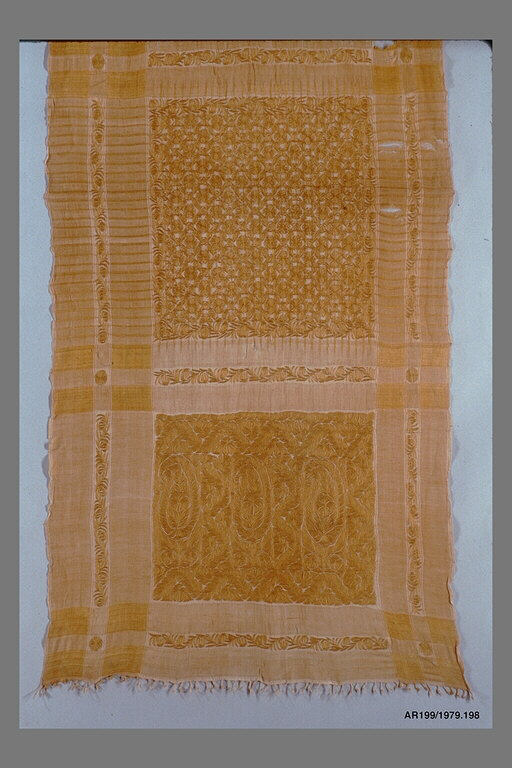
The shawl, in its historical incarnation, has long been a symbol of comfort, modesty, and static elegance. It is a garment of concealment, of wrapping, of passive warmth. For the SS26 season, Zoey Fashion Laboratory dismantles this archetype. We do not view the shawl as a mere accessory or a finishing layer; we reimagine it as a primary structural component—a dynamic, architectural armature that defines the silhouette from the inside out. Drawing from the Global Frontier, a conceptual space where cultural boundaries dissolve into a new, unified aesthetic language, this analysis explores how a seemingly simple amalgamation of silk and cotton can be transformed into a statement of radical, futuristic couture.
The core thesis of this study is the inversion of function. Traditionally, the shawl exists to drape over the body, conforming to its curves. In our SS26 vision, the shawl becomes the scaffold upon which the body is suspended. It is no longer a soft afterthought but a rigid, yet fluid, exoskeleton. This is achieved through a rigorous process of material engineering and pattern deconstruction, where the inherent tension between silk’s liquid luminosity and cotton’s tensile strength is exploited to create forms that defy gravity.
Material Alchemy: Silk and Cotton in a Futuristic Dialogue
The choice of silk and cotton is not arbitrary; it is a deliberate negotiation between opposing forces. Silk, with its unparalleled drape and reflective sheen, evokes a sense of ethereal motion—a digital, almost liquid state. Cotton, conversely, offers a grounded, tactile structure. The Global Frontier context demands a synthesis: we do not blend them into a single fabric but instead juxtapose them in a layered, tension-based system.
For SS26, we propose a shawl constructed from bonded, laser-cut panels of raw silk and high-density cotton twill. The silk is treated with a micro-encapsulated finish that allows it to shift between a matte and a high-gloss finish under different light conditions, mimicking the visual effect of a digital interface. The cotton is crimped and heat-set into a series of permanent, three-dimensional pleats that act as structural ribs. These panels are not sewn together in a traditional seam; instead, they are interlocked via a system of modular, magnetic clasps hidden within the fabric’s structure. This allows the shawl to be reconfigured, transforming from a voluminous cape into a tightly fitted, asymmetrical bodice or a sweeping train. The silhouette becomes mutable, a direct response to the wearer’s movement or the environment—a true futuristic adaptation.
Structural Innovation: The Shawl as a Kinetic Sculpture
The conventional shawl relies on gravity and the wearer’s shoulders for support. Our SS26 design inverts this. We introduce a cantilevered framework woven into the cotton base. This framework, composed of biodegradable, resin-reinforced cotton fibers, creates a series of internal arches and struts. When the shawl is draped, these arches spring outward, forming a floating, geometric collar that frames the face and neck without touching the skin. The silk panels are then suspended from these arches, creating a negative space between the fabric and the body—a void that suggests both protection and vulnerability.
This is not a static structure. The kinetic potential is realized through a series of tension cables—thin, braided silk threads—that run through the cotton pleats. By pulling or releasing these cables, the wearer can alter the shawl’s volume and shape. A gentle tug transforms a flat, rectangular shawl into a spiraling, helix-like form that wraps around the torso. A more aggressive pull creates a sharp, asymmetrical wing extending from one shoulder, while the opposite side remains flat against the body. This is couture as real-time sculpture, where the garment is never finished until the wearer interacts with it. The silhouette is not predetermined; it is a dialogue between the designer’s intent and the user’s agency.
Futuristic Silhouettes: Beyond the Body
The SS26 shawl projects a silhouette that is simultaneously primordial and post-human. When configured as a full cape, the structure flares dramatically from the shoulders, creating a trapezoidal or even parabolic form that extends far beyond the body’s natural width. The silk panels, when caught in motion, flutter like a digital flag, while the cotton pleats remain rigid, creating a dichotomy of softness and hardness. The effect is one of a bio-mechanical wing—a nod to avian or insectoid anatomy, but rendered in a soft, luxurious material.
In its most radical configuration, the shawl is collapsed and re-draped as a single-shoulder, asymmetrical dress. The cantilevered arches are folded inward, acting as a corset-like structure that cinches the waist while the silk panels cascade down one side in a cascading, waterfall-like train. The cotton pleats, now horizontal, create a ribbed, futuristic texture that resembles the armor plating of a speculative, next-gen warrior. The silhouette is lean, angular, and confrontational—a far cry from the shawl’s traditional softness. This is not a garment for warmth; it is a garment for declaration.
Cultural and Conceptual Implications: The Global Frontier
The Global Frontier is not a specific geography but a conceptual space where traditions are abstracted and recombined. The shawl, as a global archetype (from the Indian shawl to the Andean manta to the European stole), is a perfect vehicle for this exploration. By stripping it of its cultural specificity and rebuilding it through a lens of structural innovation, we create a garment that speaks to a future without borders. The silk, sourced from a global network of ethical producers, and the cotton, grown in regenerative systems, become symbols of a sustainable, interconnected world.
The act of wearing this shawl is an act of designing one’s own identity. The modular clasps and tension cables allow for infinite permutations, meaning no two wearers will ever look the same. This is a direct challenge to the homogenization of fast fashion. It is a couture object that demands engagement, understanding, and a willingness to explore the limits of form. The shawl is no longer a passive accessory; it is a tool for self-architecting.
Conclusion: The Shawl as a Manifesto
For SS26, Zoey Fashion Laboratory positions the shawl not as a nostalgic remnant of the past but as a manifesto for the future of garment construction. By harnessing the intrinsic properties of silk and cotton and integrating them with a kinetic, structural framework, we have created a piece that is both a sculpture and a system. It is a garment that breathes, shifts, and adapts—a true reflection of the Global Frontier’s fluid, interconnected ethos. The shawl is dead. Long live the shawl as a futuristic armature for the body in motion.