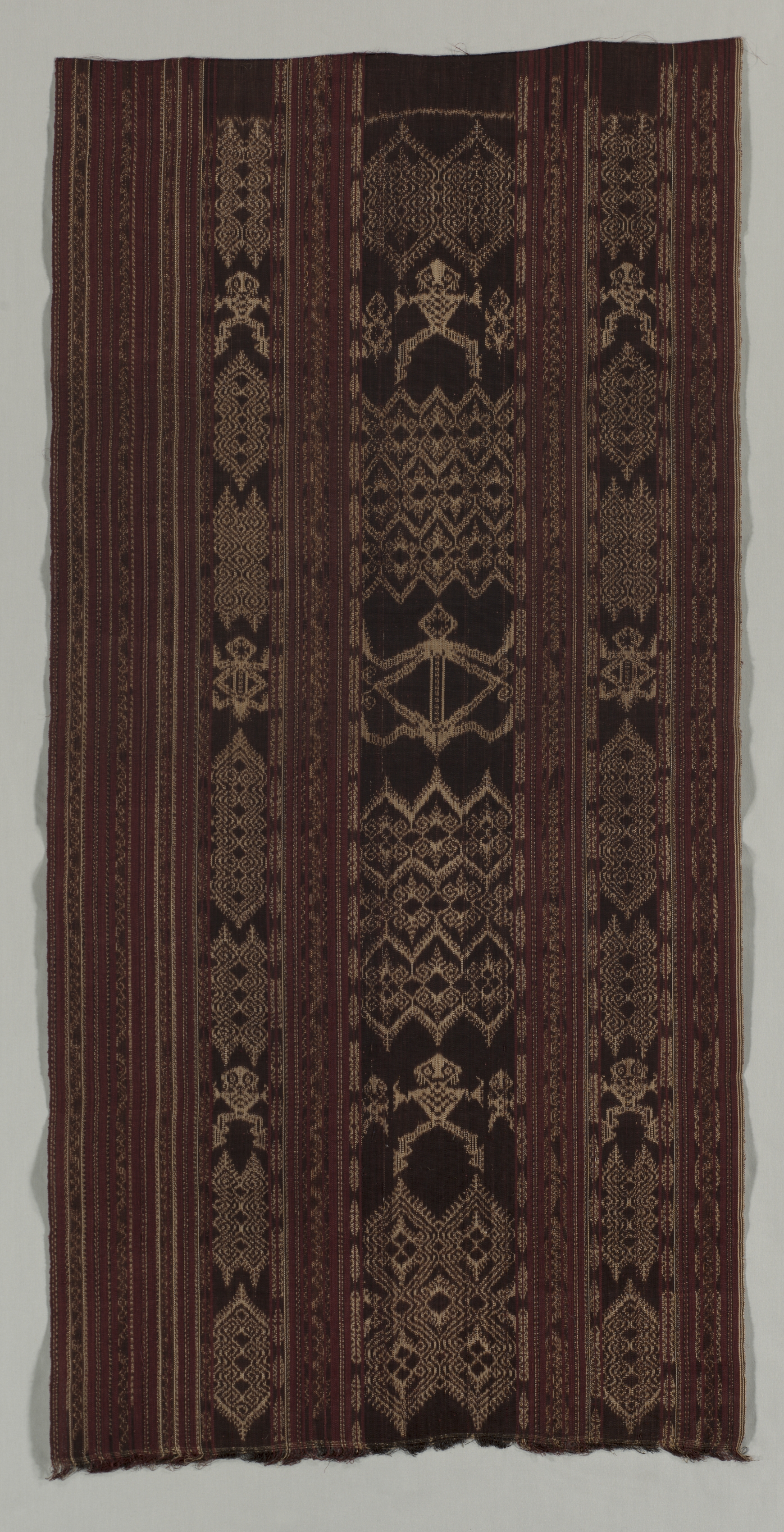
Deconstructing the Dagmay: An Avant-Garde Analysis of the Mandaya Ikat Textile
At Zoey Fashion Lab, our mandate is to strip textiles of their conventional narratives and re-engineer them as catalysts for avant-garde expression. The Mandaya ikat textile, known as dagmay, presents a profound case study. Originating from the indigenous Mandaya people of Mindanao, Philippines, this plain-weave hemp fabric, dyed through the resist-dye technique of ikat, is far more than a cultural artifact. It is a repository of geometric logic, a testament to material resilience, and a silent dialogue between the human hand and the natural world. For the avant-garde designer, the dagmay is not a relic to be preserved in amber, but a living system of design principles to be deconstructed, abstracted, and reanimated.
The Technical Substrate: Hemp, Plain Weave, and the Ikat Matrix
The foundation of dagmay is its technical rigor. The warp and weft are typically made from abaca (a banana-family hemp) or, less commonly, from local cotton. The choice of hemp is not merely agricultural; it is structural. Hemp fibers possess a high tensile strength and a natural, matte luster that resists the sheen of synthetic dyes. This creates a fabric with a distinct tactile honesty—a quality that resonates deeply with the avant-garde’s reverence for raw materiality. The plain weave, the most fundamental of interlacings, provides a neutral grid. It is the canvas upon which the ikat resist-dye process imposes its intricate, pre-determined chaos.
The ikat process itself is a feat of analytical planning. Before any thread is woven, the warp (and sometimes weft) yarns are bundled, tied with organic fibers in precise patterns, and then dyed. The ties resist the dye, creating undyed areas. This process is repeated for each color, building up a complex, multi-layered design. The true genius lies in the fact that the Mandaya weaver works blind; she cannot see the final pattern until the weaving is complete. This is a form of probabilistic design, where the outcome is a negotiation between intention and the inherent unpredictability of the resist. For Zoey Fashion Lab, this is a powerful metaphor: the avant-garde design process is not about total control, but about setting constraints that yield surprising, emergent beauty.
Archive Resonance: A Dialogue with the Sixteenth and Seventeenth Centuries
To fully understand the dagmay’s avant-garde potential, we must situate it within the resonance of global history. As referenced in Archive Resonance, the sixteenth and seventeenth centuries were a crucible of cultural collision. European maritime expansion, the spice trade, and the galleon trade that linked Acapulco to Manila created a global network of aesthetic exchange. The dagmay of this period was not created in isolation. The Mandaya people, living in the mountainous interior of eastern Mindanao, were part of a complex trade network that included Chinese ceramics, Indian textiles, and Islamic metalwork.
The geometric motifs of the dagmay—diamonds, zigzags, stylized crocodiles, and human figures—are not arbitrary. They are a visual language that encodes cosmology, social status, and spiritual beliefs. The binwaya (crocodile) motif, for example, represents the guardian of the underworld and is a symbol of power and protection. The dawot (diamond) pattern signifies the four directions and the cycle of life. When we view these motifs through the lens of the sixteenth and seventeenth centuries, we see them as part of a global conversation about pattern, power, and identity. The dagmay is not a static folk art; it is a dynamic, adaptive system that absorbed and reinterpreted external influences while maintaining its core identity. This is the very definition of cultural resilience—a quality the avant-garde must emulate.
Avant-Garde Deconstruction: From Textile to System
At Zoey Fashion Lab, we do not copy the dagmay. We deconstruct its principles. Our approach is threefold: abstraction, material re-engineering, and narrative inversion.
Abstraction involves isolating the geometric logic of the ikat. The diamond, the zigzag, the crocodile scale—these are not merely patterns; they are algorithms of repetition and rhythm. We extract these algorithms and apply them to non-traditional forms. Imagine a coat where the warp threads are not dyed with plant-based colors but with reactive, heat-sensitive dyes. The pattern would emerge not as a static design, but as a dynamic, responsive surface that shifts with the wearer’s body heat or the ambient temperature. This is the ikat logic of resist-dye, but applied to smart textiles.
Material re-engineering challenges the very substrate of the dagmay. While the original uses hemp, we ask: what if the “warp” is made of recycled PET plastic filaments, and the “weft” is a bio-degradable algae-based yarn? The plain weave remains, but the material story is transformed. The ikat resist process could be applied using a digital, waterless dyeing technique, preserving the precision of the pattern while eliminating the water waste of traditional dyeing. The result is a fabric that honors the structural logic of the dagmay while embodying a futurist sustainability.
Narrative inversion is perhaps the most radical move. The traditional dagmay is a garment of ritual and status, worn by Mandaya women during important ceremonies. In an avant-garde context, we can invert this narrative. The same geometric motifs, now laser-cut into a rigid, sculptural exoskeleton, become a form of wearable architecture. The garment no longer wraps the body; it frames it, creating a negative space between the fabric and the skin. The crocodile motif, once a protective symbol, is now a sharp, angular silhouette that challenges the viewer’s perception of safety and threat. The dagmay becomes a commentary on the tension between tradition and modernity, between protection and exposure.
Conclusion: The Dagmay as a Living Algorithm
The Mandaya ikat textile is not a museum piece. It is a living algorithm—a set of design rules that can be infinitely iterated, recombined, and recontextualized. At Zoey Fashion Lab, we see the dagmay as a blueprint for the avant-garde: a testament to the power of constraint, the beauty of material honesty, and the necessity of cultural dialogue. By deconstructing its technical and symbolic foundations, we do not erase its origin; we amplify its resonance. The dagmay becomes a bridge between the sixteenth century and the twenty-second, between the rainforests of Mindanao and the runways of tomorrow. This is not appropriation; it is reverent deconstruction. It is how we honor the past by giving it a future.