Deconstructing the Cuirassier's Armor: A Foundation for Zoey Fashion Lab's Avant-Garde DNA
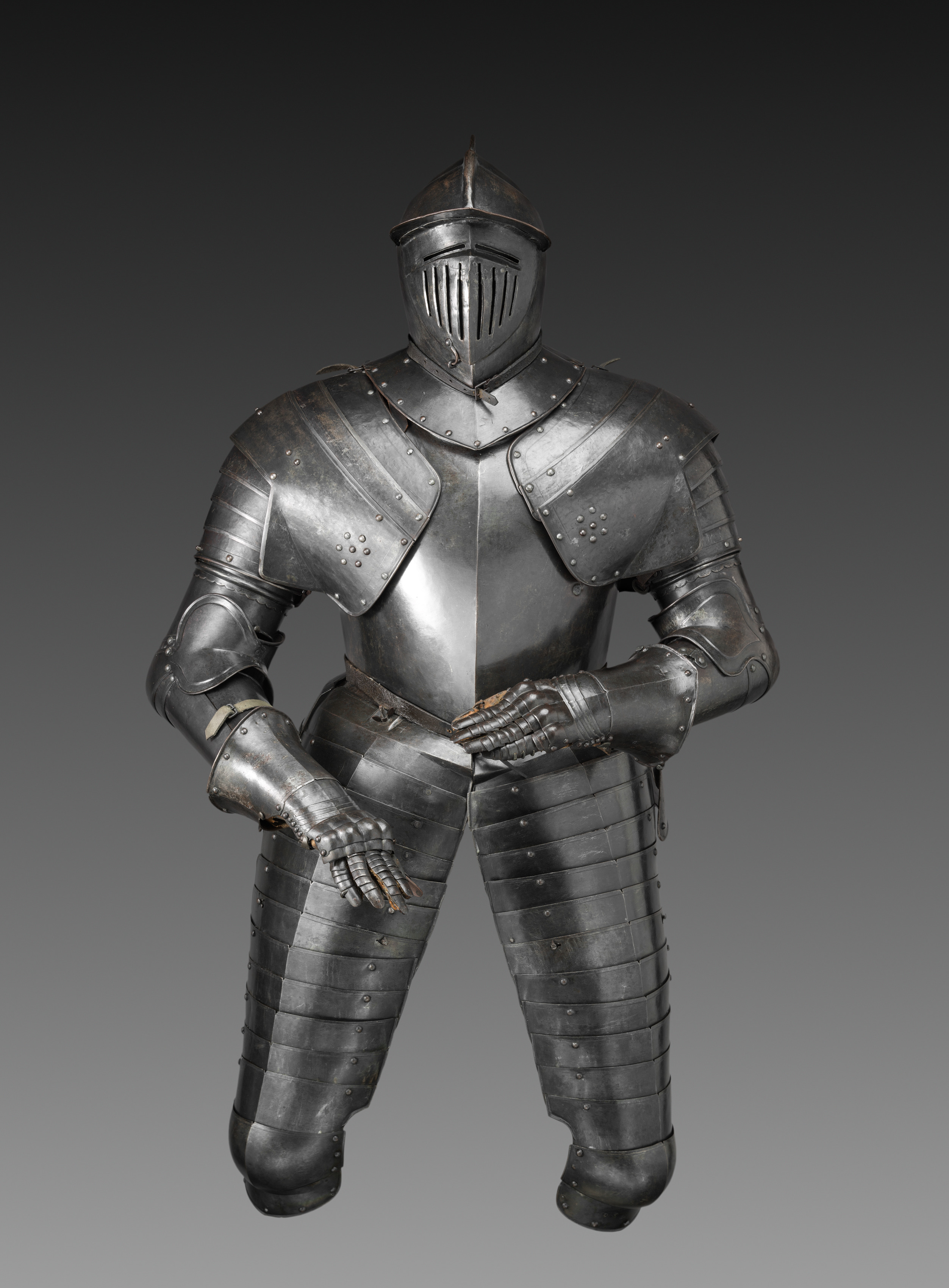
At Zoey Fashion Lab, our mission is to extract the architectural and symbolic essence of historical artifacts, then re-engineer them into avant-garde statements. The Cuirassier's Armor, attributed to early 17th-century Graz, Austria, presents a uniquely potent source material. This is not merely a relic of battlefield utility; it is a three-dimensional manifesto of power, protection, and psychological projection. Its primary materials—blued steel and leather straps—offer a dialectic of rigidity and flexibility, of cold defense and organic restraint. For our lab, this armor serves as a new DNA strand, a genetic code for designs that explore the tension between vulnerability and invulnerability, history and futurism.
Material Memory: Steel, Bluing, and the Patina of Time
The steel of this cuirassier's armor was originally blued—a controlled oxidation process that created a rich, dark, protective surface, now aged to a deep, almost obsidian black. This patina is not a flaw; it is a record. It speaks of ceremonial display, of battlefield grit, and of centuries of atmospheric interaction. For Zoey Fashion Lab, this material memory is critical. Our avant-garde approach does not seek to replicate the armor but to translate its material narrative into contemporary textiles and forms.
From Steel to Structural Fabric
We propose a deconstruction of the steel's rigidity. Instead of heavy metal, we will explore high-tenacity, metallic-coated Kevlar and carbon fiber weaves that echo the armor's protective function while offering drape and movement. The blackened patina will be referenced through laser-etched, matte-finish leather and oxidized silver-toned hardware. The visual weight of the steel is maintained, but the material is liberated from its historical immobility. The leather straps, originally functional for articulation, become a primary design element—reimagined as wide, adjustable corsetry belts, harness-like structural seams, and strategic cutouts that reveal the body beneath the armor.
Architectural Silhouette: The Torso as Fortress
The cuirassier's armor is fundamentally a sculptural object for the torso. Its defining features—the breastplate, backplate, and articulated tassets (thigh guards)—create a silhouette that is simultaneously imposing and anthropomorphic. The breastplate, with its central ridge (the "tapul"), is a masterpiece of biomorphic architecture. It follows the contours of the male torso while amplifying its presence. For our avant-garde collection, this silhouette is a direct blueprint.
Deconstructing the Breastplate
We will extract the central ridge as a recurring motif. In a garment, this translates to a sharp, sculpted seam running from the collarbone to the waist, achieved through molded thermoplastic polyurethane (TPU) inserts or structured, bonded neoprene. The breastplate's flaring lower edge becomes a peplum-like over-skirt in stiffened organza or layered, laser-cut leather. The articulation of the tassets—horizontal overlapping plates—inspires a segmented skirt or layered gauntlet sleeves, where each "plate" is a separate panel of fabric, allowing for fluid movement while maintaining a rigid visual line.
Symbolic Deconstruction: Power, Protection, and the Avant-Garde Body
Beyond its physical form, this armor is a repository of symbolic DNA. The cuirassier was a heavy cavalryman, a mobile fortress. His armor signified status, invincibility, and controlled aggression. In the context of Zoey Fashion Lab, we deconstruct these symbols to critique and reimagine contemporary power dynamics. The armor's original function—to protect the wearer from harm—is inverted. Our designs will explore armor as a cage, a second skin, or a performative shell.
The Paradox of Vulnerability
The leather straps that once secured the armor to the body become visible, functional bondage elements. A jacket might close with a series of leather straps and buckles, suggesting both security and constraint. The steel's impenetrability is subverted by strategic cutouts that expose the collarbone, spine, or waist—areas of vulnerability. This creates a dialectic of power and fragility, where the wearer is both armored and exposed. The blackened patina, a sign of age and battle, is reimagined through distressed, over-dyed fabrics and hand-applied metallic pigments, referencing decay and transformation.
Design Applications: Translating DNA into Garments
From this deconstruction, we propose three key design directions for the Zoey Fashion Lab avant-garde collection, each derived from a specific element of the cuirassier's armor.
1. The "Tapul" Bodysuit
This garment directly references the central ridge of the breastplate. A high-neck, long-sleeve bodysuit in matte black, high-compression spandex is overlaid with a sculpted, asymmetrical TPU breastplate that extends from the sternum to the hip. The TPU is finished with a hand-rubbed, gunmetal patina. The back is left largely open, with a single, wide leather strap crossing the shoulder blades, secured with a polished steel buckle. The silhouette is severe, architectural, and unapologetically powerful.
2. The "Tasset" Skirt
Inspired by the articulated thigh guards, this floor-length skirt is constructed from overlapping, horizontal panels of stiffened, black denim and lacquered leather. Each panel is slightly curved to echo the armor's contour, and they are connected by visible, silver-toned rivets and leather lacing. The skirt moves with a rigid, mechanical grace. A high, corseted waistband—referencing the leather straps—cinches the torso, while the hem is asymmetrical, evoking the uneven wear of battle.
3. The "Cuirass" Jacket
A deconstructed take on the full torso armor. This jacket is a hybrid of a blazer and a harness. The body is cut from heavy, black boiled wool, but the front is entirely replaced by a removable, molded leather "breastplate" that snaps into place. The leather piece is laser-cut with a geometric pattern that mimics the overlapping plates of the original armor. The sleeves are detached and reattached via leather straps and D-rings, allowing the wearer to adjust the fit and silhouette. The back features a dramatic, cape-like extension in sheer, black organza, a ghostly echo of the armor's absent cape.
Conclusion: The Armor as a Living Code
The Cuirassier's Armor from early 17th-century Graz is not a static artifact; it is a living code for Zoey Fashion Lab. Its DNA—the interplay of rigid steel and pliable leather, the architectural silhouette of the torso, the symbolic weight of protection and power—provides an inexhaustible source for avant-garde expression. By deconstructing its materials, silhouette, and symbolism, we do not recreate the past. We transmute it into a future-oriented language of fashion. The result is a collection that is both a homage to historical craftsmanship and a radical redefinition of the armored body in the contemporary world. The armor becomes a second skin, a statement of strength, and a canvas for the most daring explorations of form and identity.