Deconstructing the Kyōgen Overvest: A Futurist Manifesto for SS26
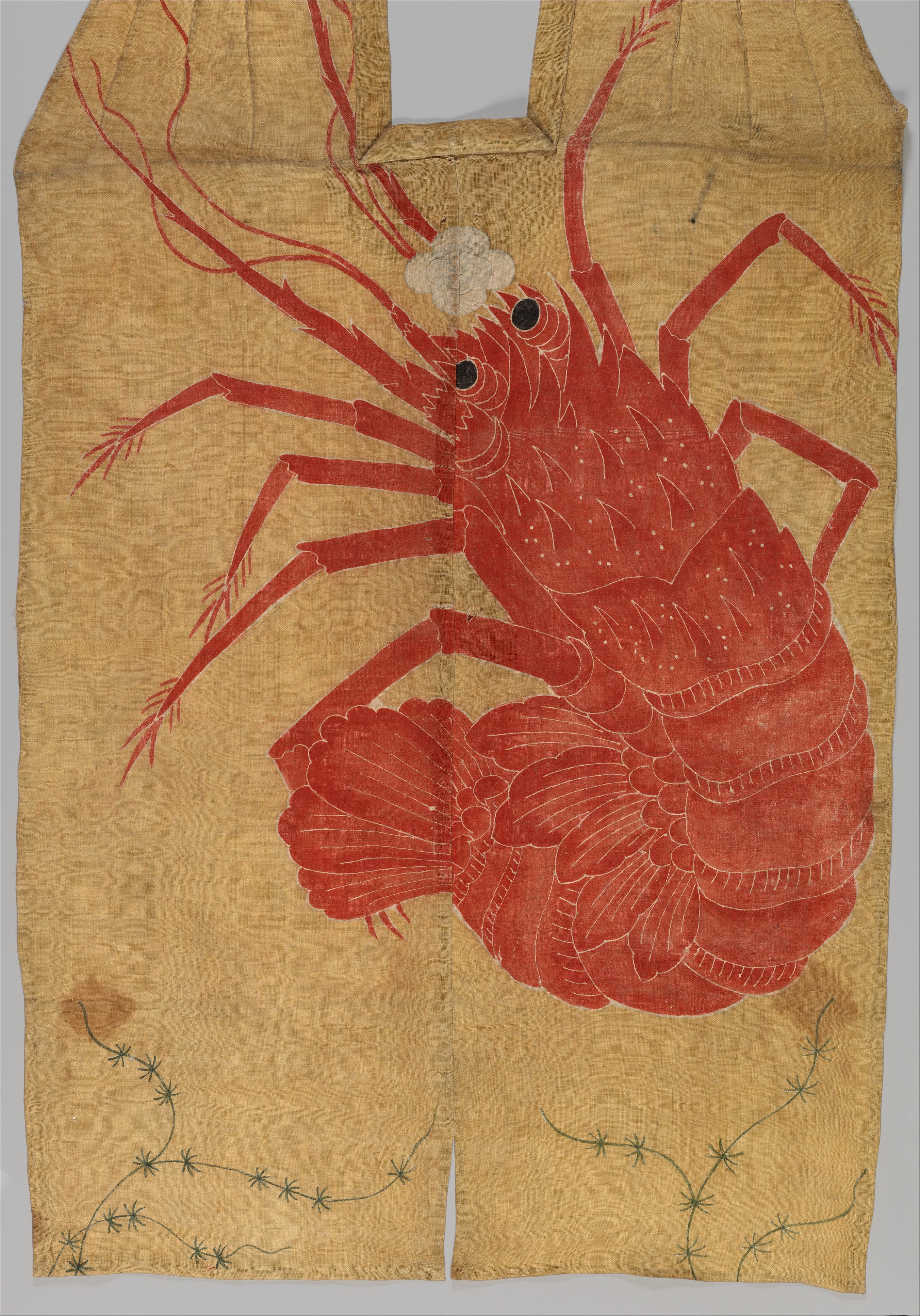
The Kyōgen Overvest, a traditional kataginu from Japan’s classical theater, has been reimagined for Zoey Fashion Laboratory’s SS26 collection as a radical architectural study. This garment, originally a lightweight, sleeveless vest worn by actors to denote status and movement in Noh and Kyōgen performances, is here stripped of its historical context and reborn as a standalone object of avant-garde couture. The material—resist-dyed and painted on plain weave hemp—serves as the substrate for a dialogue between the organic and the engineered, the past and the post-human. This analysis dissects the overvest’s structural innovations, its futuristic silhouette, and its potential to redefine the boundaries of garment architecture in the coming season.
Material Alchemy: Hemp as a Canvas for Temporal Disruption
The choice of plain weave hemp is neither nostalgic nor utilitarian; it is a strategic material for deconstructive aesthetics. Hemp, with its inherent tensile strength and coarse, irregular texture, resists the glossy perfection of synthetic futurity. Instead, it offers a friction-based futurism—a surface that catches light unevenly, creating a flickering, almost pixelated effect. The resist-dyeing technique, known in Japan as shibori, is applied not in traditional patterns but in asymmetrical, algorithmic bursts. These resist zones create negative space, where the hemp’s natural tan remains untouched, while the painted areas—using a custom-developed pigment derived from crushed Japanese lobster shells—introduce a biological, almost crustacean sheen. The lobster motif is not decorative; it is structural. The chitinous red-orange hue, applied in overlapping, scale-like strokes, mimics the exoskeleton of the Homarus japonicus, suggesting a garment that is less worn and more exoskeletal—a second skin that grows with the wearer.
Silhouette as Architecture: The Kataginu Reimagined
Traditionally, the kataginu is a stiff, boxy vest with exaggerated shoulders, worn over a kimono to create a trapezoidal silhouette. For SS26, Zoey Fashion Laboratory has deconstructed this archetype into a three-dimensional lattice. The overvest’s shoulders are no longer padded but are instead cantilevered outward using a hidden framework of recycled carbon fiber ribs, sewn into the hemp’s seams. This creates a hovering, almost aerodynamic profile—a silhouette that references both the origami-folded wings of a dragonfly and the scaffolding of a futuristic exosuit. The hemline, traditionally straight, is now asymmetrically cut, with a single trailing panel that extends to the mid-thigh, dyed in a gradient from lobster red to a muted, almost black indigo. This gradient is achieved through a resist-dyeing process called itajime, where the hemp is clamped between carved wooden boards, creating sharp, geometric transitions that echo digital glitch aesthetics. The front closure is eliminated entirely; the overvest drapes open, secured only by a single magnetic clasp hidden beneath a painted lobster claw motif at the sternum. This absence of fasteners emphasizes the garment’s self-supporting structure, a hallmark of avant-garde couture where the garment exists as an independent sculpture, not a mere covering.
Structural Innovation: The Lobster as a Biomechanical Blueprint
The Japanese lobster is not merely a visual motif but a structural metaphor. Its segmented exoskeleton, with its overlapping plates and flexible joints, inspires the overvest’s internal architecture. The hemp panels are not sewn together in a conventional manner but are laser-cut into interlocking, scale-like sections, each painted with a different density of lobster pigment. These scales are then joined using a heat-bonded polymer thread that fuses the hemp fibers without stitching, creating a seamless, continuous surface that mimics the lobster’s carapace. The resulting garment is both rigid and flexible: it resists compression from the shoulders but allows for a subtle, organic movement along the spine. This is achieved through a hidden system of elastic tension cords woven into the hemp’s warp threads, which pull the scales into a dynamic equilibrium. When the wearer moves, the scales shift, revealing glimpses of the unpainted hemp beneath—a play of presence and absence that is central to deconstructive aesthetics. The back panel, traditionally flat, is now sculpted into a convex, shell-like dome using a molded resin layer that is painted to match the lobster shell. This dome creates a pronounced, almost hunched silhouette, evoking the posture of a crustacean poised for defense or attack. It is a futuristic armor for the post-human, where vulnerability and strength are encoded in the same material.
Futuristic Silhouettes: The SS26 Context
In the context of SS26, where fashion is increasingly influenced by biomimicry, digital fabrication, and sustainable deconstruction, the Kyōgen Overvest stands as a definitive statement. Its silhouette rejects the soft, flowing lines of conventional spring/summer wear in favor of a hard, crystalline geometry. The lobster red is not a summer pastel but a warning color, a signal of toxicity or danger, which aligns with the season’s emerging trend of “protective futurism”—garments that shield the wearer from environmental and social precarity. The overvest’s asymmetry and cantilevered shoulders create a distorted human form, reminiscent of early 20th-century Russian avant-garde costume design, but updated with 21st-century material science. The resist-dyed patterns, when viewed under UV light, reveal hidden phosphorescent details—a nod to the bioluminescence of deep-sea crustaceans—that make the garment a wearable artifact for nocturnal, immersive environments. This is not a garment for passive observation; it is a performative object that demands interaction, whether through movement, light, or the viewer’s gaze.
Conclusion: The Kyōgen Overvest as a Threshold Object
The Kyōgen Overvest with Japanese Lobster is more than a deconstruction of a traditional form; it is a threshold object that bridges the historical and the speculative. By using traditional Japanese resist-dyeing on hemp, Zoey Fashion Laboratory honors the craft’s material intelligence while simultaneously subverting it through biomimetic architecture and digital-age fabrication. The lobster motif is not a decorative flourish but a structural and conceptual anchor, transforming the overvest into a wearable exoskeleton that questions the boundaries between human, animal, and machine. For SS26, this garment offers a blueprint for a new kind of couture—one that is futuristic not in its reliance on technology, but in its reimagining of form. It is a manifesto for a season where the past is not preserved but mutated, where the traditional kataginu becomes a vessel for the post-human, and where the lobster’s shell becomes a symbol of resilience and transformation. In the hands of Zoey Fashion Laboratory, the Kyōgen Overvest is not a costume; it is a living sculpture, a fragment of a future that is already here.