The Fragment as Future: Deconstructing Bobbin Lace for SS26
In the relentless pursuit of the new, the avant-garde often finds its most potent language in the broken, the incomplete, and the deliberately undone. For Zoey Fashion Laboratory’s SS26 collection, the concept of Fragment is not a lament for a lost whole, but a radical reclamation of agency over material and form. We stand at the Global Frontier—a liminal space where cultural boundaries dissolve into a singular, futuristic vernacular. Here, the seemingly archaic medium of bobbin lace is not resurrected for nostalgia; it is dissected, exploded, and re-engineered into a structural manifesto for the next generation of couture.
This analysis deconstructs the core tenets of this standalone study: how the fragmentary nature of bobbin lace, when liberated from its traditional grid, can generate silhouettes that are both alien and intimately human. We are not crafting garments; we are constructing architectural fragments of a future body.
Deconstructing the Archive: Bobbin Lace as Proto-Structure
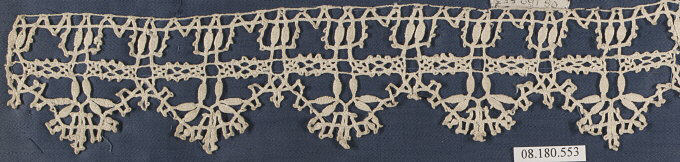
Bobbin lace, in its historical context, is a testament to precision and patience—a meticulous interlocking of threads over a pillow, guided by pins. Its geometry is one of orderly repetition: fans, petals, and net-like grounds. For the avant-garde curator, this very order is the first constraint to be shattered. The Fragment approach begins by isolating these traditional motifs—a single fan, a corner of a floral ground—and treating them not as decorative elements, but as load-bearing modules.
The materiality of bobbin lace is our primary asset. Its inherent transparency, its capacity for both rigid tension and fluid drape, makes it an ideal medium for exploring futuristic silhouettes. We are not using lace as a delicate overlay; we are using it as a primary structural skin. By fragmenting the lace—cutting, reassembling, and re-layering without regard for the original pattern—we create a new, non-linear logic. A sleeve is no longer a continuous tube; it is a constellation of lace fragments, each one a discrete architectural element, connected by invisible seams or air. The body becomes a landscape of negative space, where the eye is forced to complete the form.
Structural Innovation: The Silhouette of the Incomplete
The SS26 silhouette is defined by what is absent. The Fragment aesthetic rejects the monolithic, the seamless, and the enveloping. Instead, it champions the exoskeletal and the interrupted. We envision a torso where a traditional bodice is replaced by a harness of interlocking lace fragments—each piece a rigid, sculptural element, stiffened with a bio-resin or a heat-set polymer. The resulting form is not a second skin, but a protective lattice that reveals as much as it conceals. The shoulder line is no longer a continuous curve; it is a series of sharp, asymmetrical peaks formed by the angular placement of lace fans, jutting outward like the fins of a futuristic creature.
Volume is achieved not through padding or gathering, but through structural cantilevering. A skirt, for example, might be constructed from a single, oversized lace fragment that is folded and pinned to create a dramatic, one-sided flare. The other side remains flat, almost two-dimensional, creating a powerful tension between volume and flatness. The waist is not cinched; it is defined by the absence of connection—a deliberate gap between the upper and lower fragments, creating a visual and structural break. This is the silhouette of the incomplete, where the garment’s power lies in its refusal to be whole.
Global Frontier: A Synthesis of Techniques
The Global Frontier context demands a synthesis of diverse cultural techniques, but without the weight of historical appropriation. Bobbin lace, while historically European, is here treated as a global material—a textile code that can be rewritten. We are not replicating Flemish or Venetian patterns. Instead, we are extracting their core principles: the grid, the twist, the pin. These are then fused with methodologies from other frontier zones.
Consider the integration of Japanese boro stitching—a technique of mending and patching—but applied not to repair, but to deliberately fragment. Stitches become visible, structural scars that hold together disparate lace pieces. Or, consider the use of deconstructed kimono forms, where the straight seams and rectangular panels are mapped onto the lace fragments, creating a new, hybrid geometry. The result is a garment that speaks a universal language of construction, unmoored from any single origin. The Fragment is the ultimate global citizen—it belongs nowhere and everywhere, its identity forged in the tension between its broken parts.
Material Alchemy: From Thread to Armature
The transformation of bobbin lace from delicate textile to structural armature requires a new material alchemy. For SS26, we propose a three-tiered approach to materiality:
1. The Rigid Fragment: Select lace pieces are impregnated with a thermosetting resin, turning them into rigid, almost ceramic-like panels. These serve as the primary architectural elements—the shoulder fins, the hip flares, the structural collars. They are polished to a high gloss or left with a matte, mineral finish, creating a stark contrast with the softness of the skin.
2. The Tension Net: Other fragments are left in their natural, flexible state, but are stretched across the body using invisible monofilament or elastic cording. These create a second, floating layer of lace that hovers above the skin, casting intricate shadows and creating a sense of motion. This is the fragment as veil, a ghost of the original form.
3. The Kinetic Joint: The points of connection between fragments are not hidden. They are celebrated as kinetic joints—hinges, rivets, and exposed stitching that allow for movement and articulation. A sleeve, for example, might be attached to the bodice via a single, oversized metal pin, allowing it to swing and shift with the wearer’s gesture. This is engineering as ornament, where the mechanism of fragmentation becomes the primary visual language.
The Wearer as Architect
Ultimately, the Fragment collection for SS26 redefines the relationship between garment and wearer. The wearer is not a passive mannequin; they are an active architect, completing the form through their movement. The gaps, the voids, the deliberate incompletions invite the eye to travel, to fill in the missing pieces. The garment is a proposition, not a conclusion. It asks: what does it mean to wear a fragment? It means embracing the power of the broken, the beauty of the unfinished, and the radical potential of a future constructed from the ruins of the past. At Zoey Fashion Laboratory, we do not mend the fragment. We build with it.