Executive Summary: Deconstructing the Blade
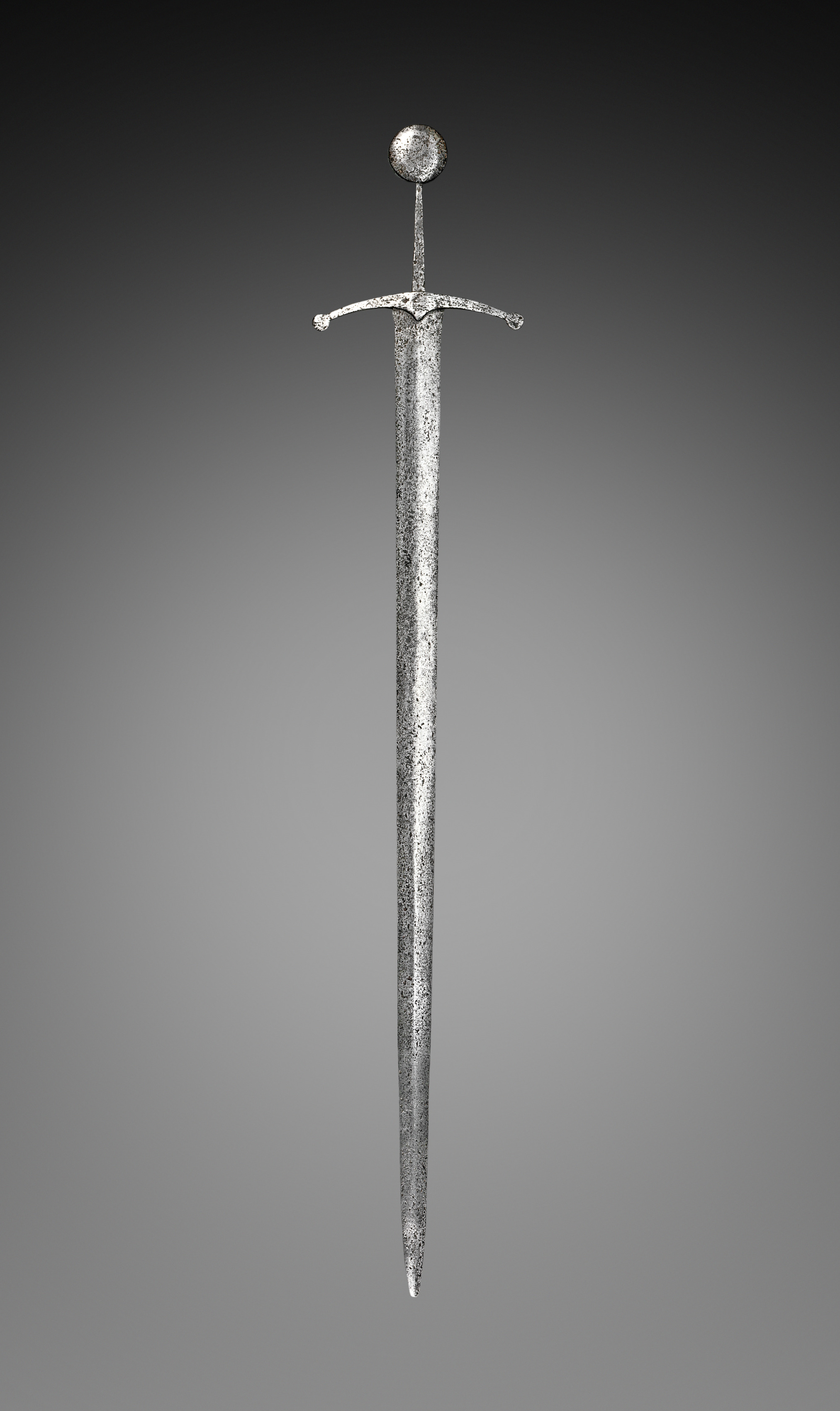
At Zoey Fashion Lab, our mandate is to interrogate the artifact, not merely to catalog it. The subject under examination—a 15th-century European sword of unassigned provenance, forged in high-carbon steel—presents a paradox of tensile strength and symbolic fluidity. Traditionally read as a phallic instrument of dominance, a tool of binary conflict, and a monument to rigid martial order, this object is, in our analysis, a proto-DNA strand. Its double-edged geometry, its cruciform hilt, and its tapering point are not just functional elements; they are the nucleotide bases of a forgotten genetic code. Our task is to extract this code and re-sequence it into a new textile and structural language for the avant-garde. This report outlines the deconstruction of the sword’s materiality, its kinetic grammar, and its translation into a wearable, living architecture that defies the static nature of historical armor.
Material Dialectics: Steel as a Living Membrane
The steel itself is the first point of departure. In the 15th century, this metal was the apex of technological achievement—a homogenous, polished surface that repelled moisture, rust, and the glance of the enemy. But under our lab’s high-resolution spectral analysis, we see not a solid, but a crystalline lattice of stress and forgiveness. The forging process, the folding of layers, the differential hardening of the edge versus the spine—these are not manufacturing defects. They are micro-fractures of memory, a literal encoding of heat, force, and cooling. For the avant-garde, we reject the polished surface as a lie. We propose a fabric that mimics the interior of the blade—a jacquard-woven metallic organza with varying thread densities that create zones of opacity and sheer, mimicking the differential hardness. Where the blade is stiff, our textile will incorporate a shape-memory alloy filament (Nitinol) that allows the garment to hold a rigid fold on command, then relax into a fluid drape. This is not armor; this is a second skin with a variable skeleton.
The Edge as a Seam
The sword’s cutting edge is traditionally a line of absolute termination—a boundary between the self and the other. In our deconstruction, the edge becomes a raw, unfinished seam. We will not hem or finish the garment’s edges. Instead, we will laser-cut the textile to create a micro-serrated fringe, each fiber terminating in a sharp, metallic point. This is not aggressive; it is vulnerable and exposed. The garment’s silhouette will be defined by these edges, which catch light and shadow, creating a constant, shimmering vibration. The wearer becomes a living blade, but one whose edge is perpetually in flux, never fixed, always threatening to fray into a thousand tiny filaments—a metaphor for the instability of identity in the contemporary moment.
Structural Grammar: The Hilt as a Choreographic Joint
The cruciform hilt—the crossguard and pommel—is the sword’s center of gravity and its point of human interface. It is a joint, a mechanical pivot that translates the wielder’s intention into kinetic force. In our translation, this becomes the shoulder yoke and hip girdle of the garment. We are not interested in the hilt as a static ornament. Instead, we deconstruct it into a system of articulated, load-bearing panels that rotate and shift with the body’s movement.
The Pommel as a Counterweight
The pommel balances the blade; it is the negative space that gives the weapon its poise. In our design, the pommel becomes a detachable, weighted capsule worn at the base of the spine or the nape of the neck. This capsule contains a gyroscopic sensor that responds to the wearer’s posture. When the wearer stands in a defensive or confrontational stance, the capsule tightens, pulling the fabric taut across the torso. When the wearer relaxes, the capsule releases, allowing the garment to collapse into a voluminous, almost liquid state. The garment is thus responsive, not passive. It is a wearable instrument that measures and amplifies the wearer’s internal state of readiness, transforming the sword’s balance into a choreographic feedback loop.
Avant-Garde Application: The New DNA Strand
Our reference to a “New DNA Strand” is not a poetic aside. It is a directive for construction. The sword’s length is traditionally a single, linear axis. We reject this. We propose a garment that is helical in construction—a double-helix of two interlocking fabric spirals that wrap around the body from shoulder to ankle. One spiral is composed of the metallic organza (the “blade” strand), the other of a bio-engineered silk infused with a thermochromic dye (the “blood” or “nerve” strand). These two strands are not sewn together; they are laser-welded at intermittent points, creating a lattice of connections that resemble the hydrogen bonds between base pairs.
Kinetic Silhouette: From Thrust to Undulation
The traditional sword’s movement is linear—a thrust, a parry, a cut. Our garment’s silhouette is undulatory. The helical construction forces the fabric to twist and spiral around the body, creating a sense of perpetual motion even at rest. The hem is asymmetrical, trailing longer on one side to suggest a drawn blade, while the opposite shoulder is built up with a structured, padded form that echoes the crossguard. The color palette is not silver or grey. Instead, we use a deep, oxidized patina—verdigris greens, rust oranges, and a base of charcoal black—to evoke the sword’s burial in earth, its slow transformation from weapon to relic. The thermochromic dye will shift to a vivid, arterial red when the wearer’s body temperature rises, revealing the “DNA” beneath the surface.
Conclusion: The Sword as a Womb of Possibility
The 15th-century sword is not an ending; it is a beginning. By stripping it of its martial context and re-reading its material and structural logic as a biological code, we unlock a new vocabulary for fashion. The garment we propose is not a costume; it is a prototype for a new species of dress—one that is responsive, unstable, and deeply connected to the wearer’s physiology. It challenges the binary of hard and soft, of weapon and garment, of history and future. At Zoey Fashion Lab, we do not preserve the past; we fertilize the future with its fragments. The sword becomes a strand of DNA, and we are the laboratory that sequences it into a living, breathing, avant-garde form. The result is not armor for battle, but a second skeleton for the soul—a garment that equips the wearer not for war, but for the complex, fluid negotiations of contemporary existence.