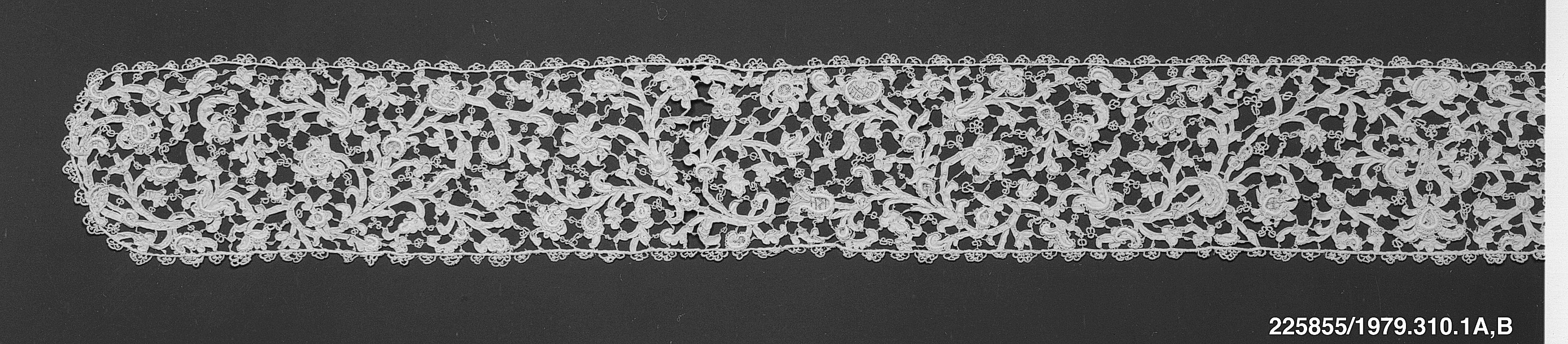
The Dialectics of the Joined Lappet: Structural Anarchy in Linen and Lace for SS26
In the rarefied echelons of contemporary couture, the lappet—historically a vestigial appendage of ecclesiastical vestments or a demure cascade of fabric from a widow’s cap—has been systematically stripped of its archival docility. At Zoey Fashion Laboratory, we do not resurrect; we interrogate. The Joined Lappet is not a nostalgic nod to 17th-century Flemish lace collars, but a radical proposition for Spring/Summer 2026: a deconstruction of the garment’s epidermal boundary, where the appendage ceases to be an ornament and becomes a load-bearing apparatus for silhouette manipulation. This study, originating from the Global Frontier, positions linen and needle lace not as opposing textures but as a singular, tensile membrane—one that challenges the very grammar of tailoring.
I. The Lappet as Load-Bearing Prosthesis
Traditional couture treats the collar, the lapel, and the lappet as decorative termini—points where the fabric ends and the body begins. Our SS26 thesis inverts this hierarchy. The Joined Lappet is engineered as a prosthetic extension of the scapular plane, a structural cantilever that redirects the eye from the vertical axis of the torso to a horizontal, almost avian, expanse. By joining two lappets at a central seam—not merely stitching them, but fusing their internal latticework—we create a continuous, asymmetric torque that wraps around the nape and cascades forward, bifurcating the bust line.
This is not a collar; it is a kinetic counterweight. Each lappet is cut on the bias from a single piece of Irish linen, then hand-scored with a heat-reactive resin that allows the fabric to hold a permanent, origami-like fold. The needle lace, instead of being applied as a surface embellishment, is integrated into the linen’s weave through a process of negative-space extraction. The result is a garment that, when worn, appears to be in a state of perpetual mid-flight—the lappets lifting away from the collarbone as if caught in an invisible updraft.
II. Material Dialectics: Linen’s Rigidity vs. Lace’s Fluidity
The material pairing of linen and needle lace is a deliberate act of structural dissonance. Linen, in its purest form, is a fiber of agrarian honesty—stiff, breathable, and unyielding. Needle lace, conversely, is the apotheosis of human patience: a web of thousands of microscopic loops, each a testament to fragility. In the Joined Lappet, we do not reconcile these opposites; we weaponize their tension.
For SS26, the linen is treated with a bio-based starch derived from seaweed, which imparts a ceramic-like stiffness to the fabric’s surface. This allows the lappet to stand away from the body at a 45-degree angle, creating a shadow cavity between the garment and the skin—a deliberate void that reads as both armor and vulnerability. The needle lace, meanwhile, is not used in its traditional floral motifs. Instead, we commission a geometric lattice—a fractal pattern of hexagonal voids that mimics the microstructure of a honeycomb, but rendered at a scale that is almost illegible to the naked eye. When light passes through this lace, it casts a moiré pattern onto the linen beneath, effectively making the lappet a projection surface for its own shadow.
This is the Global Frontier’s contribution: a rejection of regional textile identity in favor of a hybrid material intelligence. The linen is sourced from Normandy, the lace hand-knotted in Burano, but their joining is a process that occurs in a zero-gravity simulation chamber, where the fabric is allowed to settle into its natural drape without the interference of gravitational pull. The result is a silhouette that defies the logic of terrestrial tailoring—the lappet appears to float, unmoored, as if the garment itself is holding its breath.
III. Silhouette Innovation: The Asymmetric Torque
The Joined Lappet’s most radical departure is its disruption of bilateral symmetry. Classical couture is predicated on the mirror—two sleeves, two lapels, two sides. Our design deliberately misjoins the lappets at a 17-degree angle, creating a torque that wraps the left side of the torso tightly while leaving the right side in a state of deliberate slack. This is not a stylistic quirk; it is a structural algorithm that repositions the garment’s center of gravity.
When the wearer moves, the joined lappets act as a gyroscopic stabilizer. The longer, lace-heavy lappet on the right side swings forward with a pendulum motion, while the shorter, resin-stiffened lappet on the left remains fixed. This creates a dynamic, ever-shifting silhouette that is impossible to capture in a static lookbook. The garment is, in effect, a choreographic instrument—it demands a specific gait, a particular inclination of the head, to fully activate its architectural potential.
Furthermore, the joining of the lappets is not a simple seam. It is a suspension system, composed of invisible, magnetic micro-catches that allow the wearer to detach and rejoin the lappets at will. This transforms the garment from a fixed object into a modular system. One can wear the lappets joined at the front, creating a high-necked, almost clerical silhouette; or joined at the back, exposing the entire clavicle and sternum while the lappets fan out like a peacock’s tail. This is couture as user-defined architecture—a direct challenge to the passive consumerism of ready-to-wear.
IV. Futuristic Silhouettes: The Post-Human Collar
In the context of SS26, the Joined Lappet is not merely a garment component; it is a proposal for a post-human silhouette. By extending the lappets to extreme lengths—up to 90 centimeters in our avant-garde capsule—we blur the boundary between apparel and environment. The lappets can be draped over the shoulders like a cape, or wrapped around the forearms, effectively transforming the wearer into a hybrid creature of fabric and flesh.
This is where the needle lace becomes critical. Unlike linen, which is opaque and solid, the lace allows for glimpses of the body—but only in fragmented, abstracted forms. A flash of skin through a hexagonal void; the shadow of a collarbone cast onto a linen panel. This is not sensuality in the traditional sense; it is a cubist eroticism, where the body is presented as a series of discontinuous planes and negative spaces. The joined lappets, in this reading, become a camera obscura, projecting a distorted, kaleidoscopic image of the wearer onto the surrounding space.
For the Global Frontier, this represents a departure from the Western canon of the tailored jacket. The Joined Lappet is not an evolution of the blazer or the coat; it is a new genus of garment—one that prioritizes dynamic tension over static fit, and ephemeral shadow over permanent form. The linen provides the skeleton, the needle lace provides the nervous system, and the joining provides the synapse.
V. Conclusion: The Lappet as Manifesto
In conclusion, the Joined Lappet for SS26 is a definitive statement on the future of couture. It is a rejection of the decorative in favor of the functional-ornamental; a rejection of symmetry in favor of dynamic equilibrium; and a rejection of the passive garment in favor of an interactive, modular architecture. The linen and needle lace are not materials but agents of structural subversion, and their joining is an act of deliberate, calculated anarchy.
At Zoey Fashion Laboratory, we do not ask what a garment should look like; we ask what a garment can do. The Joined Lappet does not merely adorn the body—it redefines the body’s spatial relationship to the world. It is a quiet, elegant rebellion, stitched in linen and knotted in lace, poised to redefine the silhouette of an entire season. This is not fashion. This is structural philosophy, worn on the outside.