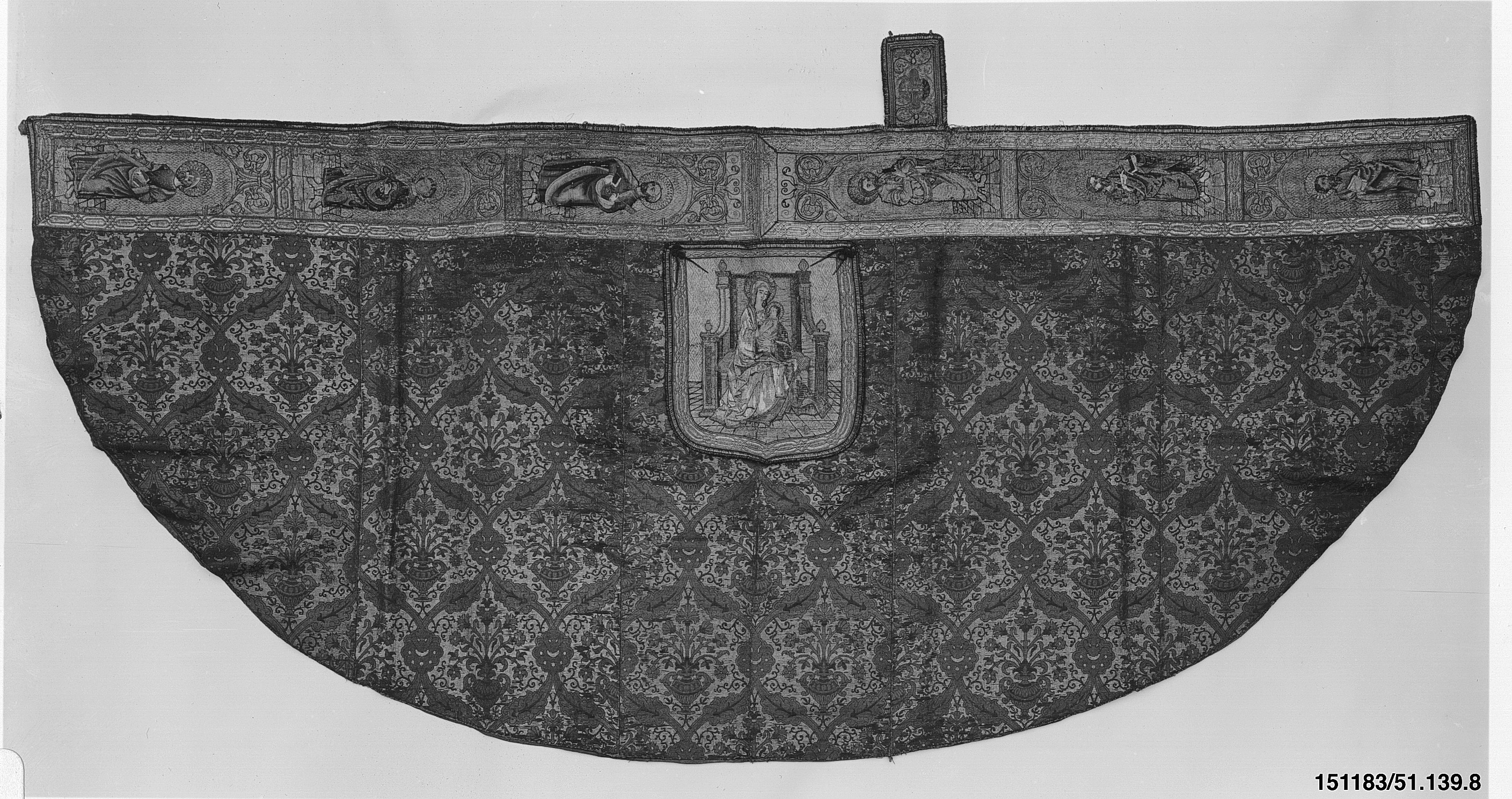
The Architecture of Resilience: Deconstructing Cope for SS26
In the relentless churn of the fashion cycle, the term "cope" is often relegated to the psychological margins—a whispered strategy for endurance, a quiet surrender to the overwhelming. But for Zoey Fashion Laboratory's SS26 avant-garde study, "Cope" is not a passive state; it is a radical, active verb. It is the deliberate act of bearing weight, of structuring support, of transforming vulnerability into a visible, wearable strength. This analysis dissects a singular garment—a conceptual cope constructed from the unlikely trinity of silk, linen, and metal thread—to argue that the future of couture lies not in escape, but in the exquisite, brutalist articulation of resilience. The cope, historically a ceremonial cloak of protection, is here re-engineered as a blueprint for a new kind of human armor, one that acknowledges the fractures of the modern world while simultaneously weaving them into a cohesive, forward-looking silhouette.
Material Dialectics: The Tension of Silk, Linen, and Metal
The materiality of this piece is its primary narrative device, a conversation between the ephemeral and the eternal. The selection of materials is not arbitrary; it is a deliberate dialectic that mirrors the internal conflict of coping itself. The foundation is a whisper-weight, raw-edged silk organza, chosen not for its lustrous opulence but for its structural transparency. It is the skin of the garment—a mutable, almost liquid surface that catches light and shadow, suggesting the fluidity of emotional states. Against this, the linen acts as the structural sinew. Its natural, slightly coarse texture provides a grounding counterpoint to the silk’s fluidity, introducing a sense of grounded, terrestrial reality. Linen, with its history of utilitarian strength, anchors the piece in the physical realm, preventing it from dissolving into pure ethereality.
However, the true innovation lies in the metal thread. This is not a decorative embellishment; it is the garment's skeletal system. Woven in a complex, irregular grid across the linen panels, the metal thread is both functional and symbolic. It functions as an exoskeleton, creating a network of tensile strength that allows the fabric to stand away from the body, forming its own architectural space. The thread is not hidden; it is exposed, catching the light like a circuit diagram, a visible network of energy and support. This integration of metal—a material of industry, of permanence, of rigid structure—into the soft, organic world of silk and linen creates a profound tension. It is the friction between the desire to be soft and the necessity to be strong, a friction that defines the very act of coping. The garment does not resolve this tension; it wears it, proudly, as its primary aesthetic principle.
Futuristic Silhouette: The Shielded Carapace
The silhouette of this cope abandons the fluid, draping forms of traditional ceremonial wear for a distinctly futuristic, quasi-architectural profile. It is a study in negative space and engineered volume. The shoulders are not padded but constructed—a cantilevered structure of linen and metal thread that juts forward, creating a protective carapace over the upper torso. This is not a shoulder pad; it is a piece of load-bearing architecture. The cape itself does not fall; it is held. It is suspended from this shoulder structure, creating a dramatic, inverted V-shape that narrows at the waist before flaring out in a series of sharp, geometric panels at the hem.
This silhouette is a direct response to the anxieties of the contemporary moment. It is a shield, but a transparent one—the silk allows the body to be seen, suggesting that protection does not necessitate concealment. The form is that of a guardian, but a fragile one. The sharp, angular lines of the metal-thread grid echo the fractured, digitized landscapes of our digital existence, while the organic drape of the linen softens the blow. The overall effect is of a being that has learned to move through a hostile environment not by hiding, but by structuring their own space around them. The wearer does not simply occupy space; they define it, carving out a personal, protected zone of silence and strength within the chaos of the SS26 landscape.
Structural Innovation: The Ribcage of the Future
The true genius of this piece, however, lies in its internal engineering—a radical departure from traditional pattern-making. The garment's structure is built upon a series of articulated, rib-like panels that radiate from the spine. These panels, composed of a double layer of linen fused with the metal thread, are not sewn flat but are connected with a series of precision-engineered, exposed seams. This allows the panels to move independently, creating a kinetic, almost biological response to the wearer's movement. The result is a garment that breathes, that flexes, that literally moves with the body as a second skeleton.
This innovation challenges the very notion of couture construction. It moves beyond the simple manipulation of fabric on a mannequin to a form of generative design, where the material itself dictates the potential forms. The metal thread acts as a spring, storing and releasing kinetic energy with each step. The silk, stretched between these metal sinews, becomes a taut membrane, a drum for the body's rhythm. Furthermore, the garment is reversible. On one side, the structure is exposed, a brutalist map of its own engineering. On the other, the silk is turned inward, creating a smooth, almost sensual surface against the skin. This duality—the hard and the soft, the exposed and the protected—is the ultimate expression of coping: the ability to present one face to the world while holding another, more vulnerable one, in reserve.
Conclusion: A Manifesto for Wearable Strength
In the context of SS26, this cope is more than a garment; it is a manifesto. It declares that the future of avant-garde fashion is not in the pursuit of impractical fantasy, but in the creation of functional, psychological armor. It is a response to a world that demands constant resilience, offering not an escape from that demand, but a beautiful, complex, and deeply intellectual way to meet it. The piece forces us to reconsider the purpose of couture: not merely to adorn, but to empower, to structure, and to protect. By fusing the organic with the industrial, the fluid with the rigid, Zoey Fashion Laboratory has not just created a garment; it has proposed a new paradigm for the human form in the 21st century—one that is fragile, yet fortified; exposed, yet shielded; and above all, capable of not just surviving, but of carrying its own weight with extraordinary, defiant grace. This is not a garment of surrender; it is a garment of structural, silent, and stunning victory.