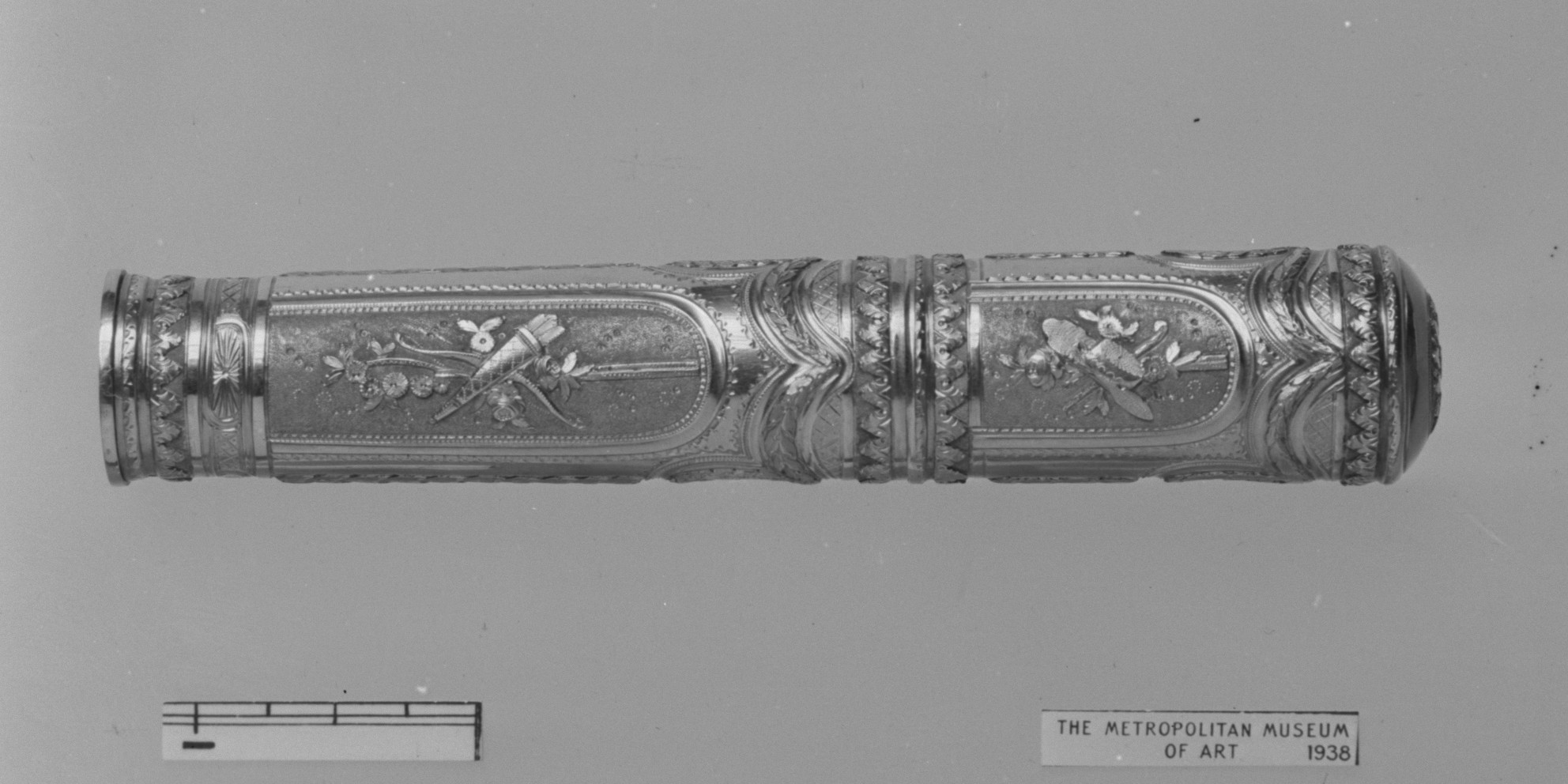
The Étui Reconstructed: Varicolored Gold and the Architecture of Sealed Desire
In the lexicon of fashion’s functional objects, few are as anachronistic, as intimately tied to the ritual of correspondence, as the sealing wax case—the étui. It is a vessel of finality, a tool that stamps a promise shut, a micro-architecture of closure. For the Spring/Summer 2026 (SS26) season, Zoey Fashion Laboratory seizes this relic not as a nostalgic curio, but as a generative matrix for a new species of garment. We reject the passive drape of the past. Instead, we deploy the étui’s rigid, protective, and sealing logic to construct silhouettes that are less worn and more inhabited—portable vaults for the human form. The subject is not the wax itself, but the latent energy of its application: pressure, heat, and the irrevocable mark. Our material vehicle is varicolored gold—not as a symbol of wealth, but as a chameleonic, structural alloy that bends light and rigidifies space.
Deconstructing the Vessel: From Containment to Liberation
The traditional étui is a cylinder of restraint, a sheath for a single tool. Our avant-garde intervention begins with a brutalist dissection of this geometry. We sever the cylinder longitudinally, creating an open spine that runs the length of the torso. This is not a cut; it is a strategic rupture. The resultant silhouette is a hybrid: a front panel of uncompromising, armor-like gold that mimics the case’s exterior, fused to a rear panel of fluid, almost liquid, metallic mesh that suggests the molten interior of wax. The wearer is thus suspended between two states—the sealed exterior and the volatile interior. This axial tension forms the core of our SS26 manifesto: the garment as a moment of transition, not a static object.
Structural innovation here is paramount. We eschew traditional seaming. Instead, panels are joined via a system of compression locks—miniature, functional hinges that mimic the snap of a case’s clasp. These are not hidden; they are celebrated as external skeletal structures. The shoulder line, typically a point of softness, becomes a load-bearing cantilever. A single, sweeping volume of gold extends from the right shoulder, curving under the arm and terminating at the hip, creating an asymmetrical cocoon that visually weighs the body to the ground. The left side is left radically exposed, a void that speaks to the absence of the seal—a space for the future, for the message yet to be written.
The Alchemy of Varicolored Gold: A Materialist’s Dream
Gold is historically monolithic—a signifier of power and permanence. We shatter this monolith. Our varicolored gold is not a single metal but a spectrum, an alchemical alloy of rose, citrine, and verdigris tones, each with a distinct thermal and reflective property. For SS26, the palette is not decorative; it is functional and narrative. The rose gold, with its warm, copper undertones, is used for panels that come into direct contact with the skin, its conductive properties engineered to regulate micro-climate. The citrine gold, almost solar in its intensity, is reserved for the garment’s “wax” elements—the folds and drips that cascade from the shoulders, frozen mid-flow. These are not fabric manipulations; they are 3D-printed metallic extrusions that grow organically from the base structure, mimicking the pour of molten wax.
The verdigris gold—a patinated, almost oxidized green—is the most radical. It is used in the “seal” itself: a massive, sculptural badge located at the solar plexus. This is not a brooch; it is a functional pressure point. The badge is mounted on a pivot, allowing the wearer to rotate it, altering the garment’s tension. Rotate it clockwise, and the front panels tighten, compressing the torso into a cylindrical, case-like form. Rotate counter-clockwise, and the structure relaxes, expanding into a billowing, almost architectural cape. The wearer becomes the seal, the instrument of their own transformation. This is interactive couture, where the act of dressing is a performative ritual of opening and closing.
Silhouette as Sealed Space: The Futurist’s Body
The futuristic silhouette for SS26 is not about elongation or volume alone; it is about delineated zones of pressure and release. We reject the uniform. Instead, we propose a garment composed of three distinct “chambers.” The first chamber is the collar, a high, rigid ring of gold that encircles the neck like the lip of a jar. It is not restrictive but defines a personal boundary, a halo of personal space. The second chamber is the torso carapace, which, as described, can shift between compression and expansion. The third chamber is the lower extremity, which we treat as a wax drip. Trousers are not trousers; they are asymmetric, single-leg sheaths that start as structured columns at the hip and dissolve into liquid, pleated filaments at the ankle, appearing to melt into the footwear—which is itself a sculpted block of blackened gold, resembling a petrified puddle.
The interplay of these chambers creates a silhouette that is simultaneously ancient and extraterrestrial. It references the ceremonial armor of a lost civilization while projecting a cyborgian future. The back of the garment is a study in negative space. A deep, U-shaped cutout exposes the lumbar spine, framed by two vertical struts of gold that mimic the tracks of a case’s slide. This is not about eroticism but about structural honesty—revealing the load-bearing mechanics of the piece. The skin becomes the gasket, the sealant between the metallic chassis and the human engine.
Contextualizing the Étui in the SS26 Landscape
In the broader context of SS26, where sustainability and digital fluidity dominate discourse, our étude on the étui is a deliberate counterpoint. It is an argument for permanence over disposability. The varicolored gold is not ephemeral; it is recyclable, remeltable, and its value increases with time. The garment is designed for a slow, deliberate lifecycle, not a single season. It is an heirloom of the future. Furthermore, the sealing wax case is a symbol of private communication in an era of public broadcasting. Our garments are a shield for the individual against the noise of the digital crowd. They do not broadcast; they enclose. The wearer is not a spectacle but a sealed entity, a mystery that invites proximity rather than distant observation.
This is the definitive avant-garde position: not to follow the trend of transparency, but to champion the power of the opaque. The sealing wax case, in our hands, is no longer a tool for letters. It is a blueprint for a new body—one that is armored, intentional, and fiercely autonomous. The varicolored gold is not a luxury; it is a technology of self-possession. The SS26 collection is not clothing; it is a series of wearable manifestos, each one a sealed promise to the self. The case is closed. The design is complete. The future is sealed in gold.