Deconstructing the Loom of Air: Silk Bobbin Lace as Architectural Membrane for SS26
In the rarefied atmosphere of Zoey Fashion Laboratory’s SS26 research cycle, we confront a paradox: the most archaic of textile crafts—silk bobbin lace—emerges as the most potent vector for futuristic expression. This is not a nostalgic revival. We reject the Victorian parlour and the bridal veil. Instead, we isolate the structural DNA of bobbin lace—its tension, its negative space, its algorithmic interlacement—and re-engineer it as a load-bearing, semi-transparent architectural membrane. For SS26, we propose a definitive break from the flat, pictorial lace of the past. Our study positions bobbin lace not as embellishment, but as the primary generative system for a new silhouette: one that is simultaneously skeletal, fluid, and cybernetic.
From Ornament to Ossature: The Lace as Exoskeleton
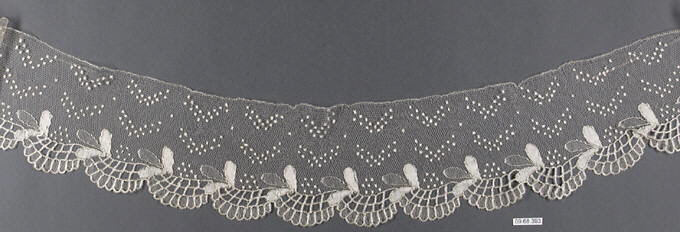
The conventional fashion system treats lace as a surface texture, a delicate appliqué that softens a garment’s line. Our laboratory inverts this hierarchy. We treat the silk bobbin lace edging as a pre-tensioned structural lattice. By isolating the edging from its yardage and re-scaling its pattern repeat, we transform a fragile trim into a rigid, self-supporting exoskeleton. The key lies in material manipulation: we coat the silk threads with a bio-resin micro-film, invisible to the eye but transformative in tactility. The lace loses its limp drape and gains a memory. It can be folded, pleated, and heat-set into sharp, angular geometries that defy gravity.
This process yields the “Coralline Silhouette”—a form that grows outward from the body like a calcified reef. The edging’s scalloped borders are no longer decorative finishes; they become load-bearing flanges. A jacket constructed from this treated lace does not wrap the torso; it hovers around it, creating a 3-centimeter air gap between fabric and skin. The negative space becomes the design. The garment is a cage of light, a topological map of the body’s kinetic energy. For SS26, we propose a signature piece: a bolero jacket where the bobbin lace edging is spiraled continuously from shoulder to hem, each rotation offset by 15 degrees, creating a vortex-like optical illusion. The wearer appears to be inside a frozen cyclone.
Radical Transparency: The New Opacity
Transparency in avant-garde couture is often mistaken for exposure. Our study of silk bobbin lace edging from the Global Frontier—where traditional European techniques meet Japanese precision and African geometric abstraction—reveals a more sophisticated concept: opacity through density. We are not interested in revealing the body. We are interested in occluding it through a complex matrix of holes. The bobbin lace’s grid of pin-holes and twisted threads creates a visual static that disrupts the gaze. The eye cannot settle on a single point; it is forced to traverse the labyrinthine pattern.
This is a political act of dressing. In an era of surveillance and data transparency, the lace becomes a privacy filter. We have developed a technique called “Thread-Stacking,” where three layers of bobbin lace edging are superimposed with a 2mm offset. The moiré interference pattern generated by this misalignment produces a shimmering, iridescent field that blurs the silhouette’s edge. The garment becomes a living, breathing optical instrument. For SS26, this manifests in a floor-length column dress, entirely constructed from stacked edging, that appears solid from one angle and completely permeable from another. It is a study in controlled ambiguity.
Structural Innovation: Kinetic Wefts and Self-Folding Edges
Our laboratory’s most significant breakthrough for SS26 is the integration of shape-memory alloy filaments into the bobbin lace structure. By weaving a nickel-titanium wire alongside the silk thread, we create an edging that can be programmed to change its geometry in response to heat or electrical current. This is not wearable tech in the clunky, battery-pack sense. It is material intelligence. The lace edging can be designed to lie flat at rest, then curl inward, forming a tight tubular ruffle, upon body heat activation. The garment is never static.
Imagine a cape: its perimeter is edged with this smart lace. As the wearer moves from a cool gallery into the warm sun, the edging contracts, pulling the cape’s hem upward into a dramatic, sculptural frill. The silhouette does not just change—it performs. This kinetic property allows for a new genre of convertible couture, where the garment’s architecture is a response to its environment. We call this the “Anemone Effect”, referencing the way sea anemones retract and expand their tentacles. The bobbin lace edging, once a symbol of static domesticity, becomes a dynamic, responsive organ.
The Global Frontier: Hybridizing the Grid
Our source material is not a single cultural artifact. The Global Frontier designation is crucial. We are synthesizing the fine, continuous threads of Belgian Binche lace with the bold, geometric fillings of Torchon lace, then overlaying a digital algorithm that fractures the traditional grid. The result is a hybrid lace that is neither European nor Asian, but planetary. We employ a computer-vision system to map the tension points of the original hand-made lace, then use a robotic arm to replicate the pin placements at 10x scale. The final edging is a collaboration between the human hand’s irregularity and the machine’s perfect precision.
This synthesis yields a new structural vocabulary. The traditional “foot” of the lace—the straight edge that was meant to be sewn into a garment—is now detached and treated as a free-floating architectural rib. These ribs are used to construct a series of “Bustier Scaffolds” for SS26. Each bustier is a lattice of these detached edgings, lashed together with silicone cord. The garment does not cover the chest; it frames it, creating a cage-like volume that expands and contracts with respiration. The silk threads, now stiffened and reinforced, cast intricate shadows on the skin, creating a temporary tattoo of light and shadow.
Conclusion: The Future is Laced
Silk bobbin lace edging, in our hands, is no longer a relic. It is a computational textile, a structural membrane, and a kinetic sculpture. For SS26, Zoey Fashion Laboratory declares that the future of couture is not in seamless, 3D-printed monoliths, but in the intricate, perforated logic of the lace grid. The hole is the new solid. The thread is the new beam. By honoring the craft’s mathematical precision while violently deconstructing its sentimental context, we produce garments that are not worn, but inhabited. They are architectures of air, engineered for the body in motion. The bobbin lace edging, once the humble finish of a handkerchief, now stands as the definitive blueprint for a new, radical, and breathtakingly intelligent silhouette.