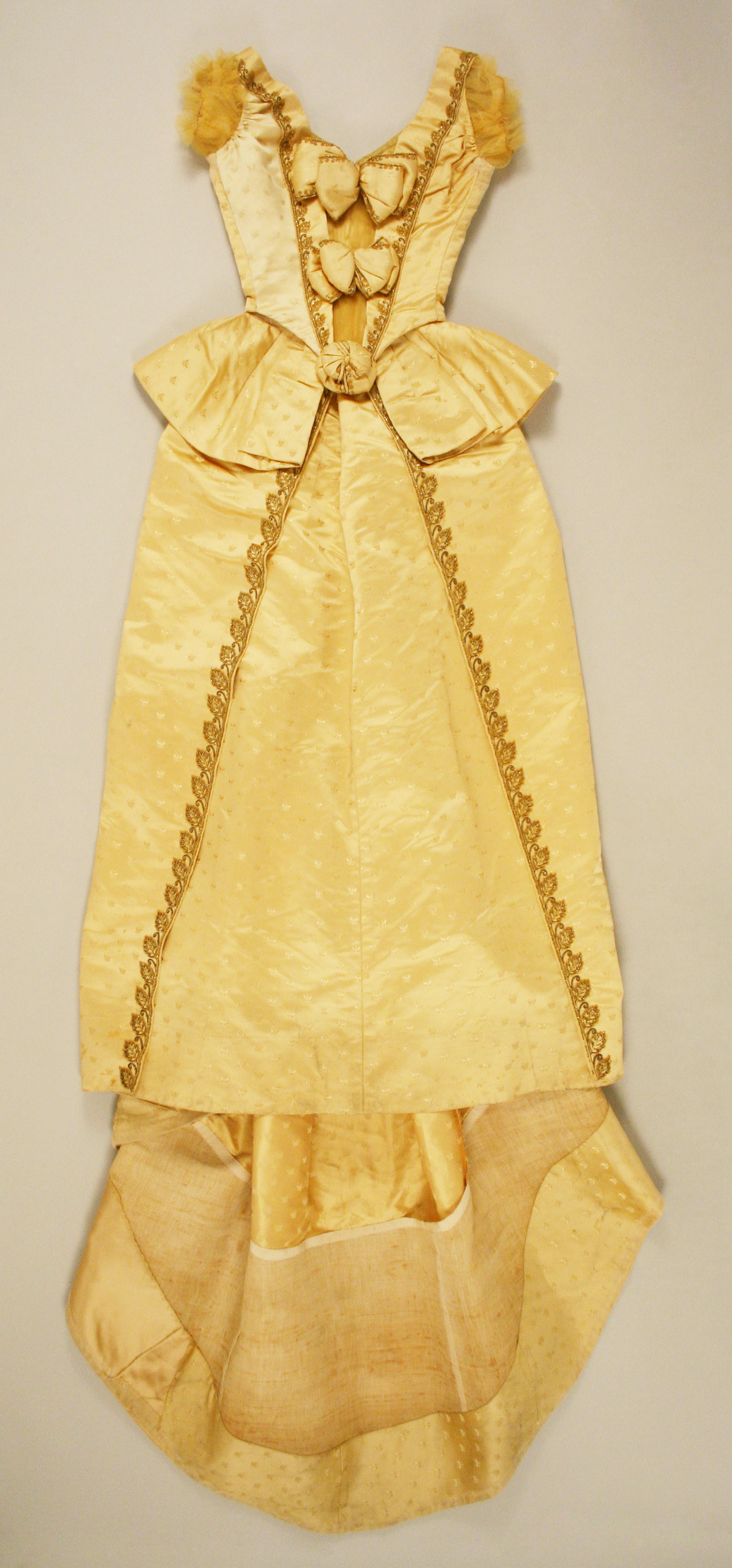
The Ball Gown Deconstructed: A Futurist Manifesto for SS26
The ball gown, in its canonical French iteration, is a monument to historical gravitas—a sculptural embodiment of aristocratic excess, rigid social choreography, and the physics of opulent drapery. For Zoey Fashion Laboratory’s SS26 avant-garde study, we do not venerate this monument; we perform an archaeological excavation upon it, unearthing its latent futuristic potential. The subject is not a garment but a thesis: how can silk, glass, and metallic thread conspire to dismantle the very notion of eveningwear’s static grandeur? The answer lies in a radical re-engineering of silhouette, where the gown ceases to be a costume of the past and becomes a wearable instrument of speculative tomorrow.
Silhouette as Architecture: The Inverted Torsion
Traditional French ball gowns rely on the bell or A-line—a gravitational fall that anchors the body to the floor, creating a sense of immovable presence. Our SS26 proposition inverts this paradigm through torsional asymmetry. The skirt is no longer a single volume but a series of intersecting, cantilevered planes that rotate around the wearer’s axis. Imagine a silk taffeta base, but instead of a hoop skirt, we employ a hidden exoskeleton of carbon-fiber-reinforced seams that force the fabric into sharp, angular folds—reminiscent of origami but with the aggressive precision of parametric design. The hemline does not touch the ground; it hovers, lifted by internal air channels created through strategic pleating, giving the illusion of anti-gravity. This is not a gown you enter; it is a gown you occupy, a mobile habitat where the wearer’s movement becomes the primary generative force of the silhouette.
Further, we introduce the concept of “ephemeral volume.” Unlike the fixed crinoline, our structure employs shape-memory alloys woven into the silk. When exposed to body heat, the metallic threads contract and expand, causing the skirt to morph from a narrow column to a wide, exploded hemisphere over a period of minutes. This is a temporal garment—one that performs its own metamorphosis. The futuristic silhouette is not a static image but a sequence of evolving states, challenging the viewer’s perception of what a gown is supposed to do. The ballroom becomes a laboratory, and each turn of the wearer is a live experiment in material kinetics.
Material Alchemy: Silk, Glass, and Metallic Thread as Data Carriers
The material triad specified—silk, glass, metallic thread—is not a decorative palette but a functional hierarchy. Silk serves as the organic substrate, the skin of the garment. However, we treat it not as a precious, delicate surface but as a membrane for structural stress. The silk is laminated with a micro-thin layer of biodegradable polymer, allowing it to hold creases and folds that would normally require heavy interfacing. This creates a crisp, almost paper-like texture that contrasts sharply with the fluidity of French couture tradition. The result is a gown that sounds like rustling parchment and moves like a mechanical bird—a deliberate rupture from the soft, romantic whisper of classic silk.
Glass enters not as beads or sequins but as optical conduits. We employ hand-blown borosilicate glass filaments, each no thicker than a human hair, embedded within the silk panels. These filaments are not merely reflective; they are engineered to capture and refract ambient light at specific angles, projecting kaleidoscopic patterns onto the surrounding floor and walls. In a darkened hall, the gown becomes a living light source, tracing the wearer’s path with a trail of fractured luminescence. This is a decisive move away from ornamentation—the glass is not decoration but a functional component of spatial interaction. The gown speaks in light frequencies, not embroidery.
Metallic thread, typically used for goldwork or passementerie, is re-purposed as conductive circuitry. Woven into the bodice and along the internal seams, these threads form a flexible network that can carry low-voltage signals. In collaboration with wearable-tech engineers, we have integrated micro-sensors that respond to the wearer’s respiratory rate and pulse. This data modulates the intensity of the glass filaments’ glow and the tension of the shape-memory alloys. The gown is thus a cybernetic organism: it perceives, processes, and reacts. The metallic thread is not a symbol of wealth but a nervous system, making the garment an autonomous participant in the social performance of the ball.
Structural Innovation: The Disappearing Corset and the Modular Bustle
Historically, the French ball gown’s structure is a hidden tyranny—the whalebone corset, the steel cage, the heavy underskirts. Our innovation is to externalize and then dissolve this infrastructure. The corset is replaced by a series of articulated, 3D-printed joints made from recycled aluminum, covered in metallic thread. These joints are visible, forming an exoskeletal ribcage that traces the torso like a futuristic armor. Yet, they are not restrictive. Each joint is ball-and-socket, allowing for unprecedented lateral and torsional flexibility. The wearer can bend, twist, and even sit without the traditional constraint of a rigid bodice. This is a liberation of the female form, not its imprisonment.
The bustle—a signature of French 19th-century fashion—is reimagined as a modular appendage. Instead of a fixed pad, we offer a series of detachable, glass-fiber-reinforced panels that clip onto the metallic-thread rails at the back of the gown. These panels can be arranged in multiple configurations: a single dramatic fin, a pair of asymmetric wings, or a full, circular halo that frames the wearer from behind. The wearer becomes the couturier, reconfiguring their silhouette in real-time to suit the rhythm of the evening. This modularity is the ultimate avant-garde statement: the gown is not a finished object but a kit of parts, a perpetual work-in-progress that defies the finality of traditional couture.
Conclusion: The Gown as a Temporal Event
The SS26 ball gown from Zoey Fashion Laboratory is not a garment for the timid. It is a deliberate provocation against the static, nostalgic impulse of French haute couture. By fusing silk with computational metallic thread and optical glass, we have created a silhouette that is simultaneously ancient and extraterrestrial, rigid and fluid, decorative and functional. The gown is no longer a costume for a ball; it is a wearable event, a live performance of material and motion. It challenges the wearer to become a co-author of their own presentation, and the audience to reconsider the very definition of eveningwear. In this deconstruction, we find not the death of the ball gown but its radical rebirth as a futuristic interface—a testament to the fact that true innovation always lies in the audacity to dismantle what we think we know. The future of couture is not in preservation but in transformation, and this gown is its herald.