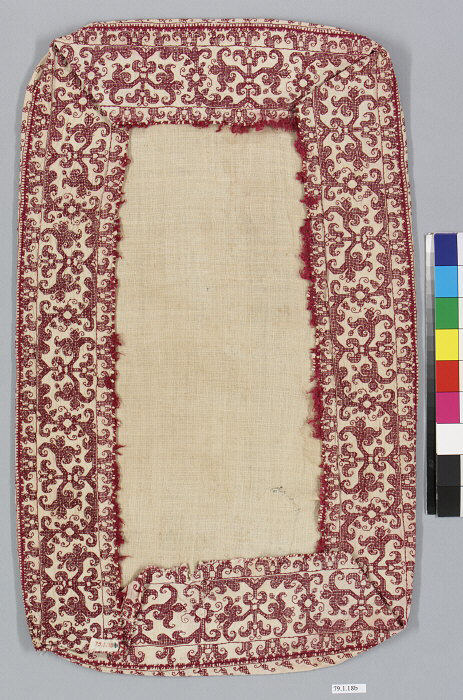
The Pillow as Prosthesis: Recontextualizing Domestic Softness for the SS26 Frontier
In the lexicon of conventional fashion, the pillow cover is a footnote—a domestic afterthought, a mere textile envelope for nocturnal utility. For the SS26 season, Zoey Fashion Laboratory dismantles this assumption with surgical precision. We do not present a pillow cover; we present a wearable architecture of rest, a deconstructed volume that challenges the binary between the supine and the erect, the private and the performative. This is not an accessory. It is a manifesto stitched in experimental material, originating from what we term the Global Frontier—a conceptual space where geopolitical boundaries dissolve into a singular, hyper-futuristic material culture.
Deconstructing the Domestic: From Sleep Aid to Structural Signifier
The avant-garde tradition has long weaponized the mundane. From Rei Kawakubo’s lumps to Martin Margiela’s tabi, the ordinary becomes a site of radical inquiry. Yet, the pillow cover remains virgin territory—a soft, yielding form that has never been granted the gravitas of a tailored shoulder or a sculpted bustier. Our SS26 study rectifies this oversight. The pillow cover, in our hands, becomes a prosthetic extension of the body’s own need for suspension—not merely to cushion the head, but to redefine the silhouette’s relationship to gravity, volume, and negative space.
Consider the silhouette. Traditional couture builds outward from the skeleton—boning, padding, and draping create a carapace of control. Our pillow cover inverts this logic. It is a soft exoskeleton, a pliable carapace that does not constrain but rather negotiates with the wearer’s motion. The cover’s internal volume—once filled with down or synthetic fill—is here replaced by a lattice of air-cellular polymers, a material that responds to pressure with a slow, memory-like rebound. The result is a silhouette that is perpetually in flux: a shoulder that swells when the arm is raised, a hip that deflates when the body leans. This is not static sculpture; it is kinetic architecture, a garment that breathes with the wearer’s own kinetic language.
The Material Lexicon: Experimental Matter from the Global Frontier
The Global Frontier is not a geographic coordinate but a material condition. It is the site where bio-fabricated cellulose meets recycled aerospace-grade aerogel, where lab-grown mycelium is woven into a textile that is both insulative and translucent. For this pillow cover, we have engineered a hybrid membrane: a base layer of spun silk-nanocellulose composite, overlaid with a matrix of thermochromic microcapsules. When exposed to body heat, the surface shifts from a matte, graphite grey to a luminescent, opalescent white—a visual pulse that mirrors the wearer’s internal thermoregulation. This is not a print. It is a living surface, a reactive epidermis that renders the invisible (temperature, circulation, stress) as visible spectacle.
Structurally, the cover employs a modular seam architecture. Instead of a single, stitched envelope, the cover is composed of interlocking panels—each one a separate, tessellated unit—connected via magnetic, snap-fit closures. This allows for reconfiguration: the wearer can detach a panel from the shoulder and reattach it at the waist, transforming a cocoon-like top into a draped skirt within moments. The pillow cover is thus not a fixed garment but a system of wearable volumes, a kit of parts that responds to the exigencies of the SS26 urban environment—where climate, social context, and personal expression shift by the hour.
Futuristic Silhouettes: The Body as a Floating Bed
What does a silhouette look like when its primary reference is the horizontal plane of a bed? We propose the “Levitation Silhouette”—a form that appears to float off the body’s axis, creating a gap between the torso and the garment’s outer shell. This is achieved through internal struts of shape-memory alloy, sewn into the cover’s hem and shoulders, which force the material to bow outward, creating a crescent of negative space. The wearer appears to be enveloped in a cloud, yet the garment never touches the skin at its apex. This is sculptural distance, a deliberate alienation of the garment from the body that speaks to our post-pandemic desire for personal space—a portable, padded bubble that is both protective and provocative.
The proportions are deliberately exaggerated. Sleeves are replaced by detachable pillow-like muffs, each one a miniature version of the main cover, filled with the same responsive polymer. The neckline is not a neckline but a “collar of repose”—a rolled, cylindrical bolster that encircles the nape, forcing the head into a slight, regal tilt. The lower hem flares into a bell shape, but the flare is asymmetric, with one side dipping to the knee and the other rising to the hip, creating a dynamic diagonal that disrupts the body’s bilateral symmetry. This is not a garment for standing still. It is a garment that demands movement, that uses the pillow cover’s inherent softness to create a silhouette that is at once monumental and ephemeral.
Structural Innovation: The Seam as a Site of Rebellion
In traditional couture, the seam is a hidden infrastructure—a necessary evil, bound and pressed into invisibility. Our SS26 pillow cover celebrates the seam as a visible, structural rib. Each seam is top-stitched with a phosphorescent thread, so that in low light, the garment reveals its internal skeleton—a glowing map of its construction. This is a deliberate provocation, a refusal of the “perfect finish” that has dominated luxury fashion. Instead, we embrace the exposed, the unfinished, the processual. The seams are not merely functional; they are a narrative of assembly, a testament to the hands and machines that brought this object into being.
Further innovation lies in the “inflation system.” Hidden within the cover’s lining is a series of micro-channels, connected to a small, wearable pump (discreetly housed in a belt pouch). With a single press, the wearer can inflate the cover’s internal chambers, increasing its volume by up to 40%. This transforms the garment from a sleek, second-skin layer to a monumental, balloon-like structure in seconds. The silhouette is no longer fixed by tailoring but is user-controlled, real-time, and ephemeral. This is couture as a performative act, a garment that is never the same twice.
Conclusion: The Pillow Cover as a Portal
The SS26 pillow cover is not a product. It is a philosophical proposition—a challenge to the fashion industry’s obsession with the rigid, the structured, and the permanent. By elevating the most humble of domestic objects to the realm of avant-garde couture, we assert that innovation lies not in novelty for its own sake, but in the recontextualization of the familiar. The pillow cover, with its connotations of sleep, vulnerability, and private comfort, becomes a public armor—a soft shield for the self in an era of constant surveillance and sensory overload.
This is the Global Frontier: a place where material science, deconstructive aesthetics, and human physiology converge. The pillow cover is our vessel, and it is ready to float. Welcome to the future of form.