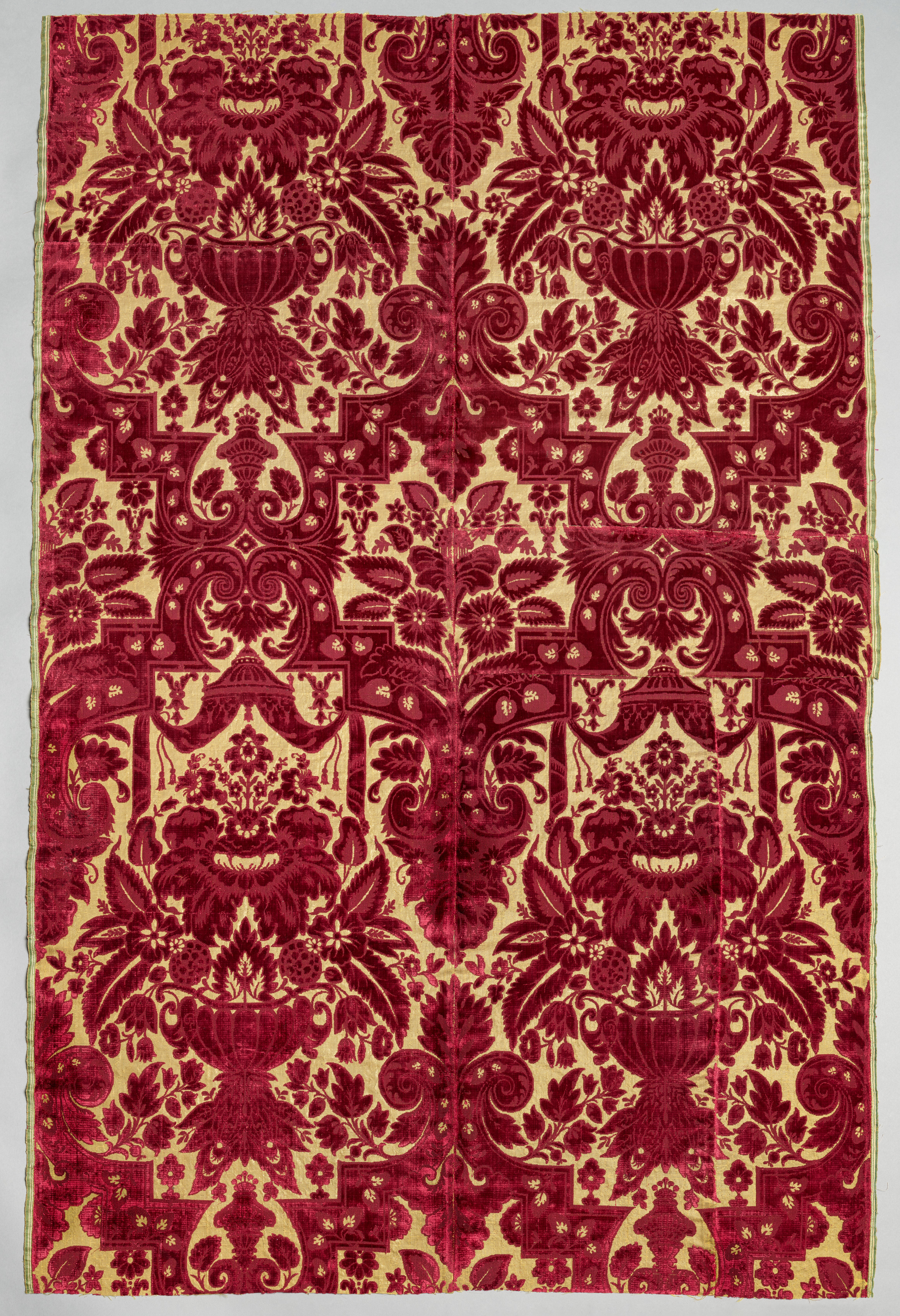
Deconstructing the Velvet Fragment: A Genoese DNA Strand for Avant-Garde Expression
At Zoey Fashion Lab, our mandate extends beyond the mere examination of textiles; we engage in a forensic and poetic dialogue with the material world. The subject of this analysis, a velvet fragment originating from Genoa, Italy, and catalogued under the reference "New DNA Strand," presents a unique paradox. It is at once a relic of a storied past and a blueprint for a radical future. This report dissects the fragment's technical, historical, and sensory properties, positioning it not as a finished product but as a living, mutable genetic code for our upcoming avant-garde collection.
Technical Provenance: The Genoese Weave
The technical classification of this fragment as velvet is, in itself, a gateway to a rich artisanal lineage. Genoa, or Genova, has been synonymous with luxurious velvet production since the 14th century, a period when the city's maritime power facilitated the exchange of silk, dyes, and weaving expertise across the Mediterranean. The fragment we possess is not a modern, machine-loomed imitation; its structure speaks of the traditional silk velvet construction, likely woven on a hand-operated loom. The pile, though worn, retains a density that suggests a high thread count, a hallmark of Genoese craftsmanship that was prized across European courts.
Micro-Structural Analysis
Under macroscopic and tactile examination, the fragment reveals a complex architecture. The ground weave, or the foundation, is a tightly spun silk, providing structural integrity and a subtle, almost imperceptible sheen. Rising from this base are loops of pile, which have been cut to create the characteristic soft, dense surface. The depth of the pile is irregular, a testament to its age and use, but this irregularity is not a flaw; it is a record of time. The color, a deep, oxidized burgundy, is not a solid hue but a spectrum of tonal variations, from a near-black crimson in the creases to a brighter, more vibrant ruby where the light catches the uncut loops. This chromatic depth is a crucial element for avant-garde design, offering a dynamic surface that shifts with movement and light.
The condition of the fragment—its frayed edges, the subtle crushing of the pile, the faint watermarks—is critical to our interpretation. We do not view these as signs of decay but as evidence of a prior life. The fragment has absorbed the gestures of its previous owners, the pressure of a hand, the drape of a garment, the weight of history. This is the "DNA" of the reference: a genetic code that encodes not just the chemical composition of silk and dye, but the intangible data of human interaction.
Historical Resonance: From Courtly Opulence to Deconstruction
Historically, Genoese velvet was a fabric of power and opulence, used for ecclesiastical vestments, royal coronation robes, and the sumptuous attire of the aristocracy. It was a material that signified wealth, status, and a connection to the exotic East. To utilize this fragment in an avant-garde context is to engage in a deliberate act of semiotic subversion. We are not replicating the opulence of the Renaissance; we are interrogating it. The velvet becomes a symbol of a system of value that we seek to dismantle and reassemble according to a new aesthetic logic.
The reference "New DNA Strand" is therefore a conceptual provocation. It suggests that the historical code of the velvet—its associations with luxury, tradition, and rigidity—can be re-sequenced. We can extract the genetic information of its tactile richness, its deep color, and its structural integrity, and splice it with contemporary ideas of impermanence, asymmetry, and raw form. The fragment is no longer a piece of a whole; it is a primordial cell from which new, unprecedented silhouettes can be grown.
Sensory and Aesthetic Properties: A Tactile Paradox
The avant-garde designer operates on the principle of the unexpected. The velvet fragment offers a perfect vehicle for this paradox. Its primary sensory property is, of course, touch. Velvet is universally associated with softness, comfort, and sensuality. However, the aged condition of this fragment introduces a counter-narrative. The surface is not uniformly plush; there are areas of hardened, matted pile, and the frayed edges are rough and irregular. This creates a bimodal tactile experience: the luxurious softness of the intact pile against the abrasive, raw texture of the damaged edges.
This duality is the core of our design language. We propose to harness this paradox by juxtaposing the velvet with stark, industrial materials. Imagine a sculptural gown where a panel of this Genoese velvet is suspended within a framework of blackened, oxidized metal, or where the velvet is deconstructed into strips and woven through a lattice of transparent, rigid polymer. The softness of the velvet would be amplified by the hardness of its counterpart, and its historical warmth would be thrown into sharp relief against a cold, futuristic aesthetic. The deep, oxidized burgundy becomes a grounding, organic force against a palette of sterile whites, metallic greys, and matte blacks.
Design Application: The New DNA in Practice
Our proposed application is not to create a garment that uses the velvet as a decorative trim. Instead, we will treat the fragment as a generative source. The irregular shape of the fragment, its tears, and its fading will be digitized and used as a template for laser-cutting and pattern-making. The resulting garments will feature asymmetric hems that mimic the fragment's frayed edges, and internal structures that echo the organic, unpredictable flow of its pile.
We envision a three-piece capsule: a deconstructed tailleur jacket, where the velvet is used as an internal lining that is deliberately exposed through cut-outs and raw seams; a floor-length asymmetrical skirt, constructed from panels of new, un-dyed silk that are overlaid with strips of the historical velvet, creating a visual and tactile rhythm; and a form-fitting bodice, where the velvet is applied in a patchwork manner, celebrating its imperfections rather than hiding them. The entire ensemble is a wearable manifesto on the beauty of decay, the value of history, and the potential for reinvention.
Conclusion: A Living Archive
The Genoese velvet fragment, under the "New DNA Strand" reference, is more than a material sample; it is a philosophical proposition. It challenges the fashion industry's obsession with the new and the pristine, arguing instead for a design methodology that embraces the archaeological and the transformative. By deconstructing its technical history and re-synthesizing its sensory properties, Zoey Fashion Lab will transform this fragment from a relic of the past into a catalyst for a future where garments are not just worn, but inhabited with the memory of their own becoming. The velvet is not dead; it is dormant, and our avant-garde process is the key to its reanimation.