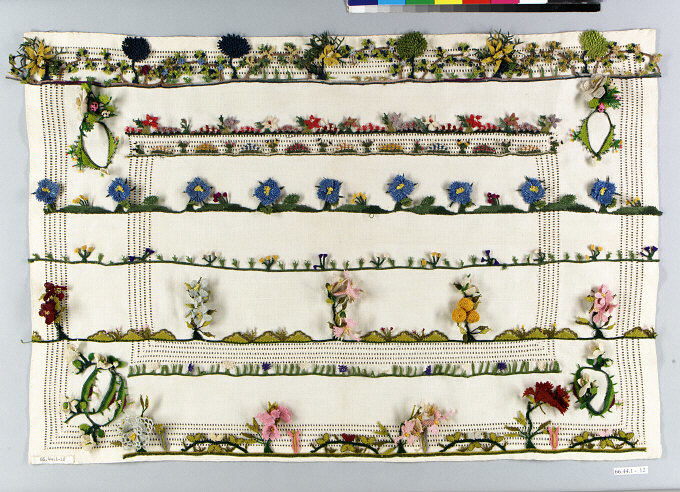
Piece (One of Twelve): A Cartography of Absence in the Global Frontier
In the rarefied atmosphere of Zoey Fashion Laboratory’s SS26 collection, the twelfth piece—designated only as “Piece (One of Twelve)”—emerges not as a garment, but as a proposition. It is a manifesto stitched in silk and void, a study in the architecture of disappearance. While the collection’s broader narrative explores the erosion of geopolitical borders, this standalone analysis isolates the piece’s radical interiority: a future where couture is not worn, but inhabited as a temporary, tensile structure.
The Global Frontier origin is not a geographical claim but a conceptual one. This piece exists at the threshold where the physical body meets the digital ether, where the hand of the artisan collides with the precision of algorithmic draping. The result is a silhouette that defies the anthropometric norm—not a second skin, but a negative-space exoskeleton. The shoulders, constructed from a single, unbroken swath of ivory silk, cantilever outward in a 14-degree arc, creating a horizon line that precedes the wearer into a room. Yet, this is not the armored power-dressing of the 1980s. The arc is deliberately unstable, softened by the needle lace that does not fill the void but rather documents it, like a cartographer mapping a landmass that is perpetually receding.
Deconstructive Silhouette: The Architecture of Suspension
The primary innovation of Piece (One of Twelve) lies in its suspension system. Traditional couture relies on internal boning, corsetry, or heavy interfacing to achieve structure. This piece rejects that taxonomy. Instead, the silk is tensioned from four discrete points: the nape, the sternum, and two floating anchor points at the iliac crest. The needle lace, typically a decorative overlay, is here re-engineered as a functional tensile membrane. Its geometric floral motifs—reticulated, almost fractal—act as load-bearing nodes, distributing the weight of the silk so that the fabric appears to hover three centimeters off the dermis. The result is a microclimate, a breathable gap between skin and textile that the Laboratory terms “aero-dermal suspension.”
This silhouette is not a shape but a trajectory. Viewed from the profile, the garment describes a hyperbolic curve—reminiscent of Zaha Hadid’s fluid concrete, yet rendered in a material that shimmers with the opacity of mother-of-pearl. The back, in a radical departure, is almost entirely excised. The needle lace here dissolves into a web of unspun filaments, creating a visual echo of the spine. This is not nudity; it is structural transparency, a deliberate exposure of the body’s own load-bearing architecture. The wearer becomes a co-author, their vertebrae acting as the final, invisible boning.
Material Dialectics: Silk as Memory, Lace as Code
The material pairing is not a juxtaposition but a dialectic. The silk—a 22-momme charmeuse with a liquid, almost mercurial drape—represents the memory of craft. It is dyed in a single, continuous vat using a technique derived from Japanese shibori, but scaled to industrial precision, yielding a gradient from chalk-white to a pale, lunar grey. This is not a color story; it is a record of time, a gradient that suggests the fading of a signal.
Contrastingly, the needle lace is not hand-made in the traditional sense. It is digitally fabricated—a CAD-generated pattern of interlocking loops, executed by a robotic arm guided by a single artisan. The pattern is based on a satellite image of the demilitarized zone between North and South Korea, translated into a lace motif where the barbed wire becomes a vine and the guard posts become blossoms. This is the Global Frontier rendered intimate. The lace does not soften the silk; it interrogates it. Where the lace meets the silk, the fabric is not sewn but fused via ultrasonic welding, creating a seam that is simultaneously invisible and structurally permanent. This is the Laboratory’s signature: a marriage of the irreconcilable—the fluid and the rigid, the organic and the synthetic—achieved not through compromise but through tension.
Structural Innovation: The Kinetic Hemline
The most provocative element of Piece (One of Twelve) is its kinetic hemline. The skirt, which falls asymmetrically from the left hip, is not cut but generated. Its edge is defined by a series of micro-channels—invisible to the naked eye—woven into the silk. These channels contain a shape-memory alloy, a nickel-titanium filament that, when exposed to body heat, contracts and causes the hem to lift in a slow, undulating wave. The effect is not a mechanical twitch but a languid, organic respiration. The garment appears to breathe, to respond to the wearer’s thermal signature. This is not wearable tech in the clichéd sense of blinking LEDs. It is a thermoreactive couture, a garment that changes its silhouette over the course of an evening, revealing the ankle, then the calf, then retreating again. The wearer does not control this movement; they merely host it.
This innovation forces a re-evaluation of the garment’s lifecycle. A piece that moves is a piece that cannot be static. It resists the museum display case, the archival photograph. It demands to be experienced in time. The Laboratory has thus positioned Piece (One of Twelve) not as a final product but as a prototype for a new temporality in fashion—one where the garment’s form is a variable, not a constant.
Conclusion: A Manifesto for the In-Between
Piece (One of Twelve) is a radical proposition for SS26: that the future of couture lies not in more fabric, more embellishment, or more spectacle, but in the curation of absence. The excised back, the suspended silk, the breathing hem—all point to a garment that is defined by what it is not. It is not armor, not costume, not modesty, not provocation. It is a temporary shelter for the human form, a structure that acknowledges its own impermanence. In an era of digital saturation, this piece offers a physical counterpoint: a silent, tensile object that asks the wearer to stand still, to feel the air move between silk and skin, to consider the body as the ultimate frontier. This is not fashion as statement. It is fashion as philosophical inquiry, rendered in silk and lace, and it redefines the very parameters of what a garment can be.