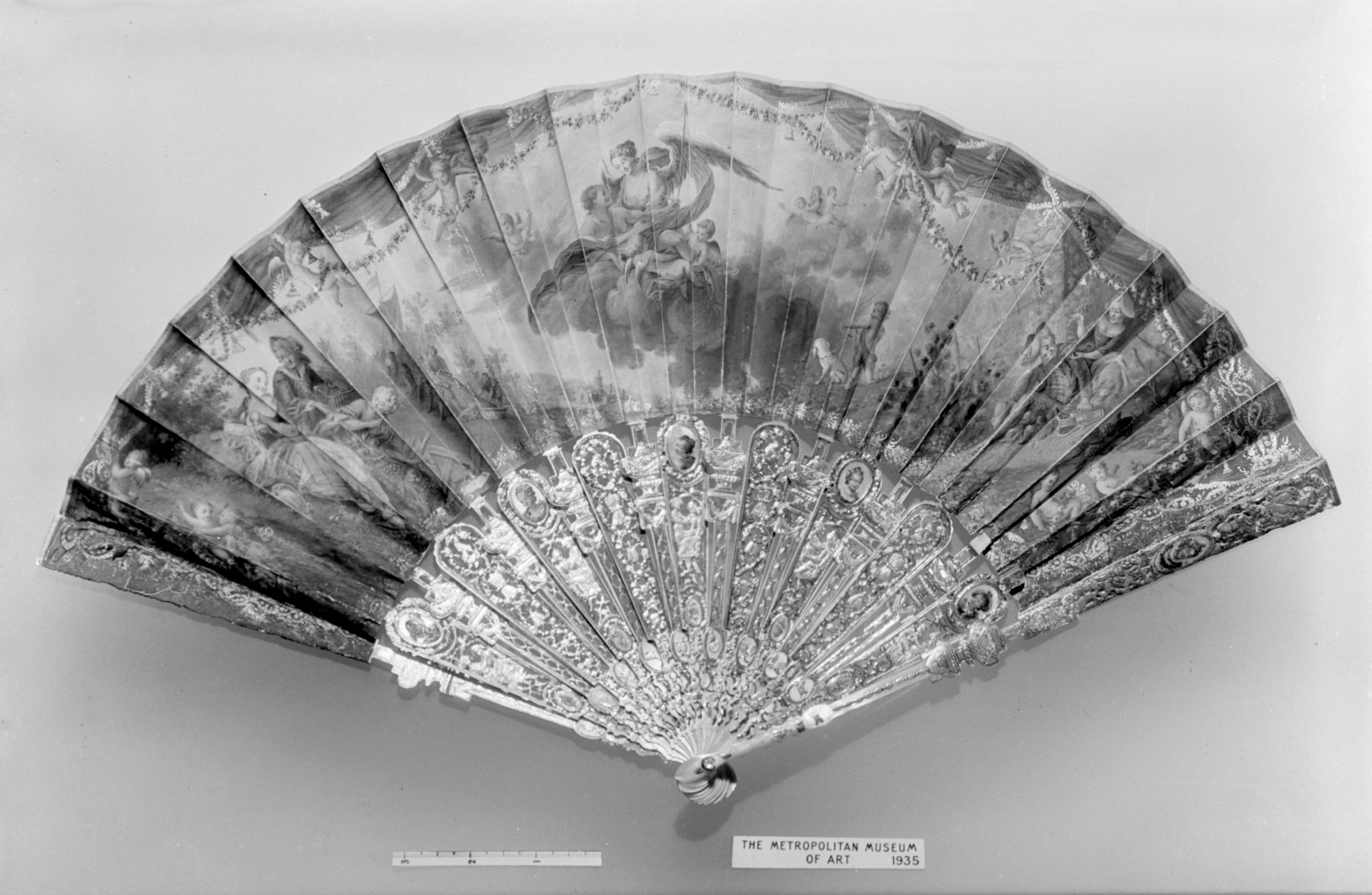
The Fan Reconstructed: An Avant-Garde Study in Kinetic Architecture for SS26
The fan, in its historical lexicon, is an instrument of concealment, a whisper of breath, a tool of courtship and climate. For Zoey Fashion Laboratory’s SS26 frontier, this object is neither relic nor accessory. It is a primary structural module—a blueprint for a new kind of wearable kineticism. Stripped of its Orientalist baggage and Victorian modesty, the fan is re-engineered as a collapsible exoskeleton, a prosthetic for the body’s own thermal and expressive needs. Our study, drawn from the Global Frontier, dismantles the fan’s pleated logic and rebuilds it as a system of tension, release, and luminous fragility. The material triad—paper, mother-of-pearl, gold leaf—is not decorative; it is a technological manifesto against the static garment.
Deconstructing the Pleat: From Surface to Skeleton
The pleat is the fan’s originary gesture, but in our laboratory, it is no longer a flat fold. We treat the pleat as a negative-space rib, a channel for air and light. The SS26 silhouette begins with a rigid, fan-inspired spine—curved, cantilevered—that projects from the shoulder blade or the hip. This spine is clad in hand-laminated mother-of-pearl strips, cut on the bias to catch refracted light, not as shimmer but as a fractured, prismatic grid. The pearl is not polished to a high gloss; it is left with its organic ridges, creating a topographic map of the ocean’s floor on the body’s surface.
From this spine, the paper unfurls. But this is not commercial paper. It is a resin-impregnated washi, treated to be both supple and structurally stubborn. It is cut into precise, laser-scored arcs that mimic the fan’s radial geometry. When the wearer moves, the paper segments do not flutter; they snap open with a deliberate, audible click, locking into place via magnetic micro-hinges embedded in the pearl. The garment is a machine for posture. The silhouette is not draped; it is deployed. A jacket becomes a half-circle of paper and pearl that extends two feet beyond the torso, a shield against both sun and gaze. A skirt unfolds from a compact waistband into a tiered, architectural cascade, each tier rotating on a hidden bearing.
The Gold Leaf Interface: Luminescence as Structural Logic
Gold leaf is typically a signifier of opulence, of surface. Here, it serves a deeper function: a conductive, reflective interface between the organic and the engineered. We apply 24-karat gold leaf not as a veneer but as a micro-thin membrane over the mother-of-pearl’s concave sections. This creates a dual-reflectivity system—one side absorbs and diffuses, the other throws sharp, solar flares. The effect is not glitter; it is controlled, directional light, akin to a heliograph. In the Global Frontier context—where climate extremes demand adaptive wear—this gold layer acts as a thermal regulator, reflecting infrared radiation while allowing the paper’s porosity to wick moisture.
The gold leaf also redefines the fan’s historical role as a communication device. We embed micro-engraved circuitry beneath the leaf, invisible to the naked eye. When the fan is opened to a specific angle, the circuit completes, triggering a subtle temperature shift in the garment’s lining. The fan becomes a manual thermostat, a pre-digital interface for the post-human body. The wearer is not passive; they are an operator.
Silhouette Studies: Three Manifestations of the Fan
Manifesto One: The Apex Collar. A high, fan-shaped collar that rises from the nape, constructed of seven overlapping pearl ribs and gold-leafed paper vanes. It does not frame the face; it replaces the neck’s silhouette with a radiating, solar disk. When closed, it folds flat against the spine, a minimalist hump. When opened, it creates a 180-degree halo, turning the head into a kinetic sculpture. The paper vanes are perforated with a pattern derived from wind-flow data, allowing air to pass through without destabilizing the structure.
Manifesto Two: The Cantilevered Train. This is a gown that attaches at the waist, its fan structure unfolding backward into a three-meter train. The train is not dragged; it is suspended on a carbon-fiber exoskeleton that mimics a fan’s ribs, with mother-of-pearl joints. The paper segments are cut in a fractal pattern, so as the wearer walks, the train appears to breathe, expanding and contracting like a gill. Gold leaf is applied only to the leading edge, creating a sharp, metallic horizon line that cuts through the air. This is not a dress; it is a moving architectural intervention in public space.
Manifesto Three: The Origami Bodice. The most radical departure. This bodice is a single sheet of paper, folded into a fan-like spiral that wraps the torso. It is held closed not by seams but by compression and tension—the paper’s own memory, set by heat treatment, and anchored by mother-of-pearl toggle pins. The wearer can partially unfold the bodice, creating a vent that exposes the sternum or the lower back. The gold leaf is applied to the interior folds, so that when the bodice opens, it flashes gold from within—a secret, internal sun. The silhouette is both rigid and mutable, a paradox of hard structure and soft release.
Structural Innovation: The Collapsible Future
The true avant-garde proposition of this study is not the visual spectacle but the collapse mechanics. Each garment is engineered to fold, in under ten seconds, into a flat, palm-sized disc. This is achieved through a system of articulated pearl hinges and memory-wire paper laminates. The SS26 wearer is a nomad of the Global Frontier, carrying their architecture with them. The fan’s historical portability—its ability to be hidden in a sleeve—is amplified to the scale of full couture.
This collapse is not a compromise; it is a new form of elegance. The act of unfolding becomes a performance, a ritual of self-construction. The garment demands the wearer’s participation, their understanding of its mechanics. It rejects the passive, ready-to-wear body. In this, the fan transcends its origin as a mere cooling device. It becomes a symbol of adaptive intelligence, a testament to the possibility that couture can be both monumental and ephemeral, both ancient and impossibly future. At Zoey Fashion Laboratory, the fan is not a motif; it is a methodology—a way of thinking about the body as a site of continuous, elegant reconfiguration.