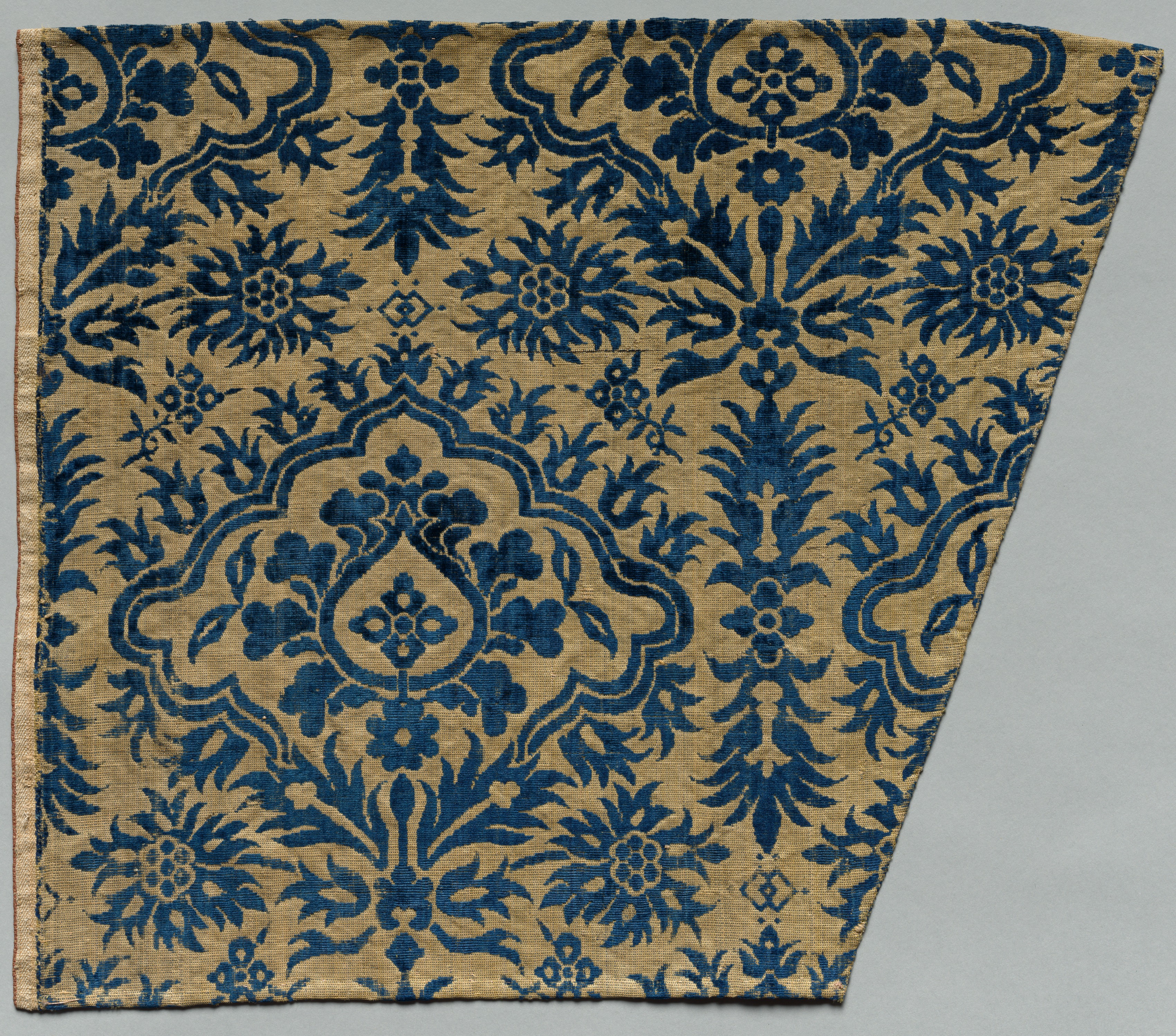
Velvet Re-Engineered: A Technical and Conceptual Analysis for Zoey Fashion Lab
At Zoey Fashion Lab, our mandate is not merely to observe fabric but to interrogate its very molecular memory. In this session, we turn our deconstructionist lens to a material of profound historical weight and tactile paradox: velvet. Specifically, we examine a 17th-century Chinese iteration of this textile, not as a relic, but as a living blueprint. Our reference point is the conceptual “New DNA Strand”—a metaphor for our methodology of splicing historical technique with avant-garde futurism. This analysis deconstructs velvet’s physical architecture, its cultural resonance, and its radical potential for the modern runway.
I. The Historical Specimen: 17th-Century Chinese Velvet
The velvet we analyze originates from the late Ming to early Qing dynasty (circa 1600–1700), a period of extraordinary textile sophistication. Unlike European velvets, which often prioritized dense, plush pile for warmth and opulence, Chinese velvet—known as Zhuanghua or Tian-tsui in certain weaves—was a study in controlled restraint. The base was typically a fine silk warp, while the pile was formed from additional silk threads, often in muted, scholarly tones: deep indigo, aged cinnabar, or undyed ecru. What distinguishes this specimen is its technique of carved pile—the deliberate shearing of certain loops to create a low, flat surface against a high, lustrous pile. This created a subtle, almost topographic relief, often depicting auspicious motifs like clouds or dragons.
From a technical standpoint, this velvet is a double-woven structure. The ground cloth is a plain or twill weave, while the pile is created by weaving over temporary metal rods. The rods are then either cut (for cut pile) or withdrawn intact (for uncut loop pile). The 17th-century Chinese artisan’s genius lies in the selective combination of cut and uncut loops within a single pass, producing a fabric that is simultaneously soft and structured, matte and glossy. This is not a fabric of loud declaration; it is a fabric of whispered hierarchy, its value residing in the precision of its construction and the depth of its shadow.
II. The New DNA Strand: Deconstructing the Technical Genome
Our “New DNA Strand” reference is not metaphorical whimsy. It is a protocol. We treat the historical velvet as a genetic sequence—a set of instructions for pile height, density, fiber twist, and weave tension. To evolve this strand, we must isolate its core components and mutate them. The original DNA consists of three primary genes: Pile Density (P), Fiber Diameter (F), and Ground Structure (G).
In the 17th-century specimen, P is high (approximately 40–60 pile threads per centimeter), F is fine (silk filament of 2–3 denier), and G is a stable, balanced weave. For an avant-garde mutation, we propose the following modifications:
- Gene P (Density): Instead of uniform density, we introduce gradient pile. Using a digitally controlled jacquard loom, we can program pile heights to shift from 2mm to 12mm across a single garment panel. This creates a topographical surface that responds to light and body movement—a fabric that appears to breathe.
- Gene F (Fiber): Replace pure silk with a hybrid filament—a co-extruded core of recycled polyester (for structural memory) wrapped in a sheath of mulberry silk (for tactility). This preserves the hand-feel of the original while adding resilience and a subtle, unexpected sheen. Alternatively, for a radical departure, we introduce thermochromic microcapsules into the fiber matrix, allowing the pile to shift color with body heat.
- Gene G (Ground): The ground weave is the skeleton. We propose a deconstructed ground—a lattice of laser-cut perforations that exposes the under-layer, creating a lace-like transparency in areas where the pile is absent. This is not a print; it is a structural void, a deliberate absence that defines the present form.
This new DNA strand is not a reproduction. It is a synthetic evolution, where the historical code is rewritten to express contemporary anxieties and desires—fluidity, impermanence, and the tension between opulence and industrial decay.
III. Avant-Garde Application: From Relic to Reactive Sculpture
How does this re-engineered velvet manifest on the body? The avant-garde is not about shock for its own sake; it is about recontextualizing the familiar to reveal its hidden truths. Our design proposal is a series of modular garments—a “second skin” that is both armor and vulnerability.
Consider a deconstructed robe that references the 17th-century silhouette but is sliced asymmetrically, with the gradient pile forming a visual vortex from shoulder to hem. The carved pile motifs, once stiff and ceremonial, are now rendered as fluid, organic growths—like moss on a ruin—using the gradient density to blur the line between pattern and texture. The laser-cut ground is exposed at the underarms and along the spine, suggesting a skeleton visible through flesh. This garment does not hide the body; it reveals a new anatomy, one where the fabric’s internal logic becomes the wearer’s external exoskeleton.
Furthermore, we introduce kinetic velvet. By integrating shape-memory alloys (nitinol) into the ground weave, specific areas of the pile can be programmed to curl or flatten in response to electrical stimulation or temperature change. A sleeve might lie flat and smooth, then suddenly ripple into a wave of high pile as the wearer raises their arm. This is not a gimmick; it is a dialogue. The garment becomes an active participant in the performance of identity—a living textile that reacts to the wearer’s micro-movements. The historical velvet’s static hierarchy is inverted; the new velvet is a democratic, reactive surface that responds to individual agency.
IV. Critical Reflection: The Paradox of Preservation
Our deconstruction is not an act of vandalism but of critical preservation. We honor the 17th-century Chinese artisan’s mastery of tension and restraint by pushing that mastery into a new domain. The original velvet was a symbol of imperial control—its production was regulated, its use restricted. Our New DNA Strand velvet is a symbol of post-industrial fluidity. It acknowledges the historical weight of the material while refusing to be subjugated by it.
The reference to a “New DNA Strand” also implies a moral responsibility. We are not merely splicing genes for aesthetic novelty; we are questioning the very ontology of fabric. Is velvet defined by its pile? By its fiber? By its cultural memory? Our answer is that it is defined by potential. The 17th-century velvet had a fixed potential—to adorn, to signify status. Our velvet has an open-ended potential—to morph, to reveal, to question. The avant-garde is not a style; it is a methodology of perpetual re-reading. In this analysis, we have read velvet not as a finished object but as a starting point for a new species of textile—one that is as comfortable in a museum archive as it is on a cybernetic runway.
In conclusion, Zoey Fashion Lab’s analysis confirms that velvet, even a 400-year-old Chinese specimen, is not a dead artifact. It is a dormant code. By extracting its technical DNA and recombining it with modern material science and conceptual rigor, we do not destroy its heritage—we amplify its legacy. The result is a fabric that is at once ancient and unborn, a true avant-garde statement that respects its origins while demanding a future. The New DNA Strand is not a thread; it is a lineage, and we are its next mutation.