The Seraphic Blueprint: Deconstructing the Divine for SS26
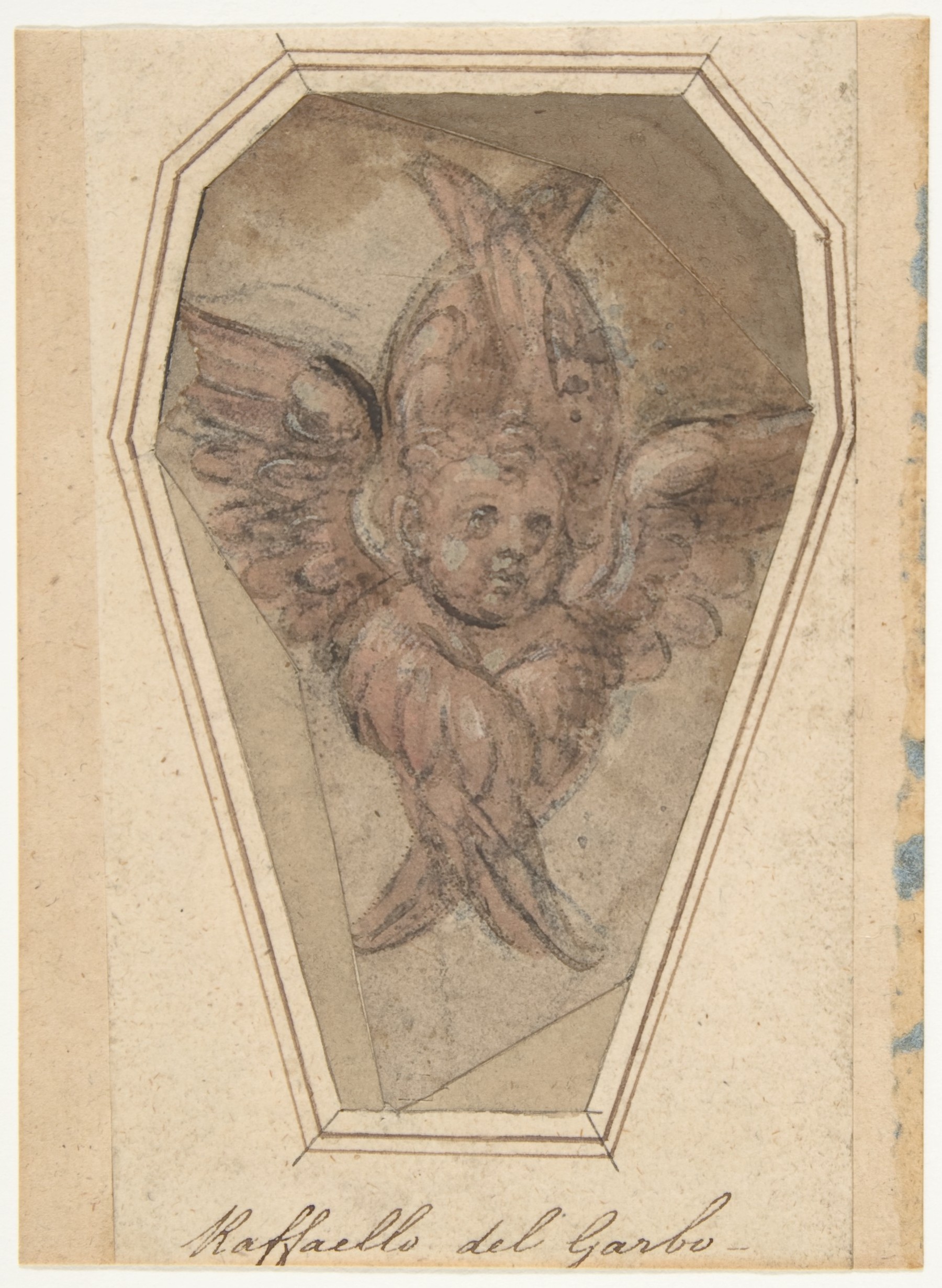
The transmutation of sacred iconography into secular, forward-facing garment architecture is a recurring obsession within the avant-garde. Yet, in the study titled A Seraph (Cartoon for an Embroidery), we are not merely witnessing a stylistic appropriation of celestial beings. The Global Frontier origin of this piece—a conceptual space where cultural boundaries dissolve into a singular, future-facing aesthetic—demands we read this not as a historical pastiche, but as a structural manifesto for SS26. The materiality of the work—pen and brown ink, brush and rose wash, white gouache over black chalk—is not incidental. It is a deliberate lexicon of tension, fragility, and permanence that directly informs our next generation of silhouettes.
Materiality as a Structural Imperative
To the untrained eye, the medium suggests a delicate, two-dimensional sketch. To the deconstructive curator, the materials are a premonition of tensile engineering. The black chalk beneath the surface acts as the foundational grid—the unseen internal skeleton of a garment. In our SS26 lab, this translates to a new class of compression-molded base layers that provide architectural support without visible seam lines. The pen and brown ink are the rigid, linear elements—the boning, the exposed zip tracks, and the carbon-fiber filament that we will weave into organza to create self-supporting ruffles. These are not decorative lines; they are load-bearing vectors.
The rose wash is the most radical proposition. It represents a fluid, transient state—a color that bleeds and diffuses. For SS26, we are engineering bio-responsive dyes that shift in hue based on body heat and ambient humidity. The rose wash is not a blush; it is a living membrane. Finally, the white gouache highlights are the points of light, the glints on a metallic surface. They dictate where our liquid-metal appliqués will be laser-fused to the fabric, creating a high-contrast, reflective topography that catches light in fragmented, cubist patterns. The pricked outlines and pouncing dust are the ultimate conceptual anchor. They speak to a process of transfer, of replication, yet the dust is a residue—a shadow of the original. In our construction, this becomes the negative-space garment: laser-cut apertures that leave a trace of the body without ever revealing it directly, a ghost of the form beneath.
Silhouette Evolution: The Asymmetrical Halo
Conventional seraphim are depicted with symmetrical, static wings. Our SS26 silhouette rejects this symmetry as a relic of classical harmony. Instead, we propose the Asymmetrical Halo: a single, dominant wing-like structure that sweeps from the left shoulder, descending into a train that is both a cape and a sculptural volume. The right side of the body remains stark, almost brutally minimal, covered in a high-neck, sheer technical jersey that mimics the black chalk’s foundational darkness. This is not balance; it is deliberate imbalance—a kinetic tension that forces the eye to travel the body in a new, choreographed path.
The wing itself is constructed from upcycled metallic organza, cut into thousands of feather-like shards. But unlike natural feathers, these are geometric, hexagonal platelets—a nod to futuristic armor. Each platelet is attached via a single, micro-engineered pivot point, allowing the entire wing to rustle and shift with the wearer’s stride. This is not a static costume; it is a kinetic sculpture. The internal structure, visible through the sheer base, is a lattice of 3D-printed nylon that mimics the pen-and-ink lines, creating a shadow of the drawing on the body itself.
Construction and Deconstruction: The Pricked Method
The traditional "pricked" method of transferring a cartoon is a violent act of creation—thousands of tiny holes that ultimately define the image. We will adopt this as a literal construction technique for SS26. Our flagship fabrication involves industrial laser-pricking of full-grain, vegetable-tanned leather. The resulting pattern is not a print; it is a perforated relief map. When placed over a backing of rose-hued, thermo-reactive silk, the body heat of the wearer causes the silk to blush a deeper pink through the holes, creating a living, breathing surface that changes with the environment. This is the Standalone Avant-Garde Study in its purest form: the garment is never finished; it is perpetually in a state of becoming.
Furthermore, the white gouache highlights are translated into ceramic-coated rivets placed at the stress points of the perforated leather. These are not merely decorative; they are the structural anchors that prevent the leather from tearing at the perforation edges. This is a fusion of haute couture hand-finishing with aerospace-grade material science. The pouncing dust—the residual black chalk powder—is trapped in micro-capsules within a transparent PVC outer shell. As the garment moves, the dust shifts, creating a permanent, internalized smudge that evokes the artist’s studio. It is a garment that carries its own history, its own process of creation, on its surface.
A Futuristic Prescription for SS26
A Seraph (Cartoon for an Embroidery) is not a reference; it is a blueprint for a new corporeal architecture. The Global Frontier context eliminates nostalgic sentimentality, allowing us to extract pure structural logic from sacred geometry. For SS26, we prescribe a wardrobe of asymmetric, single-winged outer shells; perforated, reactive leathers; and kinetic, pivot-based textiles. The color palette is stark: foundational black, the bleed of rose, and the hard, cold glint of white metal. This is not a collection of clothes. It is a series of wearable propositions about the future of the human form—a form that is no longer symmetrical, no longer passive, but actively engaged in a dialogue between the divine and the industrial. The cartoon is dead; long live the living, breathing, deconstructed seraph.