Deconstructing the Dialectic: The Black and White Elbow Gauntlet as Proto-Avant-Garde Artifact
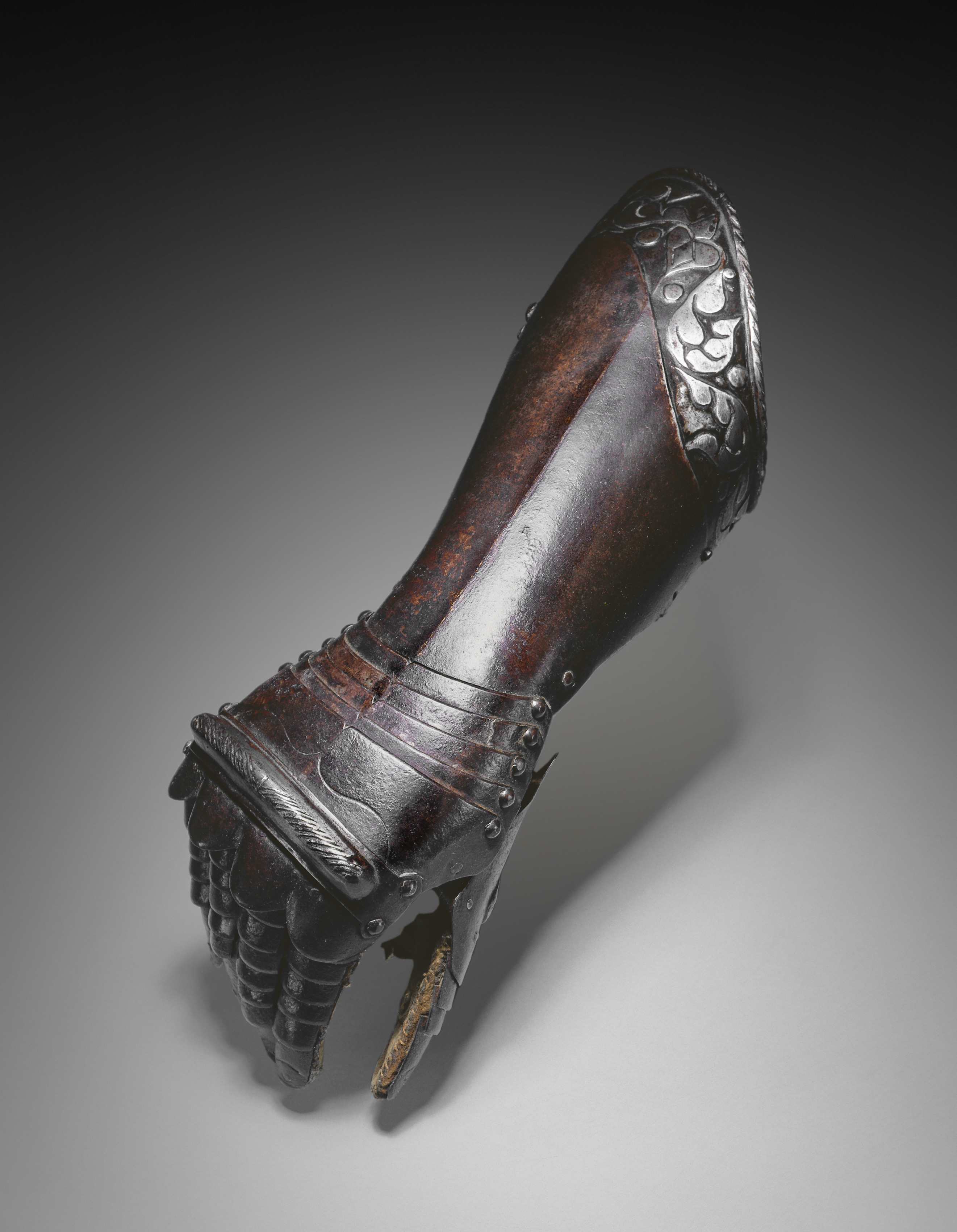
At Zoey Fashion Lab, we do not merely study historical garments; we interrogate them. We strip away the patina of time to expose the raw structural DNA that informs contemporary silhouette, materiality, and cultural provocation. The subject of this analysis—a blackened steel and leather elbow gauntlet for the right hand, originating from North Germany in the 16th century—presents a paradox. It is at once a relic of martial pragmatism and a startling prophecy of avant-garde aesthetics. Its reference code, New DNA Strand, signals our intent to re-sequence its historical coding into a living, wearable philosophy. This is not a reproduction; it is a resurrection in a new material language.
I. The Material Paradox: Blackened Steel as Void and Substance
The gauntlet’s primary technical innovation lies in its surface treatment. The steel is not merely painted or polished; it is blackened—a process of controlled oxidation that transforms the reflective metal into an absorptive void. This is the first dialectical tension. Steel, by nature, is a material of light, resilience, and cold brilliance. Blackening it subverts that inherent luminosity, creating a matte, almost organic skin that drinks in ambient light. In the dim halls of a North German armory, this would have served a tactical purpose: reducing glare and rendering the wearer less visible. But in the context of avant-garde fashion, this blackening becomes a conceptual act. It is the deliberate negation of shine, a rejection of ostentatious display in favor of a deeper, more introspective power.
Contrast this with the leather interior and articulation points. Leather is warm, pliable, and alive—it breathes and ages with the wearer. The juxtaposition is not merely functional but philosophical. The cold, inert, blackened steel exterior meets the warm, supple, organic leather within. This is the fundamental binary of protection and vulnerability, of armor and flesh. The gauntlet does not hide its construction; it celebrates the seam where these two worlds collide. For the avant-garde designer, this is a masterclass in material storytelling. The garment does not need to shout; the tactile and visual friction between steel and leather creates a silent, potent narrative of conflict and harmony.
II. Ergonomics of Power: The Right-Hand Specificity
The specification of the right hand is not an arbitrary detail; it is a critical ergonomic and symbolic choice. In 16th-century combat, the right hand was the sword hand—the hand of agency, of violence, and of decisive action. The gauntlet was not a passive shield but an active extension of the warrior’s will. Its articulated plates, riveted to allow flexion at the knuckles and wrist, were engineered for grip and maneuverability. This is not a static sculpture; it is a functional appendage designed for kinetic expression.
Translating this to avant-garde fashion, the right-hand gauntlet becomes a statement of asymmetry and intentionality. It rejects the symmetrical, balanced approach of traditional tailoring. By adorning only one hand, the designer creates a visual imbalance that draws the eye and disrupts the normative silhouette. This is a powerful tool for the modern wearer. It signifies that the wearer is not a passive participant in their environment but an active agent, ready to grasp, to create, or to defend. The gauntlet becomes a wearable manifesto of personal agency, a reminder that power is not a uniform but a specific, targeted extension of self.
III. The Elbow as Fulcrum: Redefining the Silhouette
Most historical armor focuses on the torso and head—the vital organs. This gauntlet, however, extends to the elbow, transforming a functional joint into a dramatic architectural point. The elbow is the fulcrum of the arm, the pivot that translates shoulder power into hand precision. By armoring this joint, the designer creates a new focal point in the human silhouette. The gauntlet flares slightly at the cuff, creating a bell-like or conical profile that visually elongates the forearm and adds a sense of monumental weight to the gesture.
In avant-garde terms, this is a radical re-proportioning of the body. It is not about conforming to the natural line but about augmenting and abstracting it. The elbow becomes a sculptural event, a place where the line of the arm breaks and reforms. This echoes the work of contemporary designers who use shoulder pads, bustles, or exaggerated hips to create new topographies of the body. The gauntlet, however, does this with a brutal, functionalist honesty. It is not padding or drapery; it is an exoskeletal addition that changes the very grammar of movement. The wearer’s arm becomes a weapon, a tool, and a piece of living sculpture simultaneously.
IV. Avant-Garde Re-sequencing: From Battlefield to Runway
To bring this New DNA Strand into the contemporary avant-garde, we must not mimic the original but mutate it. The blackened steel can be reimagined in high-tech polymers, carbon fiber, or even 3D-printed recycled metal, retaining the visual weight while increasing wearability. The leather can be replaced with vegan alternatives or bio-fabricated materials that offer the same supple resistance. The articulation points, once riveted steel, can be re-engineered with invisible magnetic closures or micro-hinges for silent, fluid motion.
The aesthetic intent, however, remains the same: to create a piece that is simultaneously archaic and futuristic. The gauntlet is a bridge between the medieval armorer’s craft and the digital designer’s precision. It speaks to a post-humanist sensibility where the body is not given but constructed, where clothing is not a second skin but an exoskeleton of intention. On the runway, this gauntlet would not be worn with armor. It would be paired with a deconstructed silk slip dress, or a stark, tailored suit in raw wool. The contrast would be electric—the brutal, matte blackness against the fluid, delicate fabric. It is a collision of epochs, a conversation between violence and vulnerability, between the battlefield and the boudoir.
Ultimately, the Black and White Elbow Gauntlet is not a historical artifact to be preserved under glass. It is a provocation to be worn. It challenges the wearer to consider their own agency, their own power, and their own relationship to protection and exposure. At Zoey Fashion Lab, we see it not as a piece of the past, but as a blueprint for the future—a future where fashion is not merely decorative, but a profound and deliberate statement of being. The gauntlet is no longer a weapon of war; it is a weapon of style, wielded with the same precision, intent, and undeniable presence as it was five centuries ago.