The Ontology of Insertion: A Structural Manifesto for SS26
At Zoey Fashion Laboratory, we posit that the future of couture lies not in addition, but in strategic insertion. For SS26, we deconstruct this concept from a mere technique to a core philosophical and architectural principle. "Insertion" transcends the physical act of introducing one element into another; it becomes a metaphor for the integration of the historical self into the future body, of analog craft into digital consciousness, and of the individual into the collective frontier. This collection, originating from the conceptual Global Frontier—a non-place of hybrid identities and post-geographic culture—utilizes the seemingly anachronistic medium of bobbin lace to interrogate and redefine the very fabric of contemporary existence.
Bobbin Lace: The Archetypal Code Recompiled
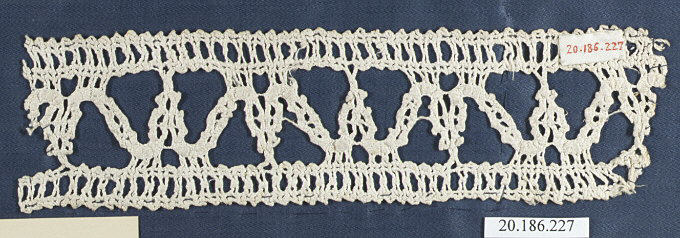
The selection of bobbin lace is a deliberate, radical act. Historically a symbol of meticulous labor and ornamental fragility, we subject it to a process of structural alchemy. We do not merely use lace; we re-engineer its DNA. Through parametric modeling, we analyze the foundational points de repère of traditional patterns, scaling nodal intersections to architectural proportions. The resulting substrates are not textiles but exoskeletal lattices, formed from biopolymer-infused threads that are heat-set into rigid, self-supporting forms. This transforms the lace from a surface application to a primary, load-bearing architecture. The delicate "voids" or "eyes" of the lace are no longer empty spaces but defined apertures—portals for light, skin, and secondary structural insertions.
Silhouette as Inhabitable Geography
The futuristic silhouette of SS26 is born from the dialectic between the rigid lace matrix and the organic body. We move beyond the garment-as-shell to propose the garment-as-habitat.
The Cantilevered Form: Inspired by bridge engineering, lace panels are engineered to project horizontally from the shoulders or hips, creating silhouettes that defy gravitational expectation. These projections are not static; they feature kinetic insertions of flexible, memory-shaped alloy filaments at key stress points, allowing for subtle, responsive movement reminiscent of organic respiration.
The Volumetric Void: Here, the body is not merely clothed but framed. A rigid lace corset may define the torso, while a vast, asymmetrical sphere of lace—a volumetric interpretation of a lace motif—extends from the hip, creating a "negative space" that the viewer's eye and ambient environment inhabit. The body becomes a curator of space, not just an occupant.
The Insertional Layering System: This is the core technical innovation. Garments are constructed as primary lattices. Into their pre-designed apertures, secondary and tertiary modules can be inserted by the wearer: slivers of recycled OLED screens displaying bio-data, capsules of climate-responsive scent, or panels of variable-opacity polymer. The wearer performs a daily, functional insertion, completing the architecture of the self. This is couture as a participatory, modular platform.
Material Dialectics and Frontier Consciousness
The Global Frontier context demands a material language of collision and synergy. The stark, mineral-like whiteness of our biopolymer lace is often juxtaposed with sudden, surgical insertions of materials sourced from this frontier: reclaimed satellite wiring woven into lace patterns, or patches of lab-grown leather fused within the lattice. This reflects a reality where the digital and the biological, the archival and the speculative, are inextricably intertwined. The fragility of the lace's history is inserted into the toughness of its future, creating a tangible narrative of resilience.
Color is treated as an inserted agent. Rather than dyed, the lace undergoes localized molecular bonding with pigments, creating hyper-saturated zones that appear to be digital projections or topological markings on a map of the body. A gradient does not flow; it is interrupted and re-initiated by the structural nodes of the lace, visualizing the concept of data packets traversing a network.
Conclusion: The Inserted Self
The SS26 collection, "Insertion," is Zoey Fashion Laboratory's definitive statement on post-artisanal couture. It is a rigorous, standalone study in how to build from the inside out. By inserting monumental scale into a micro-craft, inserting structural duty into decorative code, and inserting user agency into fixed form, we propose a new paradigm. The garment is a host architecture, awaiting the final, most critical insertion: the intelligent, evolving human body. In this symbiotic relationship, bobbin lace ceases to be a relic and becomes the blueprint for a future where beauty is defined by precision, adaptability, and the courageous act of embedding one's narrative into the very framework of what is worn. This is not fashion as spectacle, but as speculative infrastructure for the frontier self.