The Lacquered Architecture of Duality: Deconstructing the Inrō for SS26
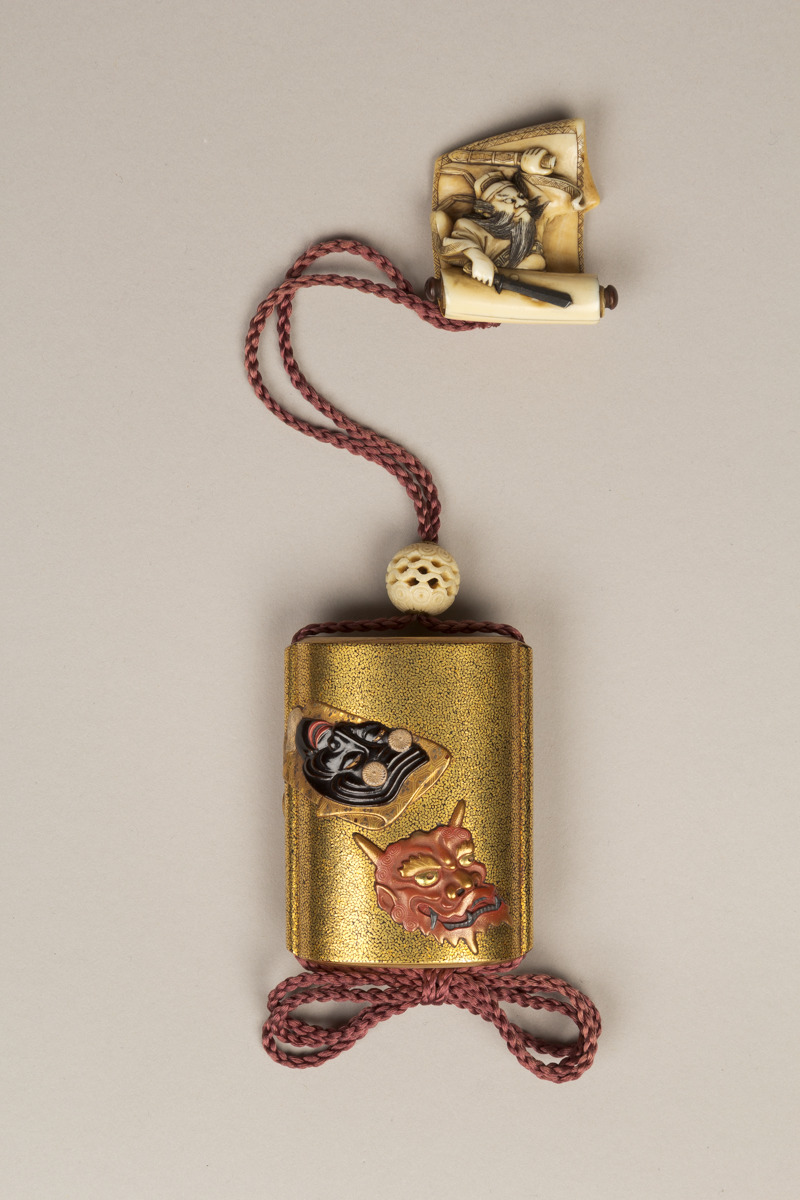
The Inrō, a diminutive Japanese accessory of the Edo period, is traditionally understood as a utilitarian object—a portable seal or medicine container suspended from the obi. Yet, within the avant-garde purview of Zoey Fashion Laboratory, this historical artifact transcends its functional origins to emerge as a blueprint for radical, futuristic garment architecture. The specific specimen in question—a two-part sheath of lacquered wood, adorned with gold, silver, and polychrome takamaki-e and hiramaki-e, punctuated by carved lacquer and ceramic inlay on a hirameji ground—offers a profound lexicon for SS26. It is not merely an object of beauty; it is a manifesto on modularity, surface tension, and the performative mask of identity. For the contemporary designer, the Inrō is a masterclass in micro-engineering applied to the macro-scale of the human silhouette.
Deconstructing the Sheath: Modularity as a Structural Imperative
The most compelling innovation of the Inrō is its two-part sheath construction. This is not a single, monolithic form but a system of interlocking volumes, designed to be opened, separated, and reassembled. For SS26, this translates directly into a new paradigm of modular couture. We must abandon the notion of a fixed garment and embrace the concept of the 'wearable chassis.' Imagine a high-fashion bustier or a sculptural outer shell constructed from two distinct, articulated panels that connect via precision-engineered, magnetic or mechanical locking mechanisms—a direct homage to the Inrō's wooden clasp. This allows the wearer to alter the garment's volume and silhouette in real-time, shifting from a compressed, columnar form to a dilated, architectural one. The future of fashion is not in seams but in connection points; the Inrō teaches us that the gap between components is as critical as the components themselves.
This structural logic extends to the materiality. The use of lacquered wood over a core suggests a composite approach to garment construction. We should explore rigid, yet lightweight, bio-resin or carbon-fiber lattices that mimic the tensile strength of wood, coated in a high-gloss, almost liquid-metal finish. The hirameji ground—a base of irregular gold and silver flecks—offers a textural directive for the fabric itself. For SS26, envision a technical jersey or neoprene embedded with metallic micro-discs that catch and refract light unpredictably, creating a living, kinetic surface. The garment becomes a reactive skin, not a passive covering.
The Dramaturgy of Surface: Takamaki-e and the Layered Gaze
The decorative program of the Inrō, specifically the high-relief takamaki-e, introduces a critical concept: tactile dimensionality. Unlike flat printing, takamaki-e builds up layers of lacquer and metallic dust to create a sculpted, three-dimensional relief on a miniature scale. Translating this to SS26 demands a revolution in textile manipulation. We must move beyond simple embroidery and toward 'garment topographies.' This involves using high-frequency welding, thermoforming, and 3D-printed polymer appliqués to build raised, topographical maps on the surface of the fabric. The design should not be an image; it should be a landscape. The Noh masks depicted—with their exaggerated expressions of rage, melancholy, and serenity—are rendered in this raised format, turning the Inrō into a micro-theater of emotional extremes.
For the avant-garde silhouette, this translates into garments that feature focal, sculptural bosses at the shoulder, hip, or nape of the neck. These are not mere embellishments but structural elements that distort the natural line of the body, creating the exaggerated, futuristic proportions that define the collection. The gold and silver takamaki-e patterns, often depicting swirling clouds or dynamic demon faces, become the basis for asymmetric, spiral seam lines that wrap the torso, visually fragmenting the wearer's form. The ceramic inlay adds another layer of dissonance—a hard, vitreous element embedded within a softer, lacquered field. This juxtaposition is key: SS26 will feature garments that combine supple, liquid-like drapes with rigid, ceramic or metallic inserts, creating a dialogue between the fluid and the fixed.
Shōki the Demon Queller and the Ojime: The Mask as Interface
The inclusion of the ivory netsuke, depicting Shōki the Demon Queller, and the openwork ojime bead, is not ancillary. These components are the conceptual anchors of the entire composition. Shōki, a mythical figure who subdues demons, represents the act of controlled chaos. In the context of couture, he embodies the designer's role: to take the wild, unstructured energy of avant-garde creativity and 'quell' it into a disciplined, wearable form. The netsuke is the counterweight to the Inrō's volume, a dense, figurative anchor that balances the overall mass. For SS26, this suggests a renewed focus on counterbalancing accessories—not merely jewelry, but functional weights and architectural appendages that alter the garment's drape and movement. Consider a heavy, sculpted shoulder piece that pulls the fabric into a dramatic, diagonal tension, or a weighted hem that creates an unexpected, gravity-defying silhouette.
Furthermore, the Noh masks themselves are the ultimate signifier of transformation. Noh theater is a performance of layered identities, where the mask is not a disguise but a revelation of a deeper, spiritual state. The Inrō, by depicting these masks, becomes a portable repository of personas. The SS26 wearer is not a static figure but a mutable entity. Therefore, the garments must facilitate this metamorphosis. We propose a series of 'second-skin' hoods, visors, and detachable collars that reference the Noh mask's architecture—not to mimic Japanese tradition, but to abstract its essence into futuristic, cybernetic forms. These elements will be constructed from lacquered, translucent polycarbonate and brushed aluminum, serving as functional interfaces that can be raised or lowered to shift the wearer's perceived identity. The openwork of the ojime bead, a lattice of negative space, inspires the laser-cut perforations in these visors, allowing for breathability while creating a mesmerizing play of light and shadow on the face—a digital-age reinterpretation of the mask's expressive power.
Synthesis: A Silhouette for the Post-Human Era
The definitive avant-garde analysis of this Inrō for SS26 is not about historical replication. It is about extracting a structural and philosophical DNA. The two-part sheath gives us modularity. The takamaki-e gives us relief and textural depth. The hirameji ground gives us a metallic, kinetic surface. The Noh masks give us the performative interface. The netsuke and ojime give us counterbalance and negative space. Synthesizing these elements, the Zoey Fashion Laboratory SS26 silhouette is one of fragmented armor—a series of independent, sculptural panels that articulate with the body's movement, connected by visible, mechanical joints. It is a silhouette that is simultaneously heavy and light, rigid and fluid, ancient and futuristic.
This is not fashion as clothing; it is fashion as wearable architecture. The garments will not simply drape; they will enclose, project, and define space. They will be engineered to be disassembled and reconfigured, allowing the wearer to become the curator of their own form. The Inrō, a tiny object of exquisite craftsmanship, thus becomes a monumental source code for a new era of couture—one that prioritizes intelligence, adaptability, and a profound, almost ritualistic engagement with the act of dressing. The future is not a single garment; it is a system. And that system, as this 18th-century accessory so brilliantly demonstrates, is built upon the elegant, powerful interplay of distinct, autonomous parts.