Deconstructing the Luminous Threshold: A Technical and Conceptual Analysis of a Central Asian Diamond Textile
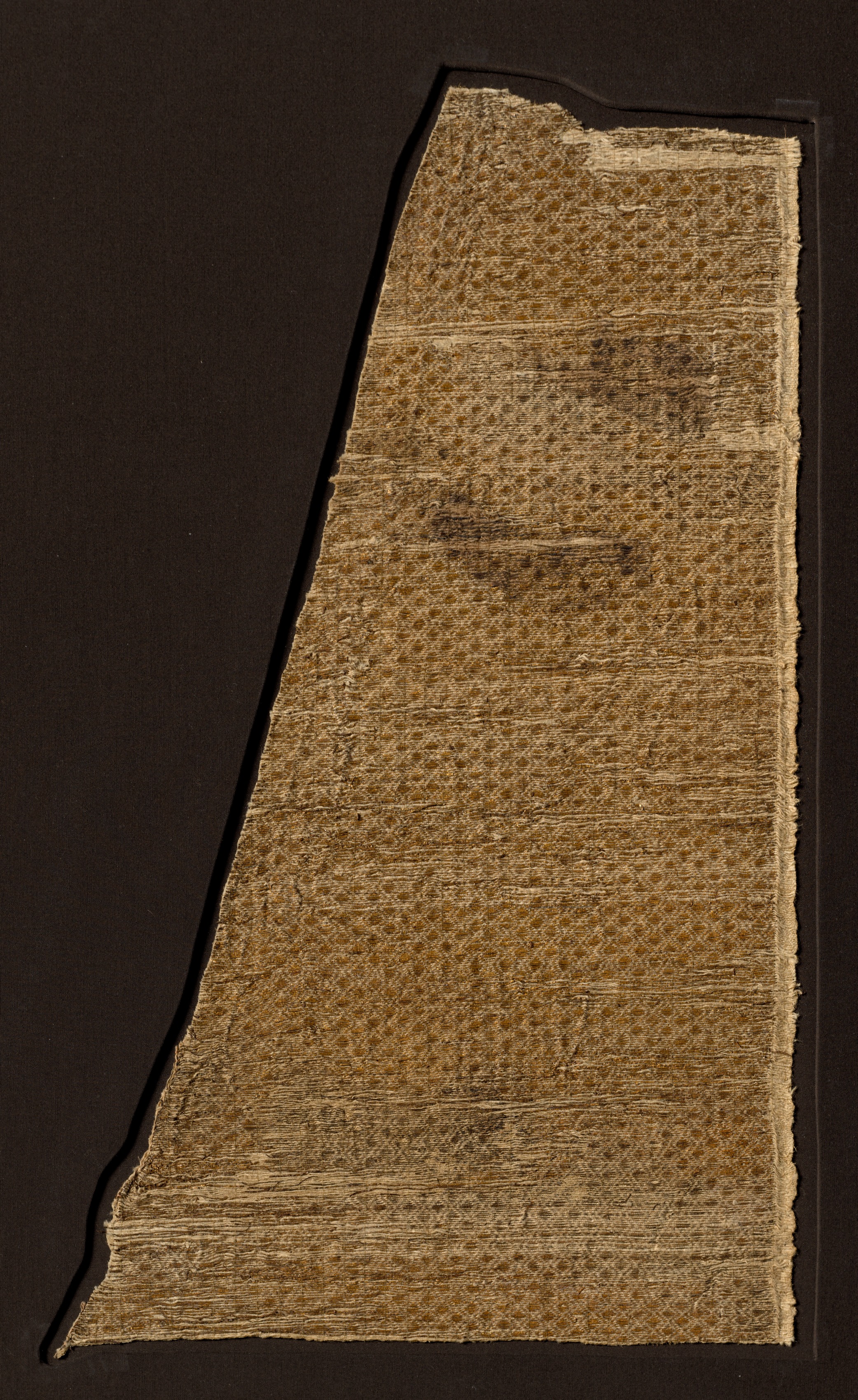
At Zoey Fashion Lab, our mandate extends beyond the mere cataloging of historical artifacts. We engage in a form of archaeological futurism—excavating the material past to unearth the blueprints for a radical sartorial tomorrow. The subject of this analysis, a Central Asian textile woven with silk, cotton, and silver thread, presents a compelling paradox. Its technical structure—a humble tabby weave augmented by supplementary weft—belies the profound optical and conceptual complexity of its diamond motif. This is not simply a fabric; it is a crystalline lattice of cultural memory, a proto-pixelated screen that predates the digital age. Our deconstruction focuses on three primary axes: the material dialectic of its fibers, the structural geometry of its weave, and the temporal resonance it evokes within the avant-garde framework.
I. The Material Dialectic: Opposing Forces in a Single Plane
The genius of this textile lies not in uniformity but in the deliberate friction between its constituent materials. The silk ground provides a foundation of liquid, almost volatile, luminosity. Its natural sheen catches light in a way that suggests movement, a shimmering mirage upon which the pattern is built. In stark contrast, the cotton—likely used in the supplementary weft for structural integrity—offers a matte, absorptive counterpoint. This is not a flaw but a deliberate design strategy. The cotton acts as a visual "silencer," dampening the silk's reflective chatter to create a field of controlled tension.
The introduction of silver thread elevates this binary into a trinity of material expression. Silver, unlike gold, does not simply reflect; it mirrors. It creates a fleeting, interactive surface that momentarily captures the viewer's own image before dissolving it. In an avant-garde context, this is a profoundly conceptual act. The garment is no longer a passive object but a relational interface. The silver thread functions as a series of micro-mirrors, fracturing the wearer's silhouette and challenging the monolithic notion of the human form. This aligns with our lab's philosophy of deconstructive identity, where the garment is a tool for destabilizing, rather than affirming, the self.
II. Structural Geometry: The Tabby as a Canvas for the Diamond
Technically, the fabric employs a tabby weave—the most elementary interlacing of warp and weft. This choice is deceptively avant-garde. By utilizing the most basic ground structure, the artisan created a neutral, rhythmic grid. This grid is not a limitation but a generative matrix. Upon this humble checkerboard, the supplementary weft introduces the diamond motif. These diamonds are not woven in; they are laid over the ground, creating a raised, sculptural relief.
The diamond shape itself is a masterclass in geometric tension. It is not a static square but a dynamic, pointed form that directs the eye diagonally, creating a sense of perpetual motion. In the context of Central Asian design, the diamond often represents the "four quarters" of the universe or the "world mountain." However, for Zoey Fashion Lab, we reinterpret this as a symbol of systemic rupture. The diamond becomes a vector, a sharp incision into the fabric's surface that disrupts the monotony of the tabby. The use of silver in these diamonds creates a moiré effect—as the fabric moves, the interaction between the static cotton/silk ground and the moving silver weft produces a shimmering, almost hallucinatory vibration. This optical instability is precisely what we seek in our designs: a garment that never appears the same twice.
III. Temporal Resonance and Archive Resonance
The provided reference, Archive Resonance, speaks of "器物与绘画" (artifacts and paintings) as "无声见证" (silent witnesses) to "文化碰撞与美学交融" (cultural collision and aesthetic fusion) during the 16th and 17th centuries. This textile is a perfect embodiment of that concept. The use of silver thread alongside silk and cotton is not a purely local invention; it reflects a confluence of trade routes, imperial patronage, and nomadic ingenuity. The silver may have come from the West, the silk from the East, and the cotton from the agrarian south. The textile is thus a portable archive of global interaction, woven into a wearable form.
For the avant-garde designer, this temporal resonance is a critical tool. We are not nostalgic for the past; we are mining it for disruptive potential. The diamond pattern, when scaled up or distorted, can become a brutalist graphic on a modern coat. The silver thread, when used in irregular clusters, can simulate digital glitches. The tabby ground, when left partially unfinished, can expose the raw structural bones of the garment, echoing the Japanese concept of wabi-sabi but with a sharper, more aggressive edge.
IV. Avant-Garde Application: From Artifact to Interface
Our laboratory proposes a radical reinterpretation of this textile. We envision a garment that is not simply cut and sewn but programmed. The diamond motifs are treated as data points. By manipulating the density of the silver supplementary weft, we can create zones of high reflectivity (for "active" areas of the body) and zones of matte absorption (for "passive" areas). This creates a visual language of the body's kinetic energy.
Furthermore, the historical technique of supplementary weft allows for thread-level manipulation. We propose a design where the silver threads are not continuous but are broken, floating, and allowed to fray. This creates a "deconstructed pixelation," where the diamond motif dissolves into a shower of metallic particles as the wearer moves. This is a direct challenge to the pristine, finished look of traditional luxury. It is a statement on the fragility of value and the beauty of entropy.
Finally, the material conflict between silk and cotton is amplified. We suggest a treatment where the silk is intentionally distressed to create a puckered, organic texture, while the cotton is left stark and rigid. The silver thread then acts as a "suture," attempting to bind these opposing forces together but ultimately failing, leaving visible gaps. This is a metaphor for the contemporary condition—a world of fragmented identities and irreconcilable differences, held together by a fragile, shimmering thread of hope.
Conclusion: A Luminous Anomaly
This Central Asian textile is not a relic to be preserved under glass. It is a living algorithm, a set of instructions for creating texture, light, and meaning. Its combination of simple tabby and complex supplementary weft, its dialectic of silk and cotton, and its unifying silver thread all point to a sophisticated understanding of material psychology. For Zoey Fashion Lab, it serves as a foundational text. It proves that true innovation is not the invention of new materials, but the radical recontextualization of ancient ones. The diamond is no longer a symbol of the past; it is a lens through which we project a fractured, shimmering, and deeply complex future. The garment we will build from this analysis will not be a costume; it will be an instrument of perceptual disruption—a wearable threshold between the archive and the avant-garde.