Deconstructing the Velvet Fragment: A New DNA Strand for Avant-Garde Expression
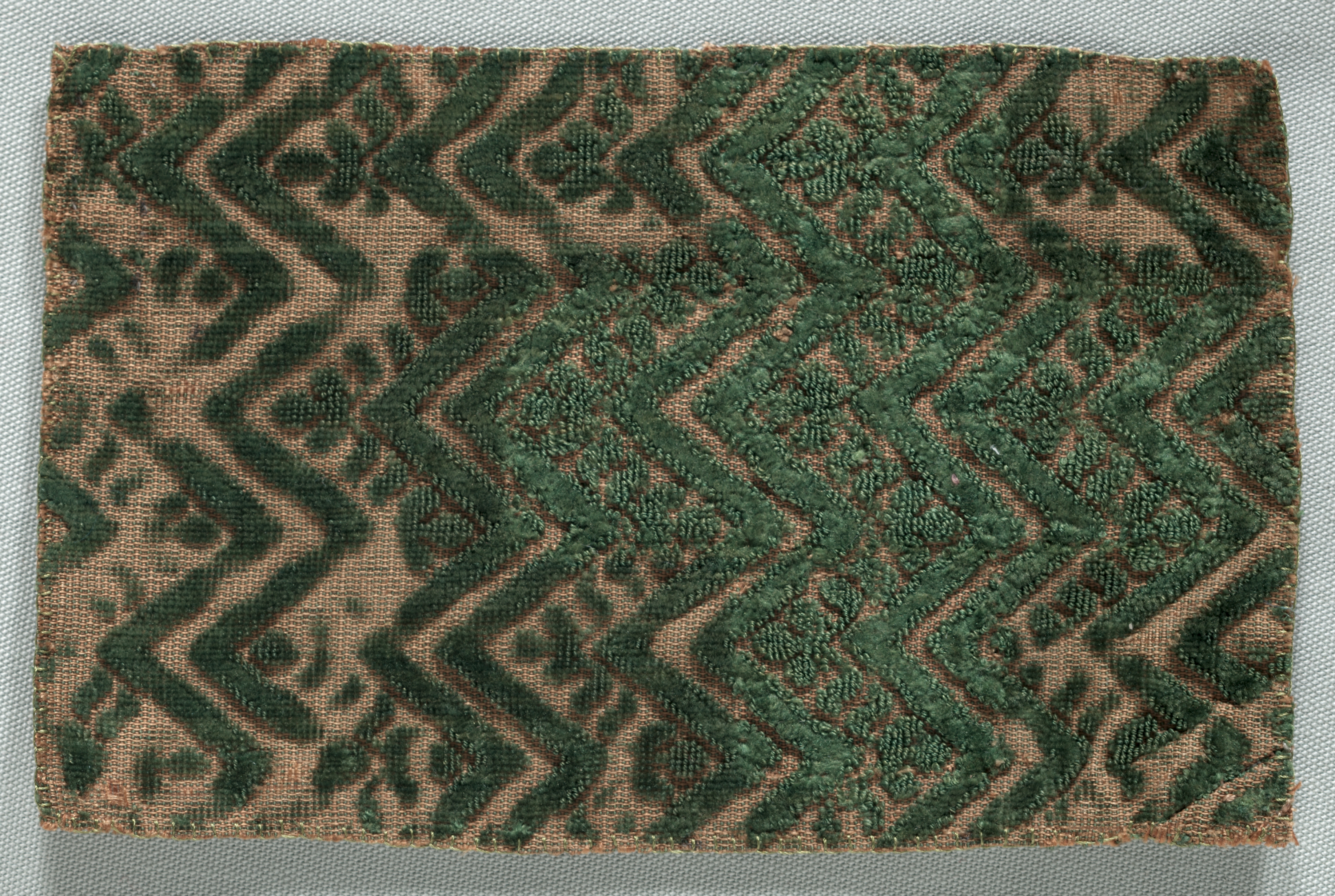
At Zoey Fashion Lab, our mandate extends beyond the mere preservation of historical textiles. We are engaged in a process of fabric deconstruction—a forensic and poetic excavation of material memory to extract the genetic code that can inform future silhouettes, textures, and conceptual narratives. Our current subject, a velvet fragment originating from Italy in the late 16th to 17th century, presents a formidable challenge and an exhilarating opportunity. This is not merely a piece of cloth; it is a New DNA Strand—a repository of opulence, labor, and structural intelligence that, when decoded, offers a radical blueprint for avant-garde design.
I. The Historical Matrix: Reading the Fragment’s Original Genome
To deconstruct is to first understand the original construction. This Italian velvet, likely produced in the bustling textile centers of Florence, Genoa, or Venice, is a testament to the Renaissance and early Baroque periods. The fragment’s physical properties—its dense pile, its lustrous sheen, and its intricate pattern—speak to a specific technological and economic reality. Velvet was the currency of power, reserved for ecclesiastical vestments, royal court attire, and aristocratic interiors. The original genome of this fabric is encoded with:
- Material Hierarchy: The use of silk filament, often with a ground weave of linen or wool for structure, created a surface that absorbed and reflected light with an almost liquid quality. This was a deliberate manipulation of light to signify wealth and divine favor.
- Structural Complexity: The technique of voided velvet, where the pile is cut away to reveal the ground, or ciselé velvet, where the pile is cut and uncut to create contrasting textures, demonstrates a high degree of artisanal mastery. This is not a simple weave; it is a three-dimensional sculptural relief in fiber.
- Symmetry and Order: The patterns—typically pomegranates, thistles, or acanthus leaves—were rendered in strict, mirrored symmetry. This reflected a worldview of cosmic order, divine hierarchy, and controlled nature. The repetition was not monotonous but rather a meditative affirmation of stability.
This fragment, therefore, is a fossilized record of a society that valued permanence, luxury, and ritualistic display. Its weight, its drape, and its tactile insistence demand a certain posture from the wearer. It is a fabric that commands space.
II. The Deconstruction Protocol: Unraveling the Threads of Convention
Our laboratory protocol for this fragment is not to replicate it, but to mutate it. We identify the core structural and conceptual threads—the DNA—and then introduce deliberate errors, cuts, and recombinations. The goal is to extract the essence of the velvet’s soul (its opulence, its density, its theatricality) while discarding its historical constraints (its symmetry, its formality, its association with static power).
The deconstruction occurs on multiple levels:
- Surface Disruption: We begin by interrogating the pile. The pristine, uniform surface of the 17th-century velvet is a lie—a perfected facade. Our process involves distressing, shearing, and burning sections of the pile to create a topographical map of decay. This is not vandalism; it is a revelation of the underlying warp and weft, exposing the skeleton of the fabric. This technique, which we call Décadence Stratifiée, transforms the velvet from a symbol of static wealth into a narrative of entropy and resilience.
- Pattern Subversion: The symmetrical, ordered motifs are the most resistant to change. We digitally scan the fragment and then use algorithmic distortion to break the symmetry. A pomegranate is stretched, fragmented, and multiplied into an organic, almost viral pattern. The result is a print that references the original but feels like a hallucination—a baroque pattern viewed through a cracked lens. This new pattern is then applied to the deconstructed velvet, creating a dialogue between the physical texture and the visual illusion.
- Structural Re-engineering: The weight of historical velvet is both its strength and its limitation. For avant-garde application, we re-engineer the fabric’s structure. We use laser-cutting to remove the pile in specific geometric grids, creating a mesh-like effect that retains the velvet’s lushness in certain areas while revealing a translucent, almost skeletal lattice in others. This porous velvet allows for a play of skin and shadow, subverting the fabric’s traditional role as a totalizing cover.
III. The New DNA Strand: Synthesis for the Avant-Garde
After deconstruction, we enter the synthesis phase. The extracted DNA—the sensuality of the pile, the depth of the color, the architectural presence—is recombined into new forms that are inherently avant-garde. This is not about creating a costume for a Renaissance fair. It is about creating a garment that exists in the present, yet carries the ghost of the past within its folds.
Our synthesis produces three distinct archetypes from this single fragment:
- The Deconstructed Gown: Imagine a bias-cut column dress where the front is pristine, dark, and impeccably draped in the original velvet. The back, however, is a chaotic masterpiece—raw edges, exposed seams, and panels of the laser-cut, porous velvet. The garment is a study in duality: the historical façade of the front versus the fragmented, vulnerable interior of the back. This is a commentary on the performative nature of identity and the hidden labor behind opulence.
- The Architectural Bodice: Using the re-engineered, stiffened velvet, we construct a sculptural bodice that does not conform to the body but rather creates a new geometry around it. The velvet is molded into sharp, asymmetric peaks and valleys, reminiscent of origami or brutalist architecture. The original softness is replaced with a rigid, almost armor-like quality. This piece challenges the wearer’s movement and posture, forcing a new physical dialogue with the fabric.
- The Zero-Waste Cape: We utilize every scrap of the deconstructed velvet, including the frayed edges and the laser-cut remnants, to create a voluminous, modular cape. The piece is assembled using visible, structural stitching—a deliberate rejection of the invisible finishing of haute couture. The cape can be worn in multiple configurations, transforming from a severe, monastic silhouette to a chaotic, draped shawl. This approach honors the material’s value by ensuring no waste, while simultaneously celebrating its deconstruction as a design feature.
IV. Conclusion: The Fragment as Future
The Italian velvet fragment is not an artifact to be worshipped behind glass. For Zoey Fashion Lab, it is a catalyst for radical innovation. By deconstructing its historical, technical, and aesthetic codes, we have extracted a new genetic sequence that allows us to design garments that are simultaneously luxurious and rebellious, historical and futuristic, heavy and ethereal.
This project proves that the past is not a prison but a palette of possibilities. The velvet’s DNA, once thought to be immutable, is revealed to be highly adaptable. Our avant-garde garments are not a rejection of the past; they are a mutation of it—a new strand that carries the memory of opulence into a future of deconstructed, expressive, and deeply conceptual fashion. The fragment lives on, not as a relic, but as a living, evolving organism within our contemporary design ecosystem.