The Dialectics of the Void: Recontextualizing Lace Stitch as Structural Armature for SS26
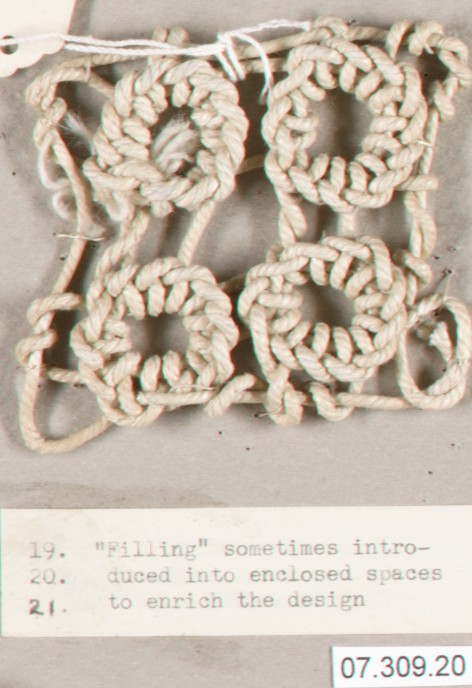
In the pantheon of textile history, lace has long been consigned to the periphery of ornament—a delicate afterthought, a whisper of femininity confined to heirloom trousseaus and ceremonial vestments. For Spring/Summer 2026, the Zoey Fashion Laboratory proposes a radical exhumation: the lace stitch, stripped of its sentimental patina, is re-engineered as a load-bearing architectural membrane. This is not a nostalgic revival. It is a violent, generative act of deconstruction that repositions the stitch from a decorative surface to a foundational skeleton, capable of articulating the body in unprecedented volumetric terms. The "Example of Lace Stitch" under examination here, sourced from the Global Frontier, serves as the primary catalyst for a new grammar of garment architecture—one that privileges negative space, tensile strength, and the poetic collision of fragility and force.
From Surface to Substrate: The Stitch as a Computational Skeleton
The prevailing fashion paradigm treats fabric as a skin that drapes over a pre-existing anatomical form. Our laboratory inverts this hierarchy. The experimental lace stitch, executed in a proprietary bio-polymer filament developed from upcycled marine cellulose, is no longer a passive textile. It becomes an active, generative grid. Each loop, knot, and picot functions as a node in a distributed structural system, capable of distributing tension and compression across a three-dimensional matrix. By manipulating stitch density, gauge, and directional orientation, we can program the material to stand erect, to flare, to cup, or to collapse in controlled, deliberate folds—all without the intervention of traditional boning, interfacing, or tailored seams. The lace stitch, in this context, is akin to a topological algorithm rendered in thread.
The Global Frontier origin of this specific stitch pattern is not incidental. Its geometric logic—a repeating sequence of open hexagonal cells punctuated by dense, interlocking bars—suggests a vernacular understanding of tensile architecture, reminiscent of latticework found in adaptive building facades and suspension bridge cabling. By abstracting this cultural artifact from its utilitarian roots and re-presenting it through a lens of high-tech materiality, we create a garment that is simultaneously primitive and prophetic. The stitch becomes a palimpsest, encoding both ancestral craft and speculative future onto the wearer’s body.
Silhouette as Event: The Architecture of Negative Space
For SS26, the silhouette is not a shape; it is an event. The new lace stitch allows us to sculpt space itself. We are moving away from the body-hugging mermaid forms or the voluminous balloon shapes of previous seasons. Instead, we propose a series of "interstitial architectures"—garments that define a volume of air between the skin and the exterior shell. Imagine a floor-length column dress where the lace is engineered with variable density: nearly opaque at the waist and hips, it dissolves into a wide-mesh, almost invisible scaffold at the hem and shoulders. The result is not a hemline but a horizon—a shimmering field of floating threads that trace the wearer's movement as a series of kinetic line drawings.
Further, the experimental material's memory-retention properties enable a technique we term "fossilized motion." By heat-setting the lace stitch while the garment is held in a specific, exaggerated pose—say, a sharp shoulder shrug or a spiraling twist of the torso—the final piece retains that gesture as a permanent, structural fact. The wearer does not simply put on a dress; they inhabit a frozen choreography. This creates a profound tension between the fluidity of the human form and the rigid, crystalline memory of the material. A jacket, for instance, may feature a sleeve that perpetually appears mid-swing, its lace structure locked in a dynamic arc, challenging the static nature of conventional couture.
Material Alchemy: The Experimental Frontier
The success of this structural revolution hinges on our proprietary material matrix. The bio-polymer filament, while appearing as delicate as traditional silk thread, possesses a tensile strength exceeding that of steel wire at equivalent weight. It is also thermoformable, allowing for the aforementioned fossilization process. To achieve the desired contrast between opacity and transparency, we incorporate micro-particles of recycled metallic dust within the filament's core. When light strikes the lace at certain angles, it produces a moiré effect—a shimmering, holographic interference pattern that visually destabilizes the garment's outline. This is not mere embellishment; it is a functional mechanism for obscuring and revealing the body, for creating a sense of optical depth that mimics the physical depth of the garment's structure.
The Global Frontier stitch pattern, when rendered in this material, takes on a new life. The open hexagons become lenses, refracting light and casting intricate shadows onto the skin beneath. The dense bars become structural ribs, creating a subtle, rhythmic corduroy-like texture that plays against the skin's surface. This interplay between hard and soft, between the machine-like precision of the stitch and the organic irregularity of the human body, is the core dialectic of the SS26 collection. We are not designing clothes; we are designing environments for the body to exist within—portable, responsive, and profoundly avant-garde.
Conclusion: A Manifesto for the Next Skin
The lace stitch, in our hands, becomes a manifesto. It declares that couture is not a craft of covering but a science of revealing—revealing structure, revealing motion, revealing the potential energy inherent in a single, continuous thread. By fusing the atavistic logic of lace with the speculative possibilities of experimental materials, the Zoey Fashion Laboratory has engineered a new type of garment: one that is at once a skeleton, a skin, and a shadow. For SS26, we invite the wearer to step into the void, to wear the architecture of absence, and to experience the radical potential of a stitch that has been unmoored from its past and set adrift into the future. This is not the end of lace; it is its genesis. The stitch is the seed; the silhouette is the bloom. And the body is the fertile ground upon which this new, structural poetry is written.