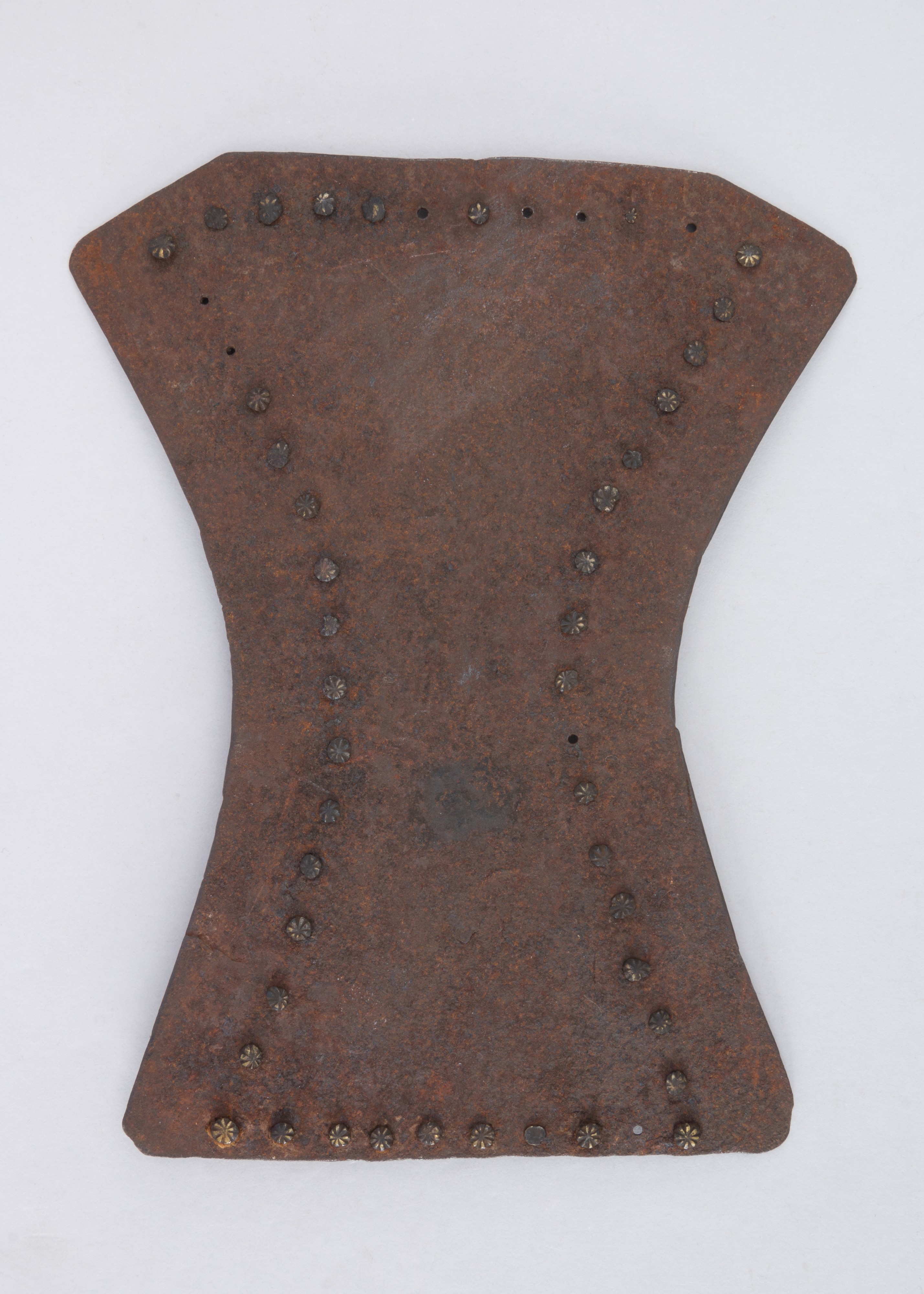
Deconstructing the Armature: Brigandine Plate as Avant-Garde Genesis
The historical brigandine—a pragmatic fusion of small, overlapping metal plates riveted to a flexible fabric substrate—represents not merely a relic of Italian martial history but a profound archetype for structural innovation. For Zoey Fashion Laboratory's SS26 inquiry, this artifact is disassembled and re-contextualized, not as a symbol of protection or conflict, but as a philosophical and architectural blueprint for the future corporeal experience. Our analysis transcends mere aesthetic appropriation; it engages in a rigorous dialogue with the brigandine's core principles: modularity, articulated rigidity, and the dynamic interface between hard and soft elements. This standalone study posits the brigandine plate as the foundational unit for a new sartorial syntax, one that challenges the very continuity of the fashion silhouette.
Structural Innovation: From Articulated Defense to Kinetic Exoskeleton
The genius of the historical form lies in its ingenious compromise: maximum protection with minimal impediment to mobility. Zoey Fashion Laboratory's SS26 interpretation transmutes this functional compromise into a avant-garde manifesto. We replace the concealed, utilitarian plates with hyper-expressed, sculptural modules forged from iron and copper alloys. These are not mere appliqués; they are the primary structural chassis from which the garment is engineered. The fabric substrate evolves from a hidden foundation to a series of tensile, high-tech mesh ligaments or bi-phase memory textiles that contract and expand, creating a living, breathing matrix that holds the alloy plates in a state of dynamic tension.
This approach yields a silhouette that is inherently fragmentary and kinetic. Instead of a monolithic form, the body is mapped as a series of nodal points and moving planes. Plates may cluster around the scapula to form a futuristic, wing-like protrusion, or cascade asymmetrically down a leg, articulating with each step like robotic greaves. The rivet—once a humble fastener—is reimagined as a pivotal, multi-axis joint or a magnetic coupling point, allowing for wearer-configurable modularity. The silhouette thus becomes non-static and participant-defined, embodying a post-human aesthetic where the garment is a collaborative, wearable architecture.
Material Dialectics: The Alchemy of Alloy and Atmosphere
The specified materials—iron alloy and copper alloy—are not selected for historical fidelity alone. They are chosen for their narrative of contrast, transformation, and dialogue with the body and environment. Iron alloy, with its inherent strength and propensity for oxidation, introduces a variable, living patina. We engineer this process, encouraging controlled rust blooms that interact with applied biocoatings, creating unique topographic maps of wear and time on the garment's surface. Copper alloy, with its conductive and antimicrobial properties, introduces a layer of bio-interactivity. Patinated verdigris becomes a deliberate aesthetic, while the material's innate ability to conduct energy opens pathways for integrated, low-level luminescence or responsive thermal systems.
The profound innovation lies in the dialectic between these metals and next-generation substrates. Imagine a copper-alloy plate, etched with circuit-like patterns, bonded to a hydrogel-infused textile that hydrates the skin beneath. Or iron plates, finished with a matte ceramic coating, adjacent to areas of translucent, laser-etched polymer. This material conversation creates a sensory and visual landscape of stark contrasts: heavy versus weightless, opaque versus transparent, static versus reactive. The SS26 body is thus presented as a site of alchemical experimentation, where ancient metallurgy meets speculative biomimicry.
Futuristic Silhouette: The Fragmentary and the Volumetric
The SS26 silhouette emerging from this study definitively abandons the cyborgian trope of seamless integration. Instead, we champion a deconstructed, exoskeletal elegance. The silhouette is read as a series of deliberate interruptions and volumetric expansions. Plates may create cantilevered forms that extend horizontally from the hips or shoulders, creating imposing, architectonic shadows. Elsewhere, the body may be revealed through voids in the plate matrix, with the tensile fabric beneath performing a delicate, second-skin function.
Key silhouettes include the "Floating Carapace"—where a breastplate and backplate are connected by tension wires, seemingly suspended away from the torso—and the "Articulated Cage Skirt"—where plates form a responsive, segmented cage around the lower body, moving with a distinct, rhythmic soundscape. The copper and iron alloys, in their finished states, will catch light with a dull, resonant glow, emphasizing the sharp, geometric lines and fractured planes. The overall impression is one of calculated dissonance and powerful, non-organic beauty, proposing a future where fashion is less about clothing the body and more about augmenting its architectural potential.
Conclusion: The Autonomous Garment-Object
This definitive analysis concludes that the "Brigandine Plate" study for Zoey Fashion Laboratory SS26 yields more than a collection; it proposes a new category of wearable object. It is a standalone avant-garde proposition that exists at the intersection of historical artifact, speculative design, and corporeal architecture. By deconstructing the brigandine to its first principles and reconstructing it through a futuristic lens, we have developed a lexicon of form, material, and movement that challenges passive consumption. The resulting garments are autonomous, thought-provoking entities. They are not for concealment or mere adornment; they are exoskeletal statements, kinetic sculptures, and interactive platforms that invite the wearer to engage in the continuous redefinition of their own silhouette. This is the core of avant-garde practice: not to predict the future, but to construct a tangible, wearable proposition of what it could be.