Deconstructing the Blade: The European Sword as a Foundational DNA Strand for Avant-Garde Fashion
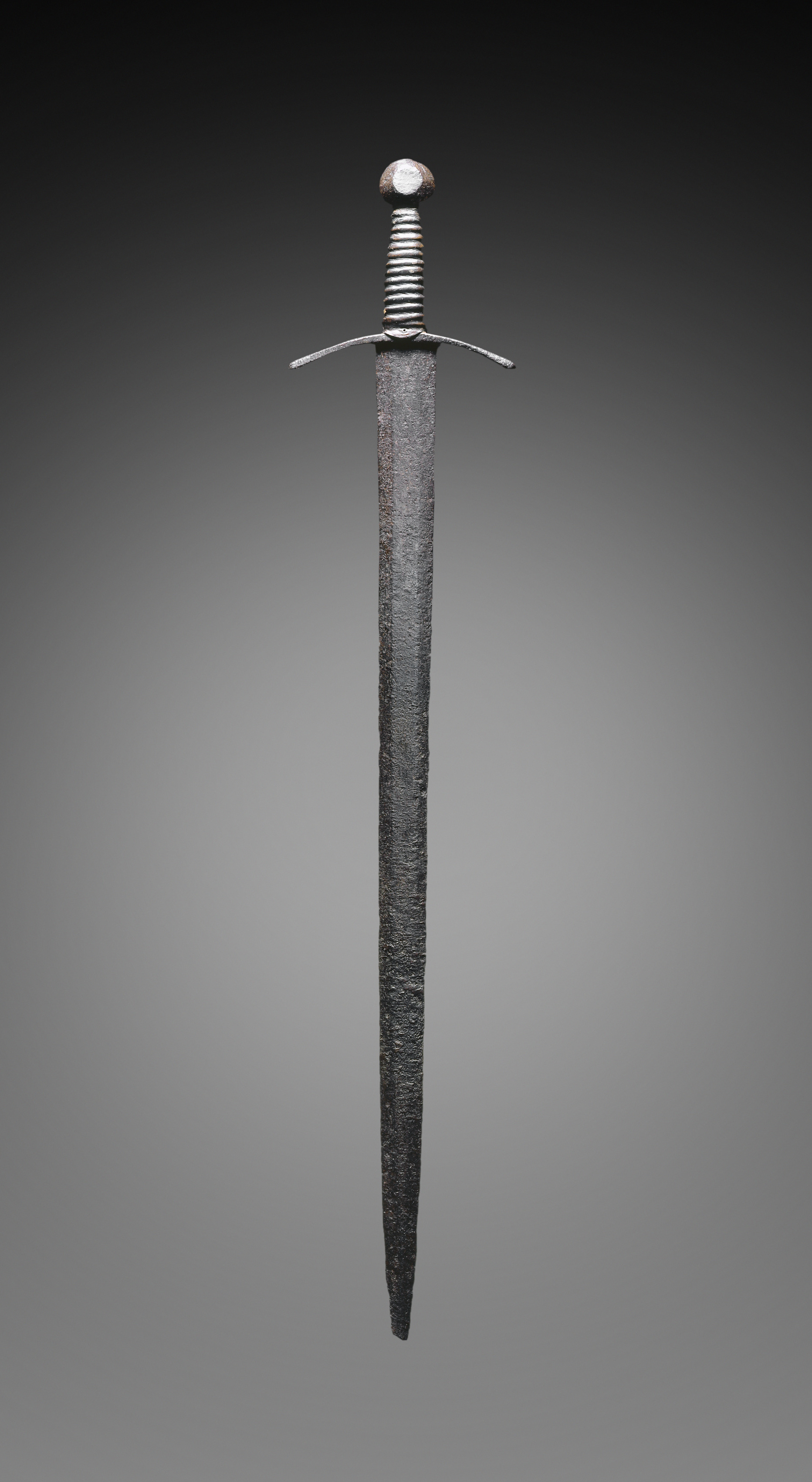
At Zoey Fashion Lab, we do not simply observe historical artifacts; we extract their latent structural language and re-synthesize it into wearable philosophy. The subject of this analysis—a European longsword from the early 15th century—presents a formidable paradox. It is an object of ultimate termination, yet its construction embodies principles of tensile strength, dynamic balance, and layered restraint. When we strip away its martial purpose, we are left with a pure anatomical blueprint: a rigid spine, a flexible edge, a wrapped grip, and a counterweighted pommel. This blueprint, which we term the “New DNA Strand,” offers a revolutionary template for avant-garde garment architecture. Our analysis deconstructs the sword into four primary genetic markers—the Blade (Silhouette), the Fuller (Negative Space), the Grip (Tactile Interface), and the Crossguard (Structural Transition)—and translates each into a disruptive, couture-level design language.
Genetic Marker I: The Blade – Silhouette as a Single, Unbroken Line
The blade of a 15th-century longsword is not a simple wedge; it is a masterclass in distal taper. It is thick at the hilt to withstand impact, yet narrows imperceptibly toward the point, creating a balance that feels alive in the hand. For Zoey Fashion Lab, this translates directly into a revolutionary silhouette that defies conventional tailoring. We propose a floor-length coat or gown where the entire garment is cut from a single, continuous piece of technical wool or bonded leather, with no shoulder seams. The garment begins with substantial, structured volume at the shoulders and chest—mimicking the blade’s forte—and tapers with surgical precision down the body, culminating in a razor-thin, asymmetric hem that grazes the floor like a sword’s point.
This is not a simple A-line. The taper must be engineered with a three-dimensional curvature, using internal boning or carbon-fiber stays that mimic the sword’s fuller (the central groove). The result is a garment that appears static when the wearer is still, but which generates a fluid, whipping motion when they move—a kinetic echo of a blade being drawn. The fabric itself is treated with a metallic, graphite-infused finish to catch light like polished steel, while the interior remains a stark, blood-red or matte black, referencing the contrast between the weapon’s cold exterior and the heat of its purpose. The hem is not hemmed; it is laser-cut and sealed, leaving a crisp, unforgiving edge that refuses to curl—a direct homage to the blade’s sharpened terminus.
Genetic Marker II: The Fuller – Negative Space as Structural Integrity
The fuller is the deep groove that runs down the center of many medieval blades. Contrary to popular belief, it is not a “blood groove” but a lightweighting channel, designed to reduce mass without compromising the blade’s rigidity. In our avant-garde translation, the fuller becomes a literal cut-out, a negative space that defines the garment’s architecture. We propose a series of garments—corsets, bodices, and even trousers—where long, precise, elliptical cut-outs are laser-etched into the fabric, following the body’s natural lines of tension.
These are not decorative slashes. Each cut-out is strategically positioned over joints, tendons, and muscle groups, creating a ventilated exoskeleton that allows for unprecedented freedom of movement. The edges of these cut-outs are not raw; they are finished with a thin, flexible wire—either steel or memory wire—that is encased in leather piping. This wire acts as the garment’s “fuller,” providing structural rigidity to the opening while simultaneously preventing the fabric from sagging or stretching. The skin becomes the visible “core” of the blade, creating a provocative interplay between protection and vulnerability. In a full ensemble, these channels align across separate garments—a sleeve, a bodice, a skirt—to create a continuous, unbroken line of negative space that visually slices the wearer’s body into elegant, segmented planes.
Genetic Marker III: The Grip – Tactile Interface and Ergonomic Deconstruction
The sword’s grip is a masterwork of ergonomic pragmatism. Typically constructed from a wooden core, wrapped in leather cord or wire, it is designed for a gloved hand, offering friction, shock absorption, and a secure, non-slip hold. For Zoey, this translates into a new language of surface texture and fastening systems. We reject the clean, invisible zipper in favor of a visible, tactile “grip” system along the garment’s closure points.
Imagine a jacket that closes not with buttons, but with a series of interlocking leather and steel cording, wound diagonally across the torso in a pattern reminiscent of a sword’s wire-wrap. This is not merely decorative; it is a functional tensioning system. The wearer can adjust the tightness of the garment by pulling and wrapping these cords, creating a custom fit that mimics the act of gripping a hilt. The sleeves, similarly, feature high-friction panels of textured leather or woven steel mesh at the forearms and inner elbows—areas that correspond to the sword-wielder’s contact points. These panels are not hidden; they are exaggerated, almost sculptural, protruding slightly from the garment’s surface to catch light and invite touch. The fastening hardware itself—buckles, D-rings, and cord locks—are oversized and gunmetal-finished, echoing the utilitarian brutality of the weapon’s furniture.
Genetic Marker IV: The Crossguard and Pommel – Structural Transitions and Counterbalance
The crossguard is the critical junction between blade and grip, a horizontal bar that protects the hand and redirects force. The pommel, conversely, is the weighted cap at the opposite end, serving as a counterbalance to the blade. In our design philosophy, these two elements become the shoulder and hem architecture of our garments. The crossguard is reimagined as a dramatic, angular shoulder yoke—a rigid, cantilevered structure made from molded leather or 3D-printed recycled steel that extends horizontally beyond the natural shoulder line. This is not a padded shoulder; it is a literal architectural shelf, creating a stark, imposing top block that visually “protects” the wearer’s head and neck.
Conversely, the pommel is translated into the garment’s counterweight at the hem. To balance the heavy shoulder yoke, we integrate weighted, articulated panels at the back of a coat or the train of a gown. These panels are constructed from layered leather and lead-free metal beads, sewn into channels that allow them to swing and settle with the wearer’s motion. This creates a dynamic equilibrium: as the wearer turns, the heavy shoulder remains stable while the weighted hem swings outward, generating a powerful, centrifugal force that shapes the garment’s movement. The visual effect is that of a human gyroscope, a body in perfect, weaponized balance.
Conclusion: The Sword as a Living System
The European longsword, when stripped of its historical violence, reveals itself as a profound study in biomechanical efficiency and material honesty. For Zoey Fashion Lab, it is not a nostalgic reference but a living DNA strand—a set of genetic instructions for building garments that are simultaneously protective, aggressive, and fluid. Our avant-garde collection does not imitate the sword; it internalizes its logic. The tapered line, the structural void, the tactile grip, and the weighted counterbalance are not design motifs but functional imperatives that challenge the passive nature of contemporary fashion. The wearer of a Zoey sword-derived garment is not merely dressed; they are armed with an architecture of intent, moving through the world with the precision, balance, and unyielding presence of a forged blade.