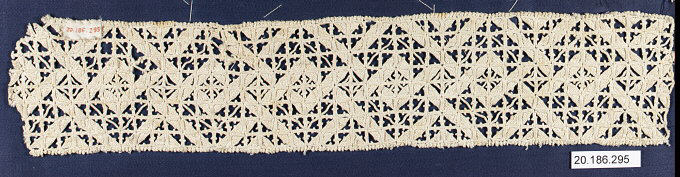
The Semiotics of Absence: Cutwork as the Defining Lexicon of SS26
In the relentless churn of the fashion calendar, true innovation is a rare commodity. Yet, as we dissect the nascent codes of Spring/Summer 2026, a singular, potent language emerges from the global frontier—one that does not rely on addition, but on deliberate, surgical subtraction. At Zoey Fashion Laboratory, we identify Insertion as the operative concept, and Cutwork as its primary material agent. This is not a nostalgic nod to Victorian lace or folkloric embroidery. This is a deconstructive, architectural re-engineering of the garment’s very epidermis, transforming fabric from a passive surface into an active, volumetric participant in the dialogue between body, space, and light.
Our analysis posits that SS26’s avant-garde imperative lies in the strategic manipulation of absence. The cut is no longer a mere finishing detail; it is the foundational gesture. It is the incision that liberates the silhouette from the tyranny of the seam, allowing the fabric to breathe, buckle, and float in defiance of conventional draping. This is structural innovation through excision, where the void becomes as critical as the form it defines.
Deconstructing the Global Frontier: From Cartography to Cutwork
The "Global Frontier" is not a geographic location but a conceptual space—a liminal zone where disparate cultural techniques and futuristic material science collide. Our SS26 study extracts cutwork from its artisanal past and repositions it within a high-velocity, techno-organic context. The influence is not the delicate broderie anglaise of the English countryside, but rather the precise, laser-etched perforations on aerospace alloys and the organic, cellular porosity of bioluminescent marine organisms. This synthesis yields a new materiality, one where the fabric’s integrity is paradoxically enhanced by its perforation.
The Architectural Incision: Silhouette as Skeleton
Futuristic silhouettes in this paradigm are no longer draped over the body; they are erected around it. We observe a shift from the fluid, body-con silhouette of recent seasons to a rigid, exoskeletal profile. The cutwork functions as a structural truss, creating internal tension and external projection. Imagine a sculptural column of bonded neoprene, its surface systematically excised to reveal a secondary, sheer layer beneath. The negative space is not arbitrary; it is calculated to create a visual rhythm that mimics the load-bearing capacity of a geodesic dome. The garment becomes a portable piece of architecture, with the wearer’s body serving as the central column.
This approach demands a radical rethinking of the shoulder and hip. Instead of padding, we see volumetric cutwork panels that flare outward, creating a stiff, petal-like extrusion. These are not soft ruffles; they are sharp, geometric projections that redefine the wearer’s personal space. The waist is cinched not by a belt, but by a corset-like structure made of rigid, laser-cut leather, where the perforations are so dense they form a flexible yet unyielding mesh. The result is a silhouette that is simultaneously armored and ethereal, heavy in concept but visually weightless.
Materiality of the Void: Engineering Transparency and Depth
In this avant-garde study, cutwork transcends mere decoration to become a tool for manipulating perception. The strategic removal of material creates a play of opacity and transparency that is far more complex than simple sheer fabric. By layering multiple planes of cutwork—each with a different scale and orientation of incision—we achieve a moiré effect that generates a sense of kinetic depth. As the wearer moves, the patterns shift and interlock, creating a dynamic, ever-changing surface that defies static observation.
Our laboratory experiments with high-tenacity technical yarns and heat-bonded laminates. A primary focus is the development of self-supporting cutwork that does not require a lining or understructure. This is achieved through a matrix of interlocking, laser-scored slits that, when opened, create a honeycomb-like rigidity. The fabric becomes a three-dimensional lattice, casting intricate shadows onto the skin—a secondary, ephemeral tattoo of light and dark. This is not about revealing the body; it is about abstracting the body into a series of fragmented, geometric planes.
Insertion as a Conceptual Praxis: The Garment as a Site of Intervention
The term "Insertion" in our context is a deliberate misdirection. It implies an addition, yet our methodology is one of removal. This paradox is central to the SS26 philosophy. The act of cutting is an act of intervention, a deliberate rupture in the fabric’s continuity that demands a response from the material itself. The edges of the cut are not finished or hemmed; they are left raw, heat-sealed, or bonded with a contrasting resin. This unfinished finish is a signature of the deconstructive aesthetic, a testament to the process of creation.
Furthermore, we explore the insertion of non-traditional elements into the cutwork matrix. Think of micro-engineered metal grommets that punctuate a field of fine organza, or lengths of phosphorescent cord threaded through a grid of precision slits. These are not decorative embellishments but functional components that alter the garment’s drape and its interaction with the environment. They are points of tension, anchors for a future silhouette that can be adjusted, tightened, or expanded by the wearer, turning the garment into a customizable, interactive architecture.
The Future of Form: A Standalone Manifesto
This standalone avant-garde study concludes that SS26 will be defined by a new form of negative-space tailoring. The future of couture does not lie in the accumulation of fabric, but in the intelligent, expressive management of its absence. The cutwork is the new seam, the new dart, the new silhouette. It is a language of precision and risk, where a single misplaced incision can compromise the entire structure. This is the high-stakes game of the global frontier.
For Zoey Fashion Laboratory, the garment is a site of radical potential. By mastering the art of the cut, we are not simply making clothes; we are engineering experiences, sculpting light, and defining a new corporeal aesthetic for the post-digital age. The body is no longer a mannequin to be dressed; it is a canvas to be dissected, analyzed, and ultimately, reconstructed through a lens of deliberate, beautiful violence. This is the power of insertion—the power to create by destroying, to build by excising, and to define the future by cutting away the past.