Deconstructing the Anachronism: The Gothic Breastplate as a Proto-Avant-Garde Artifact
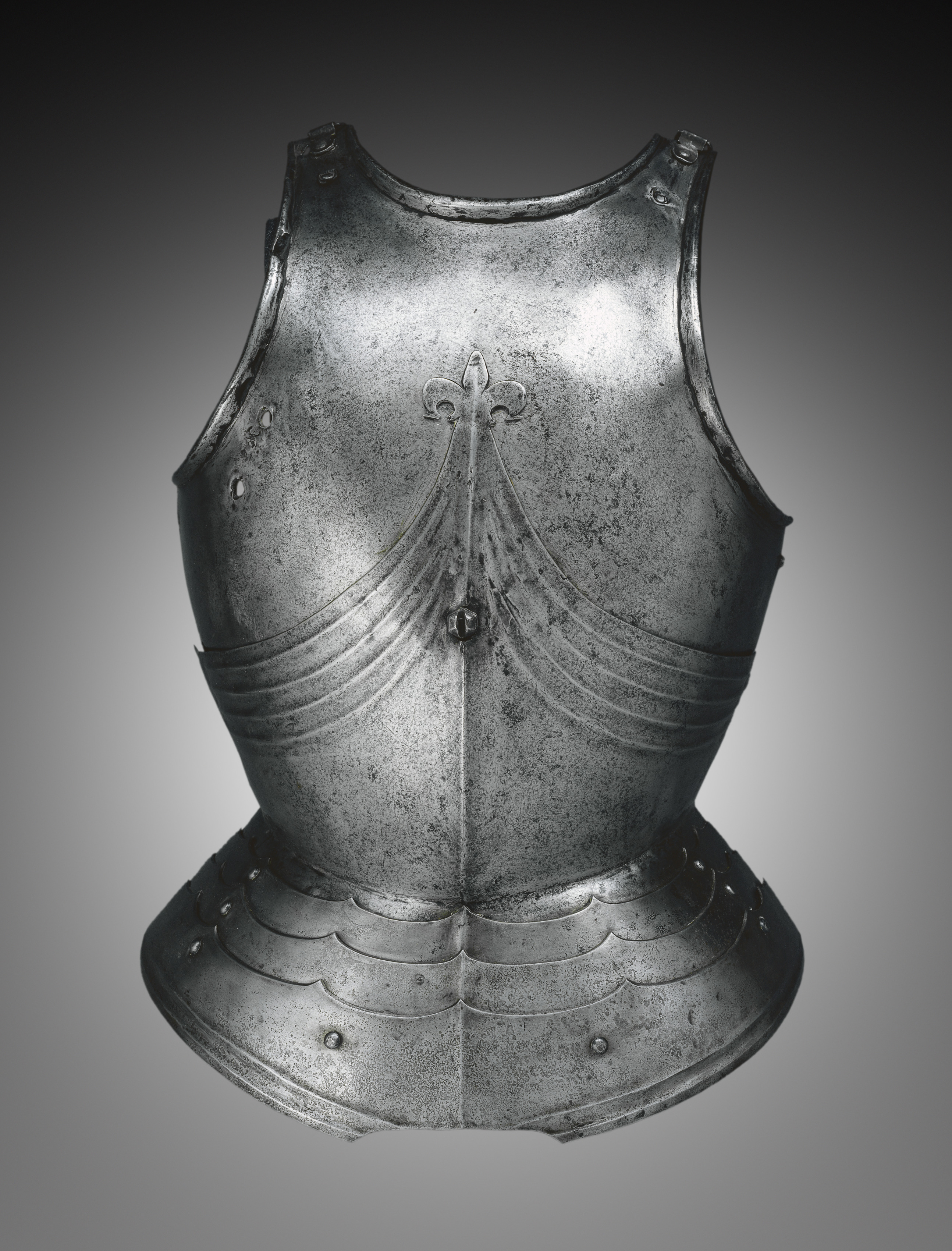
At Zoey Fashion Lab, our mandate is not merely to observe historical garments but to dissect their structural DNA, extracting the latent codes that inform contemporary avant-garde expression. The subject of today’s analysis—a Gothic breastplate from South Germany or Austria, specifically Innsbruck, dating to the late 15th century—presents a unique paradox. Forged in steel, it is an object of absolute rigidity, yet its silhouette and surface logic contain the genetic blueprint for modern deconstruction, architectural draping, and cybernetic augmentation. This is not armor as mere protection; it is armor as an early manifesto of the body’s potential for transformation.
Material Provenance: The Alchemy of Innsbruck Steel
The technical specification of steel is the foundational strand in our analysis. Innsbruck was not an arbitrary center of production; it was a nexus of metallurgical innovation, where the Tyrolean mines yielded a high-quality ore that, when worked by master armorers, produced a plate of exceptional resilience and, critically, a surface capable of a mirror-like polish. For the avant-garde designer, this is not merely a historical fact but a lesson in material hierarchy. The breastplate’s steel is a precursor to modern technical fabrics—think of bonded neoprene, carbon fiber, or liquid metal alloys—materials that impose their own structural logic on the wearer.
From a deconstructionist perspective, the steel’s rigidity is its primary narrative. Unlike woven textiles that drape and follow the body’s organic curves, this breastplate defies the body, creating a new, idealized topography. The avant-garde aesthetic thrives on this tension. The breastplate does not clothe; it re-forms. This is the same principle we apply in our lab when we use sculptural padding, corsetry boning, or 3D-printed polymer shells. The material is not a passive substrate; it is an active agent of silhouette distortion. The Innsbruck steel, with its ability to hold a sharp crease and a deep, volumetric dome, is the 15th-century equivalent of a haute couture tailoring structure, yet it operates on a scale of permanence that fabric can never achieve.
Structural Silhouette: The Architecture of the Torso
Examining the breastplate’s form, we identify two distinct yet interconnected zones: the pectoral plane and the abdominal fauld. The pectoral section is a study in convexity. It is not a flat shield but a series of compound curves, engineered to deflect a lance’s point. This is the origin of the "power suit" shoulder, the exaggerated pectoral shell seen in the works of Thierry Mugler or the recent collections of Coperni. The breastplate’s central ridge, or "tapul," creates a vertical axis that visually elongates the torso, a technique replicated in modern tailoring through a sharp center-front seam or a pronounced princess line.
The fauld, the articulated skirt of overlapping steel plates, is where the avant-garde reading becomes most potent. This is not a static element; it is a system of kinetic articulation. Each lame is riveted to its neighbor, allowing for a restricted, rhythmic movement. In our lab, we translate this into "tech-modular" fashion—garments with detachable panels, zippered segments, or pleated sections that mimic this layered, defensive yet mobile structure. The Gothic breastplate’s fauld is a precursor to the asymmetrical, layered skirts of Yohji Yamamoto or the robotic exoskeletons of A.F. Vandevorst. It proposes a silhouette that is simultaneously armored and fluid, a contradiction that defines the most compelling avant-garde work.
Surface Semiotics: The New DNA Strand
Our reference to a New DNA Strand is not a poetic abstraction but a literal reading of the breastplate’s surface logic. The naked steel, devoid of the fabric coverings (like velvet or leather) often used in tournament pieces, presents a raw, unadorned surface. This is a radical act of honesty. It is the 15th-century equivalent of exposing a seam or leaving a hem unfinished. The polished steel reflects the environment, making the wearer a chameleonic entity—part human, part mirror, part environment. This is the DNA of modern reflective fabrics, liquid lamé, and chrome-coated leathers used by designers like Paco Rabanne and Iris van Herpen.
Furthermore, the subtle hammer marks and the faint patina of age are not flaws; they are trace evidence of the maker’s hand and the wearer’s history. In our deconstructionist practice, we deliberately distress fabrics, crack leathers, and oxidize metals to simulate this narrative depth. The breastplate’s surface is a palimpsest, recording every impact, every polish, every moment of use. This is the antithesis of the sterile, mass-produced garment. It is a bespoke, artisanal object that carries its biography on its skin. The avant-garde designer must learn from this: true innovation is not in creating a perfect, sterile surface but in cultivating a surface that can speak of its own creation and destruction.
The Body as a Prosthetic: Avant-Garde Implications
The most profound avant-garde lesson from this breastplate is its redefinition of the human form. The wearer is not merely inside the armor; they are merged with it, becoming a cyborg—a hybrid of flesh and steel. This is the ultimate expression of fashion as prosthesis. The breastplate extends the chest, sharpens the waist, and broadens the shoulders, creating a silhouette that is more imposing, more abstract, and more powerful than the biological body. This is the core principle of contemporary avant-garde design: the garment is not a second skin but a new skeleton.
Designers like Rei Kawakubo and Rick Owens have built their careers on this principle, using padding, draping, and rigid structures to distort the human form into something alien and magnificent. The Gothic breastplate is their historical antecedent. It demonstrates that the body is a mutable canvas, a site for architectural intervention. The "New DNA Strand" we reference is this very concept—the idea that fashion can fundamentally alter our perception of the human anatomy, not through cosmetic enhancement but through structural re-engineering. The breastplate is a hard, metallic exoskeleton that anticipates the soft, padded exoskeletons of modern runway shows.
Conclusion: A Blueprint for the Future
In conclusion, the Gothic breastplate from Innsbruck is far more than a relic of medieval warfare. It is a masterclass in material agency, structural silhouette, and surface narrative. For Zoey Fashion Lab, it serves as a critical reference point, proving that the most radical ideas in fashion are not invented in a vacuum but are extracted from the deep well of historical craft. The steel’s refusal to conform, the articulated fauld’s kinetic intelligence, and the polished surface’s environmental reflectivity are all elements that we directly translate into our avant-garde collections.
This breastplate is not an artifact of the past; it is a prophecy of the future. It predicts a fashion that is architectural, prosthetic, and deeply self-aware. By deconstructing its form, we reconstruct our own understanding of what clothing can achieve. The Gothic breastplate is the original power suit, the first piece of wearable hard architecture, and a permanent strand in the evolving DNA of avant-garde fashion. It is, quite simply, the future, forged in the past. We do not look back to copy; we look back to extract the code, and then we re-code it for the next century of radical dressing.