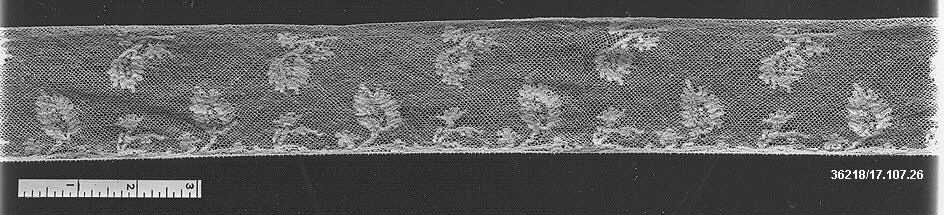
The Temporal Lattice: Deconstructing Bobbin Lace as a Structural Frontier
In the rarefied ether of avant-garde couture, where fabric ceases to be mere drapery and becomes a proposition about the future of the human form, Zoey Fashion Laboratory presents its latest standalone study: Piece. Originating from the nebulous concept of the Global Frontier—a liminal space where geographical boundaries dissolve into pure technological and cultural synthesis—this garment challenges the very ontology of textile. It does not employ bobbin lace as a nostalgic relic of 17th-century European craftsmanship. Instead, Piece weaponizes this intricate, hand-made matrix as a computational lattice, a rigid yet ethereal exoskeleton for the SS26 season. The result is not a dress; it is a manifesto stitched in air.
Deconstructing the Matrix: Bobbin Lace as Load-Bearing Architecture
To understand the radicality of Piece, one must first abandon the notion of lace as a delicate, secondary overlay. In this iteration, the bobbin lace is not appliquéd onto a base fabric; it is the primary structure. The laboratory’s artisans have reconfigured traditional Torchon and Cluny patterns, scaling them to monumental proportions. The fine cotton and silk threads, typically used for handkerchiefs and heirloom collars, are here braided with monofilament and a subtle, conductive metallic core. This hybrid yarn allows the lace to hold its own weight, creating a self-supporting architectural shell. The openwork, traditionally a symbol of absence and transparency, is inverted into a positive space—a topographic map of negative volume that defines the silhouette more aggressively than any solid textile could.
The silhouette itself is a study in controlled dissonance. Gone are the soft, organic curves of conventional femininity. Piece presents a hyper-geometric carapace: shoulders are exaggerated into sharp, asymmetrical cantilevers that jut forward like the prow of a spacecraft. The waist is not cinched but rather encased in a rigid, honeycomb-structured lattice that flares abruptly into a truncated, conical skirt. This is not a garment that follows the body; it is a garment that commands the body to occupy a new spatial dimension. The lace's natural flexibility is arrested at precise intervals by internal, invisible resin stays, creating zones of rigidity and sudden, fluid release. The result is a silhouette that appears to be in a state of perpetual digital freeze-frame—a 3D render momentarily materialized in physical form.
The Global Frontier: A Synthesis of Craft and Cybernetics
The "Global Frontier" origin is not a marketing platitude; it is encoded in the very production logic of the piece. This is a garment born of a decentralized atelier, where traditional lace-makers from the Venetian islands collaborate remotely with generative design engineers in Tokyo. The patterns are not drawn by hand but are the output of an algorithm trained on thousands of historical lace samples, which then mutates them into impossible, non-repeating fractals. This fusion of the artisanal and the algorithmic elevates the piece beyond mere fashion. It becomes a physical artifact of a post-geographic era, where the "frontier" is not a physical landmass but the boundary of what a hand and a machine can co-create.
For SS26, this translates into a specific material philosophy: Lace as a sustainable, zero-waste technology. Unlike cut-and-sew construction, which discards up to 30% of fabric, bobbin lace is inherently additive. Every thread is placed with intention; there is no off-cut. The conductive metallic core also imbues the garment with latent functionality—a subtle, integrated circuitry that could, in future iterations, respond to temperature or body movement. In this sense, Piece is not a static object but a prototype for a responsive, intelligent second skin. It proposes that the future of couture lies not in adding more layers, but in engineering the gaps between threads to perform structural and environmental work.
Structural Innovation and the New Anatomy
The most provocative aspect of Piece is its redefinition of the wearer’s anatomy. The garment’s internal architecture does not accommodate the human torso; it creates a secondary, parallel anatomy. The lace's rigid panels are shaped to hover millimeters away from the skin, creating a micro-climate of air between body and garment. This "negative space" is the true innovation. It allows for unprecedented freedom of movement—the wearer does not feel the fabric, but rather the pressure differential it creates. The silhouette, therefore, is not a container but a field of force. The exaggerated hip flanges and the asymmetric neckline that rises to a metallic, lace-woven collar are not decorative flourishes; they are structural counterweights that balance the garment's forward thrust.
In the context of SS26's broader trend toward "quiet luxury" and minimalist tailoring, Piece stands as a defiant counter-narrative. It is maximalist in its intricacy yet minimalist in its palette—an unbleached, bone-white thread accented by a single, iridescent silver thread that catches light like a data stream. This is not a garment for passive observation; it demands engagement. It forces the viewer to question the hierarchy of materials, the role of craft in a digital age, and the very definition of a silhouette. Is this a dress? A sculpture? A wearable computing device? The answer is all and none. It is a standalone proposition, a thesis on the future of form, and a definitive statement that in the laboratory of Zoey, the frontier of fashion is not a distant horizon—it is a thread, pulled taut into the future.