Deconstructing the Funerary Veil: An Avant-Garde Reading of the Paracas Mummy Bundle Mask
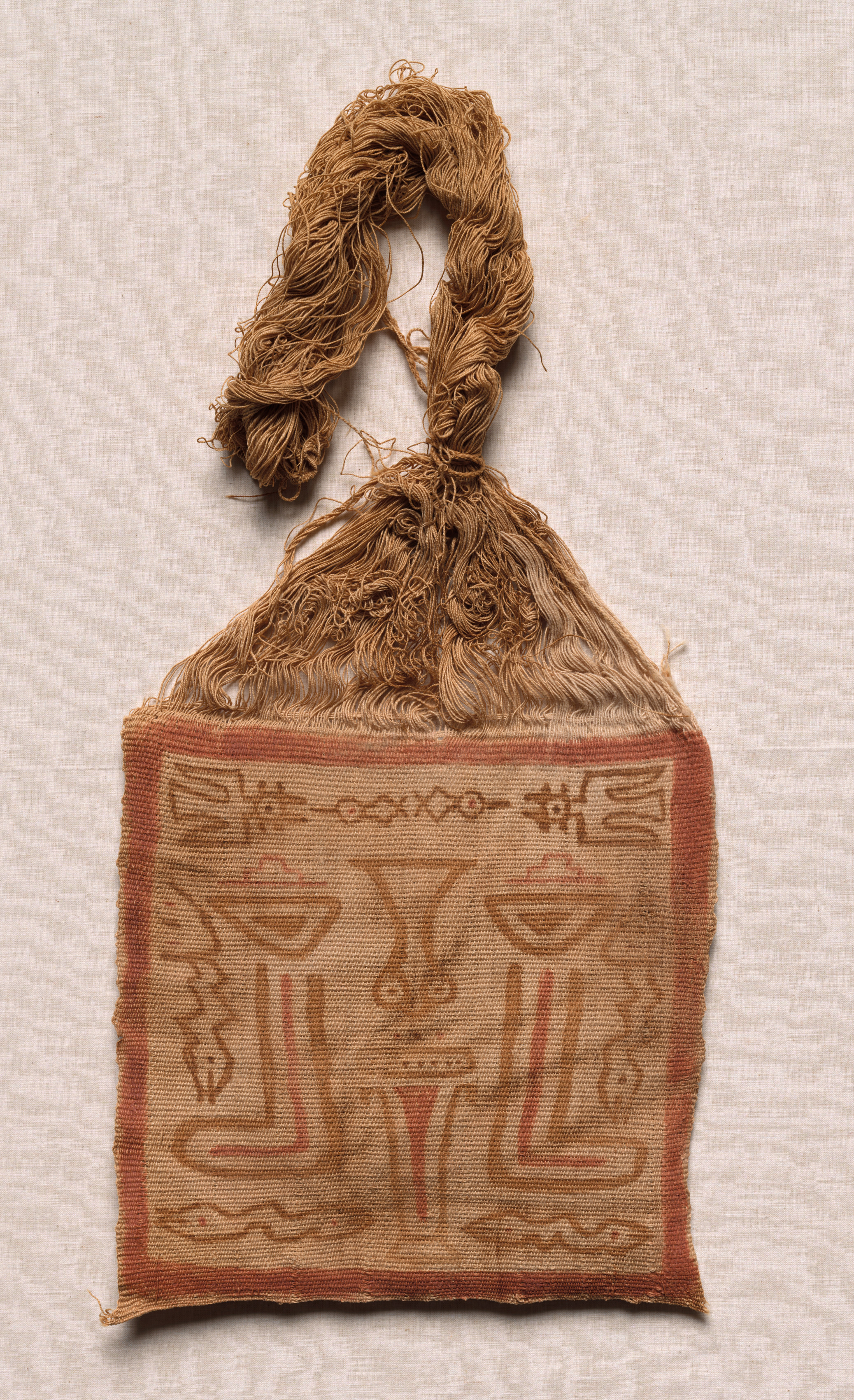
At Zoey Fashion Lab, we do not merely study textiles; we interrogate them. We strip away the patina of time to expose the raw, structural dialogues between material, maker, and cosmos. Today's subject, the Mummy Bundle "Mask" from the Paracas culture of Peru's Ica Valley (700 BCE–1 CE), presents a paradox of stillness and violence. It is a cotton plain-weave shroud, painted with mineral pigments, yet it functions not as a garment for the living but as a sealed portal for the dead. For the avant-garde designer, this artifact is not an anthropological curiosity; it is a blueprint for radical compression—a lesson in how to bind narrative, identity, and material into a single, unyielding surface.
I. The Architecture of Silence: Plain Weave as a Structural Grid
Technically, the mask is defined by its plain weave—the most elementary interlacing of warp and weft. In conventional fashion analysis, this is dismissed as a baseline, a humble ground. But in the avant-garde lens, we recognize this simplicity as an act of extreme discipline. The plain weave is a binary system: over-under, over-under. It is the fabric equivalent of a heartbeat—rhythmic, relentless, and pre-verbal. The Paracas weaver did not use the loom to create illusionistic depth; instead, they used it to create a tensile membrane. This membrane was not meant to be seen in life but to be wrapped, folded, and sealed over a contracted body.
Consider the compression inherent in the mummy bundle. The mask is the outermost layer of a multi-layered cocoon. It is the final skin, the last word. For our lab, this suggests a radical departure from Western tailoring, which prioritizes the body's articulation. Here, the mask denies articulation. It flattens the face into a geometric field. The cotton, grown in the arid coastal valleys, was spun and woven to be dense enough to hold pigment, yet soft enough to conform to the contours of a wrapped corpse. This is not a garment of movement; it is a garment of permanence. The avant-garde designer must ask: how do we create fashion that resists the ephemeral? The answer lies in this Andean logic—using the most basic weave to achieve the most profound finality.
II. Pigment as Political and Spiritual Collision
The surface of the mask is not neutral. The pigment—likely derived from cinnabar, iron oxides, and plant dyes—was applied post-weave, often in bold, geometric blocks or stylized feline and serpentine motifs. In the context of the Paracas necropolis at Ocucaje, these pigments were not decorative. They were energetic inscriptions. The colors—deep reds, ochres, blacks—were drawn from the earth and the mineral world, creating a chromatic bridge between the living community and the subterranean realm of the dead.
Here, we encounter the "Archive Resonance" referenced in our brief—the echo of cultural collision. The Paracas style predates the broader Andean horizon, yet it already shows a sophisticated synthesis of coastal fishing iconography and highland shamanic vision. The mask’s painted face often features weeping eyes or trophy-head imagery, suggesting a society obsessed with fertility, sacrifice, and cyclical regeneration. For the avant-garde, this is a call to treat color not as a mood enhancer but as a semantic weapon. The mask’s palette is aggressive, non-naturalistic. It does not mimic skin; it replaces skin with a symbolic carapace. In our collections, we must push pigment to this extreme—using textile paints, resin coatings, and mineral dyes to transform fabric into a hard, declarative surface that refuses the softness of flesh.
III. The Ocucaje Site: A Necropolis of Textile Memory
The geographical specificity—the Ica Valley, the Ocucaje site—is crucial. This is one of the driest deserts on earth, a hyper-arid environment that paradoxically became the greatest preserver of ancient textiles. The mummy bundles were buried in subterranean chambers, where the lack of moisture prevented microbial decay. This means the mask we analyze today is not a fragment; it is a time capsule. The cotton retains its tensile strength, the pigment its vibrancy.
For Zoey Fashion Lab, this challenges our contemporary obsession with "wear and tear." The Paracas mask was designed for eternity, not for a season. Its avant-garde relevance lies in its anti-consumerist stance. It is a garment that was never worn, never washed, never photographed. It existed solely for the ritual moment of burial. This forces us to re-evaluate the purpose of fashion. Is the garment a tool for social performance, or can it be a vessel for solitary, terminal significance? The mask suggests the latter. It is a terminal object—the final interface between the deceased and the cosmos. In our design practice, we can translate this into "one-off" couture pieces that are intentionally unwearable, existing only as sculptural artifacts for contemplation.
IV. The Avant-Garde Translation: From Shroud to Silhouette
How do we, as fabric deconstructionists, translate this 2,700-year-old shroud into a contemporary avant-garde language? We begin by inverting the function. Instead of a mask that hides, we create a garment that reveals the structure of hiding. We deconstruct the plain weave by unravelling its edges, leaving the warp threads exposed like exposed nerves. We print the pigment patterns onto sheer technical mesh, creating a ghost of the original—a palimpsest that speaks to the loss of the body.
We also borrow the concept of the bundle. Our silhouettes will be asymmetrical, wrapped, and bound. Not to restrict the wearer, but to suggest the possibility of a different kind of presence—one that is self-contained and hermetic. The mask’s flat, frontal gaze becomes a printed graphic on oversized hoods or face-obscuring veils. The cotton is swapped for a high-performance blend that mimics the hand-feel of ancient textiles but offers modern durability. The pigment is replaced with reactive dyes that shift color under different lighting, echoing the mineral iridescence of cinnabar.
Most importantly, we adopt the temporal defiance of the Ocucaje weavers. In a fashion industry obsessed with immediacy, the Paracas mask is a reminder that true innovation is often an act of preservation. The avant-garde is not always about the new; sometimes, it is about the archaic made radical. By stripping the mask of its funerary context and re-presenting it as a wearable structure, we perform a form of cultural resurrection. We do not appropriate the Paracas symbols; we abstract their structural logic—compression, flatness, pigment density, and ritual finality—and apply it to the contemporary body.
V. Conclusion: The Mask as a Mirror of the Future
The Mummy Bundle "Mask" from the Paracas culture is a masterclass in materialized metaphysics. It teaches us that a simple cotton weave can carry the weight of an entire cosmology. It demonstrates that pigment is not mere decoration but a form of writing. And it proves that the most avant-garde gesture in fashion is not the shock of the new, but the shock of the perennial. As we fold these ancient techniques into our lab's future collections, we do so with reverence and rebellion. We take the plain weave, the mineral pigment, and the sealed, silent form, and we force them into dialogue with the chaos of the modern runway. The result is not a costume, but a concept—a wearable argument that the future of fashion lies not in faster production, but in deeper compression of meaning. The mask is off, but the bundle remains.