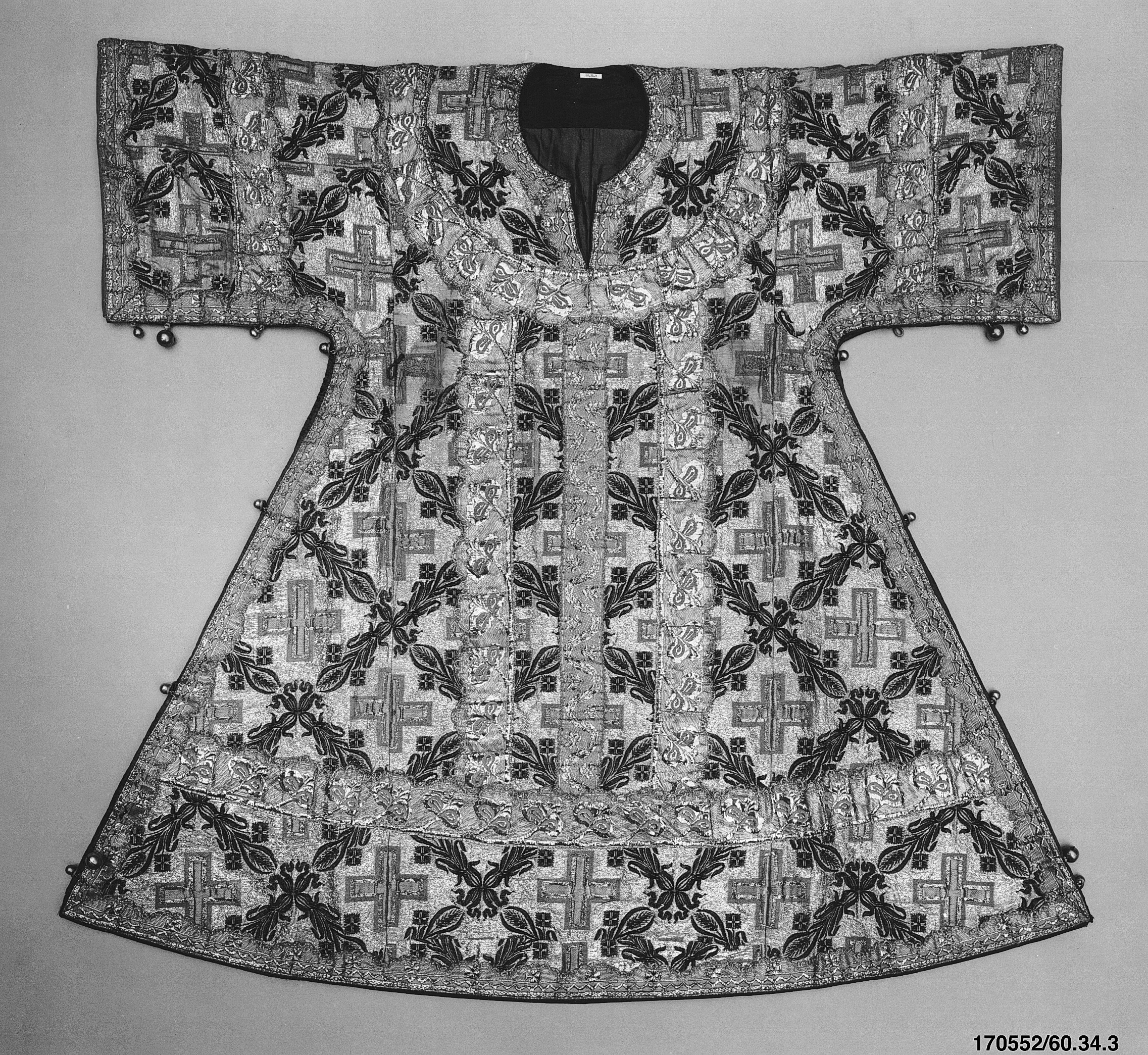
The Saccos Reimagined: Deconstructing the Vessel for SS26
In the relentless pursuit of fashion’s next frontier, the avant-garde designer must look beyond the garment as a mere covering and perceive it as a habitable structure, a portable architecture. For the Spring/Summer 2026 season, Zoey Fashion Laboratory presents its definitive study on the Saccos—a term derived from the ancient Greek for sackcloth, yet here transmuted into a symbol of futuristic containment and liberation. This is not a nostalgic revival of the peasant tunic; it is a radical re-engineering of the silhouette, a dialogue between the organic fluidity of silk and the rigid precision of metal thread. The Saccos, in our laboratory, becomes a standalone manifesto on the body’s relationship with space, gravity, and light.
Deconstructing the Vessel: From Containment to Expansion
The traditional Saccos is defined by its simplicity—a rectangular or trapezoidal cut that hangs from the shoulders, concealing the body’s natural contours. Our SS26 iteration violently disrupts this passive geometry. We employ asymmetrical paneling that shifts the garment’s center of gravity, creating a dynamic imbalance that suggests motion even in stillness. The silk, chosen for its liquid drape, is no longer a passive substrate; it is a canvas for tension. By integrating metal thread in a helical weave along the seams, we introduce a structural skeleton that forces the fabric to buckle, fold, and cantilever away from the body. The result is a silhouette that is neither fitted nor flowing, but rather suspended in a state of controlled collapse—a garment that appears to be perpetually mid-transformation.
This deconstruction is not an act of destruction but of redefinition. We have excised the traditional armholes, replacing them with laser-cut apertures that trace the scapula, allowing the metal thread to form an exoskeletal cage around the shoulder joint. The wearer does not simply put on the Saccos; they inhabit it. The fabric’s natural give is counteracted by the thread’s tensile strength, creating a bio-mechanical interface where the garment responds to the wearer’s micro-movements. This is not clothing for the passive consumer; it is a prosthetic for the perceptual self, a second skin that amplifies the wearer’s presence in the urban landscape.
Material Alchemy: The Silk-Metal Matrix
The materiality of the Saccos is the core of its avant-garde proposition. Pure silk, with its hypoallergenic and thermoregulating properties, provides a luxurious yet functional base. However, we have subjected it to a process of metallic infusion, where the thread is not merely embroidered but woven directly into the warp and weft at strategic intervals. This creates a gradient of rigidity—the fabric is fluid at the hem, but progressively stiffens towards the shoulders and neckline. The metal thread, an alloy of copper and stainless steel, is chosen for its shape-memory properties. When the garment is manipulated—folded, twisted, or compressed—it retains that form until heat or kinetic energy prompts it to return to its original architecture.
This alchemy results in a garment that is sculptural yet wearable, a paradox that defines the SS26 collection. The metal thread catches light in a way that is almost liquid, creating a moiré effect that shifts with the wearer’s gait. Under direct sunlight, the Saccos appears as a solid metallic monolith; in shadow, it dissolves into a delicate, almost translucent web. This chameleonic quality is essential to the futuristic narrative—the garment is not a static object but a responsive environment, a wearable interface between the individual and the shifting conditions of the external world.
Structural Innovation: The Architecture of Air
Beyond the material, the true innovation of this Saccos lies in its internal structure. We have abandoned the conventional lining in favor of a suspended internal chassis made of the same metal thread, but woven into a honeycomb lattice. This lattice is not attached to the outer silk except at six discrete stress points—the nape, the sternum, and the four cardinal points of the waist. The result is a double-skin construction that creates a pocket of air between the body and the outer shell. This thermal buffer is not merely functional; it is a visual and conceptual statement. The Saccos appears to float, its outer surface hovering a few millimeters away from the wearer’s form, creating a negative space that is as important as the fabric itself.
This architectural approach allows for unprecedented modularity. The internal chassis can be detached and re-attached in different configurations, allowing the wearer to alter the garment’s volume and drape in real-time. A simple twist of a magnetic clasp at the shoulder can transform the Saccos from a voluminous cocoon into a streamlined, almost columnar form. This is a direct response to the fluidity of modern life—the garment adapts to the context, from a morning gallery opening to an evening of immersive performance. The Saccos is no longer a single garment but a system of possibilities, a kit of parts that empowers the wearer to become the co-author of their own silhouette.
Futurism and the Body Politic
This study is not an exercise in technical fetishism; it is a philosophical position. The Saccos, in its historical context, was a garment of humility, a shapeless sack that erased individuality. Our SS26 reimagining inverts this narrative. By introducing structural rigidity and metallic brilliance, we transform the sack from a symbol of erasure into a badge of hyper-individuality. The wearer is not hidden within the fabric; they are amplified by it. The metal thread traces the lines of their movement, turning every gesture into a kinetic sculpture. This is a garment for the post-humanist era, where the boundary between the organic and the synthetic is not just blurred but actively explored.
The color palette, deliberately restricted to oxidized silver, gunmetal, and a single accent of iridescent white, reinforces this futuristic ethos. There is no nostalgia here, no romanticism. The Saccos is a tool for navigation, a piece of wearable technology that speaks the language of precision and intent. It challenges the viewer to reconsider what clothing can be—not as a passive reflection of taste, but as an active agent in the construction of identity. In the context of SS26, the Saccos is not a trend; it is a prototype for a new kind of dressing, one that prioritizes structural intelligence, material innovation, and the profound, silent dialogue between the body and the garment it commands.