The Fragment as Blueprint: Deconstructing the Tunic for SS26
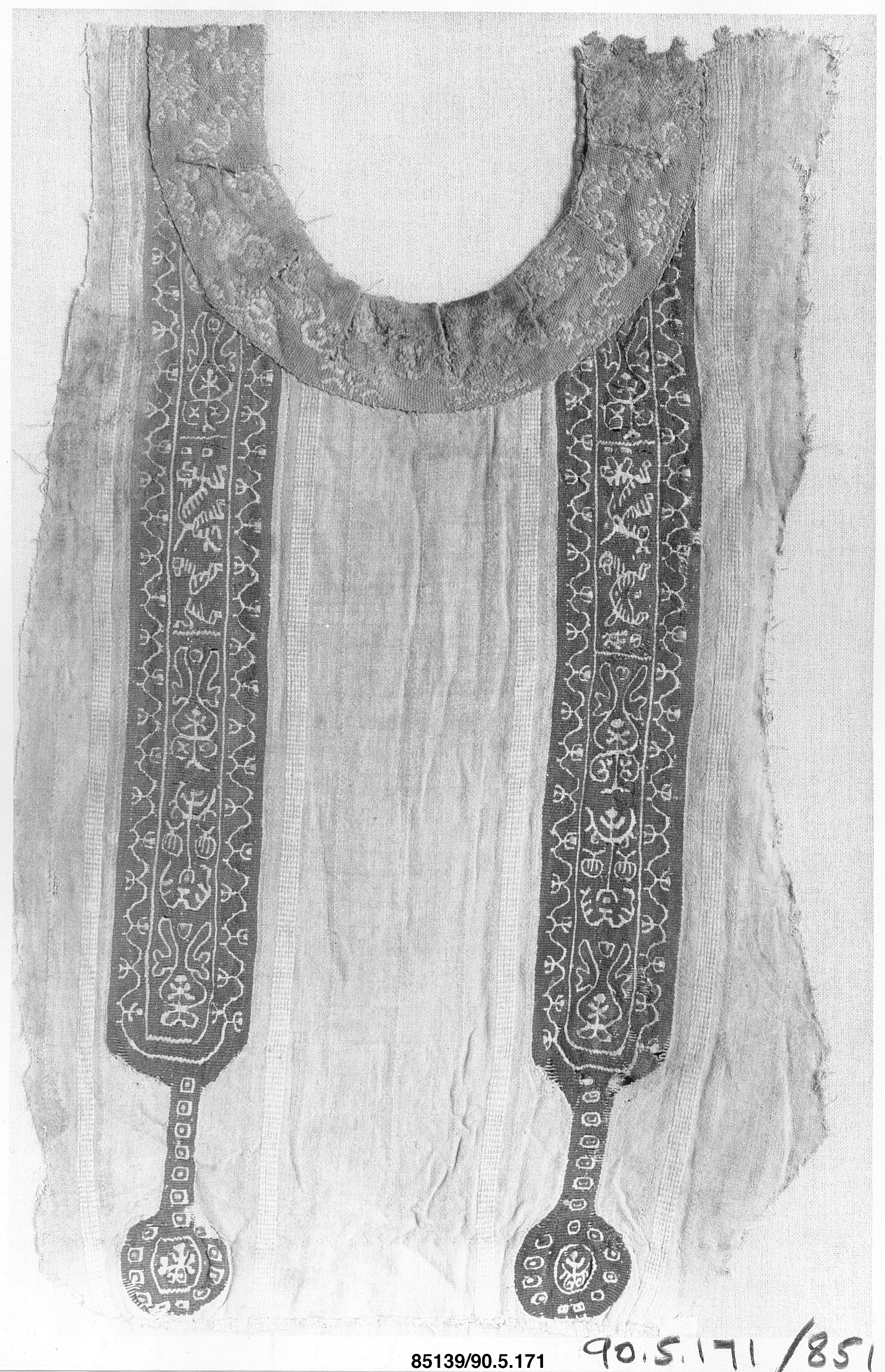
In the relentless pursuit of a new sartorial vernacular, the Zoey Fashion Laboratory positions the fragment—not the finished garment—as the primary site of innovation. The Fragment of a Tunic, sourced from the Global Frontier, is not a relic of antiquity but a provocation for the future. It is a deliberate rupture in the continuum of fashion, a specimen that demands we re-evaluate the very architecture of dress. For SS26, this piece is not merely an inspiration; it is a structural manifesto. We dissect its material logic—the interplay of wool and linen, the dialogue between plain weave and tapestry weave—to extract principles for silhouettes that defy gravity, time, and conventional utility.
The tunic’s fragmentary state is its most potent feature. It liberates the garment from the tyranny of the complete. In our laboratory, we see not a torn edge but a generative seam, not a missing sleeve but a negative-space architecture. This analysis will decode the fragment’s DNA, translating its woven truths into a collection of radical, forward-thinking forms. The goal is not restoration, but evolution through excision.
I. Material Memory: The Dialectic of Wool and Linen
The fragment’s materiality is a study in contrasts, a binary system that generates immense creative tension. Wool, with its inherent plasticity and memory, offers a sculptural potential that is both ancient and futuristic. It can be felted, molded, and coaxed into volumes that hold their shape against the body, creating a second skin that is both protective and expressive. In the SS26 context, wool is not a winter weight but a thermo-regulating structural membrane. We propose using high-twist, technical wools that can be heat-set into permanent, three-dimensional folds, echoing the fragment’s organic drape while pushing it into rigid, architectural planes.
Conversely, linen is the principle of lightness and linearity. Its crisp, dry hand and natural luster provide a counterpoint to wool’s density. Linen is the line, wool is the volume. In the fragment, their co-existence—often in the same weave—creates a surface that is simultaneously matte and reflective, soft and sharp. For the avant-garde, this dialectic informs a new layering system. We envision linen as the exoskeleton, laser-cut into precise, perforated grids, and wool as the internal organ, visible through those apertures. The result is a garment that breathes, moves, and reveals its inner structure, a literal anatomy of fashion.
II. Weave as Algorithm: From Plain to Tapestry
The fragment’s technical construction—the shift from plain weave to tapestry weave—is our blueprint for digital-age pattern making. The plain weave is the baseline, the algorithm of simplicity, a grid of over-under that speaks to efficiency and structural purity. It is the fabric of the masses, the canvas of the everyday. But the tapestry weave is the site of narrative. It introduces discontinuity, deliberate irregularity, and the potential for image-making within the structure itself. It is a manual, pixelated code that predates the computer.
Our SS26 strategy is to treat these weaves as a binary programming language. The plain weave areas become zones of structural integrity, while tapestry sections are designated for deformation and ornamentation. We will develop jacquard-woven textiles that transition from a stark, open plain weave to a dense, sculptural tapestry within a single garment. This is not surface decoration; it is functionality embedded in the weave. The tapestry zones will be engineered to provide targeted support, creating internal corsetry or shoulder structures without visible seams. The garment becomes a topographical map, where the weave density dictates the silhouette’s rise and fall.
III. The Global Frontier: A New Nomadic Silhouette
The fragment’s provenance—the Global Frontier—is not a geographical location but a conceptual space of hybridity and constant motion. It suggests a garment that has traveled, been adapted, and carries the marks of multiple cultures and climates. This informs a silhouette that is fundamentally non-static. We reject the tailored, static suit in favor of a kinetic architecture that responds to the wearer’s environment and velocity.
For SS26, this translates into a tunic that is not worn, but inhabited. We propose a silhouette that is asymmetrical, with a single, exaggerated sleeve that flares into a voluminous, cape-like panel, echoing the fragment’s torn edge. The other side is stripped bare, a streamlined, body-conscious sheath that reveals the negative space. This fragmentary asymmetry is a direct homage to the original artifact. The garment’s hem is deliberately unfinished, with loose warp threads that can be pulled and manipulated by the wearer, allowing for real-time customization of the silhouette. This is fashion as a living system, not a fixed object.
IV. Tapestry of Absence: The New Ornament
In the fragment, the most compelling “decoration” is not what is present, but what is missing. The frayed edges, the gaps in the weave, the evidence of wear—these are the ornaments of absence. For the avant-garde, this is a radical departure from embellishment as addition. We propose a new form of ornamentation based on subtraction and erosion.
Our techniques will include acid-washing to dissolve specific weave structures, creating lace-like patterns that are not applied but revealed from within the cloth. We will use laser ablation to precisely remove the linen warp threads, leaving only the wool weft to create a translucent, skeletal grid. This is not destruction; it is controlled deconstruction, a surgical process that reveals the material’s hidden potential. The resulting garments will have a haunting, archaeological beauty, as if they are artifacts from a future civilization that has already been and gone. The tunic becomes a palimpsest, its history of wear and repair written into its very fibers.
V. Structural Innovation: The “Zero-G” Tunic
Our definitive proposition for SS26 is the “Zero-G” Tunic, a direct evolution of the fragment’s principles. This is a garment designed for a state of perpetual, weightless motion. It is constructed from a single, continuous piece of fabric that integrates the wool-linen dialectic. The core, over the torso, is a fine, high-twist wool that provides warmth and a smooth, second-skin fit. This transitions seamlessly into a tapestry-woven linen exoskeleton that flares outward, creating a stiff, sculptural halo around the shoulders and hips. The weave is engineered so that the tunic’s volume is not created by cut and sew, but by differential shrinkage and heat-setting, causing the fabric to billow and curve in predetermined arcs.
This tunic has no closures. It is donned by stepping through a single, large aperture, a deliberate “fragment” of a hole that is the garment’s only entry point. The fit is maintained through a series of internal, woven channels that can be cinched with cords made of the same material. The silhouette is fluid yet architectural, simultaneously transparent and opaque, ancient and interstellar. It is a garment that embodies the fragment’s ethos: incomplete, yet wholly definitive; torn from a larger narrative, yet a complete statement in itself. The Fragment of a Tunic is not a starting point, but a destination—a proof of concept for a future where clothing is not assembled, but grown, woven, and eroded into being.