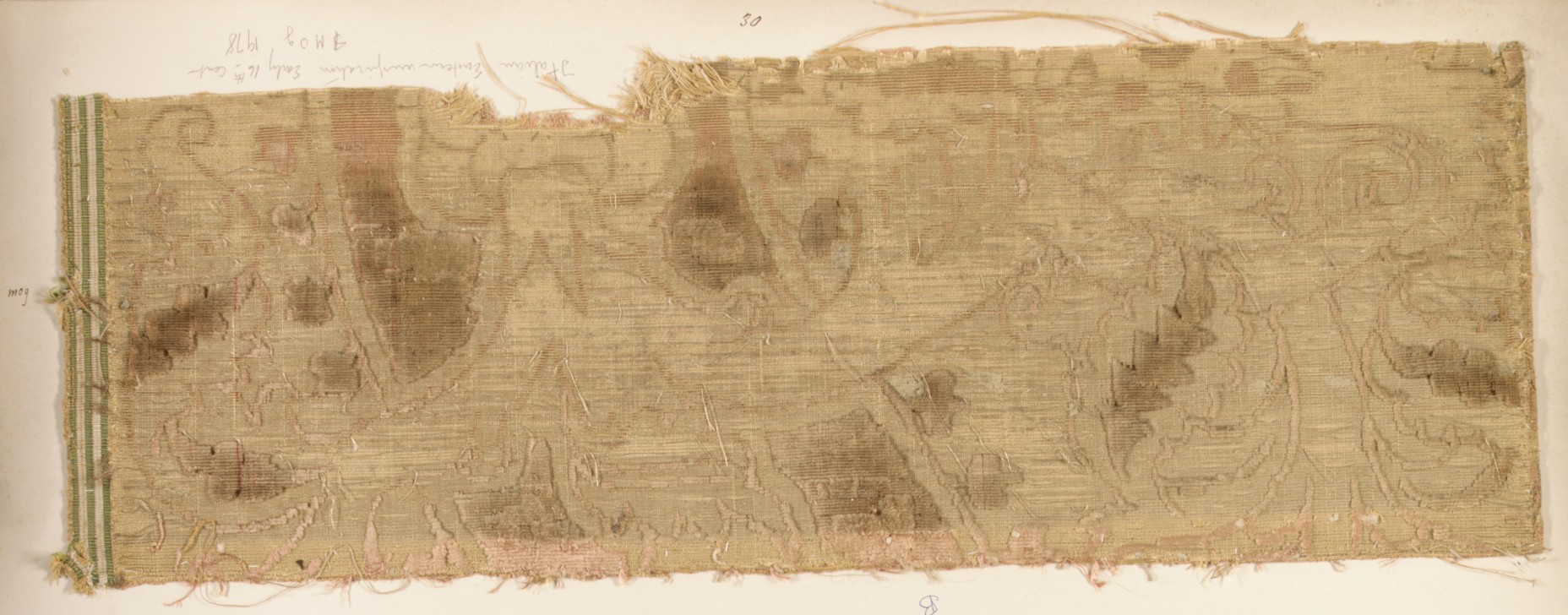
The Dialectics of Dissolution: Deconstructing the Fragment for SS26
The avant-garde is not a destination; it is a perpetual state of excavation. For the Spring/Summer 2026 season, Zoey Fashion Laboratory abandons the tyranny of the whole to interrogate the Fragment—not as a casualty of decay, but as a primary agent of structural genesis. This study transcends the conventional lexicon of "cut-outs" or "distressing." We are dissecting the very ontology of dress, proposing that the incomplete is, in fact, the most complete expression of futuristic intent. The Fragment, sourced from the Global Frontier—a conceptual space where geopolitical boundaries dissolve into data streams and nomadic energy—becomes our raw material. Here, the garment is not sewn; it is assembled from shards of intention, held together by the tensile strength of paradox.
Silk as a State of Un-Becoming
Our primary material, silk, is traditionally venerated for its unbroken continuity—a single filament spun from cocoon to couture. In this collection, we weaponize that heritage. The silk is not cut; it is fractured. Through a process of thermal shock and enzymatic washing, we induce a controlled hydrolysis that creates micro-perforations and organic tears, transforming the fabric's surface into a topographical map of erosion. Yet, this is not a passive ruin. The silk is then stabilized with a molecular-grade resin, locking the fragmentary state into a permanent, architectural rigidity. The result is a textile that behaves like shattered glass yet drapes with the fluidity of liquid metal. This is the Global Frontier aesthetic: a material that has traversed extremes—from delicate organic origin to industrial-strength future—without losing its luminous, liquid core.
The Metallic Suture: Threading the Void
To hold these fragments in suspension, we deploy metal thread—not as a decorative afterthought, but as a load-bearing exoskeleton. This is the critical innovation for SS26. We abandon the conventional seam. Instead, we employ a technique we term Cartographic Stitching, wherein a nickel-titanium alloy filament is used to trace the negative space between fragments. The thread does not bind; it articulates. It creates a visible, three-dimensional lattice that functions as a structural joint, allowing the garment to flex and recoil with kinetic memory. The metal thread is not merely sewn; it is robotically welded at precise stress points, creating a micro-mesh that is both armor and filigree. This metallic suture acts as the nervous system of the silhouette, transmitting tension and release across the body's architecture.
Futuristic Silhouettes: The Negative-Volume Revolution
The SS26 silhouette rejects the anthropomorphic norm. We are pioneering a system of Negative-Volume Construction, where the absence of fabric defines the form more powerfully than its presence. The human body is treated as a scaffold, and the garment is engineered as a series of floating planes that orbit the flesh without ever fully conforming to it. Using a complex pattern-cutting algorithm developed in-house, we generate panels that are mathematically derived from the body's pressure points, then deliberately misaligned by 15 to 30 degrees. This creates a deliberate torque—a dynamic torsion that makes the wearer appear to be perpetually in motion, even at rest.
Consider the signature piece: the Fractured A-Line Carapace. A floor-length silhouette is sliced into seven distinct horizontal bands, each separated by a gap of exposed air, yet connected by the metallic lattice. The bands are not parallel; they are canted at varying angles, creating a spiral vortex around the legs. The silk, in its rigid state, holds each band aloft, defying gravity. The metal thread, visible at the seams, glints like a signal fire against the matte silk. This is not a dress; it is a wearable architectural model of a collapsing star—beautiful, violent, and utterly futuristic.
Structural Innovation: The Kinetic Joint System
Beyond the visual, the structural innovation lies in our Kinetic Joint System. Traditional couture relies on darts and boning to shape fabric. We replace this with a modular system of micro-hinges, crafted from the same metal thread, that are embedded at the fragment boundaries. These hinges allow for a range of motion previously impossible in rigid couture. The wearer can manipulate the garment's architecture in real-time—raising a shoulder panel to create a dramatic wing-like silhouette, or collapsing a hip fragment to transform the gown into a streamlined column. This is interactive deconstruction, where the fragment is not a fixed state but a mutable variable. The garment becomes a dialogue between the wearer's will and the material's memory.
The Global Frontier: A Synthesis of Dislocation
The Global Frontier origin is not a geographical claim but a philosophical one. It signifies a fashion practice that operates outside the traditional ateliers of Paris, Milan, or Tokyo. It is a decentralized, data-driven approach where digital simulation meets handcrafted precision. The fragments themselves are inspired by satellite imagery of geopolitical borders—lines that are drawn, erased, and redrawn. The silk is dyed in gradients of "conflict neutral" tones—ash grey, pale titanium, and a bone white that is never pure—to reflect a landscape stripped of nationalistic color. The metal thread, in a raw, unpolished finish, recalls the utilitarian infrastructure of border walls and communication towers.
This is couture for the post-geographic individual—a being who exists in the interstices of cultures, whose identity is inherently fragmented yet powerfully cohesive. The SS26 collection does not offer comfort or nostalgia. It offers a mirror to our own fractured modernity, elevated to an art form. Each garment is a manifesto, stating that beauty is not found in perfection, but in the deliberate, intelligent, and fearless embrace of the break. The Fragment, for Zoey Fashion Laboratory, is not an end—it is the beginning of every future silhouette.