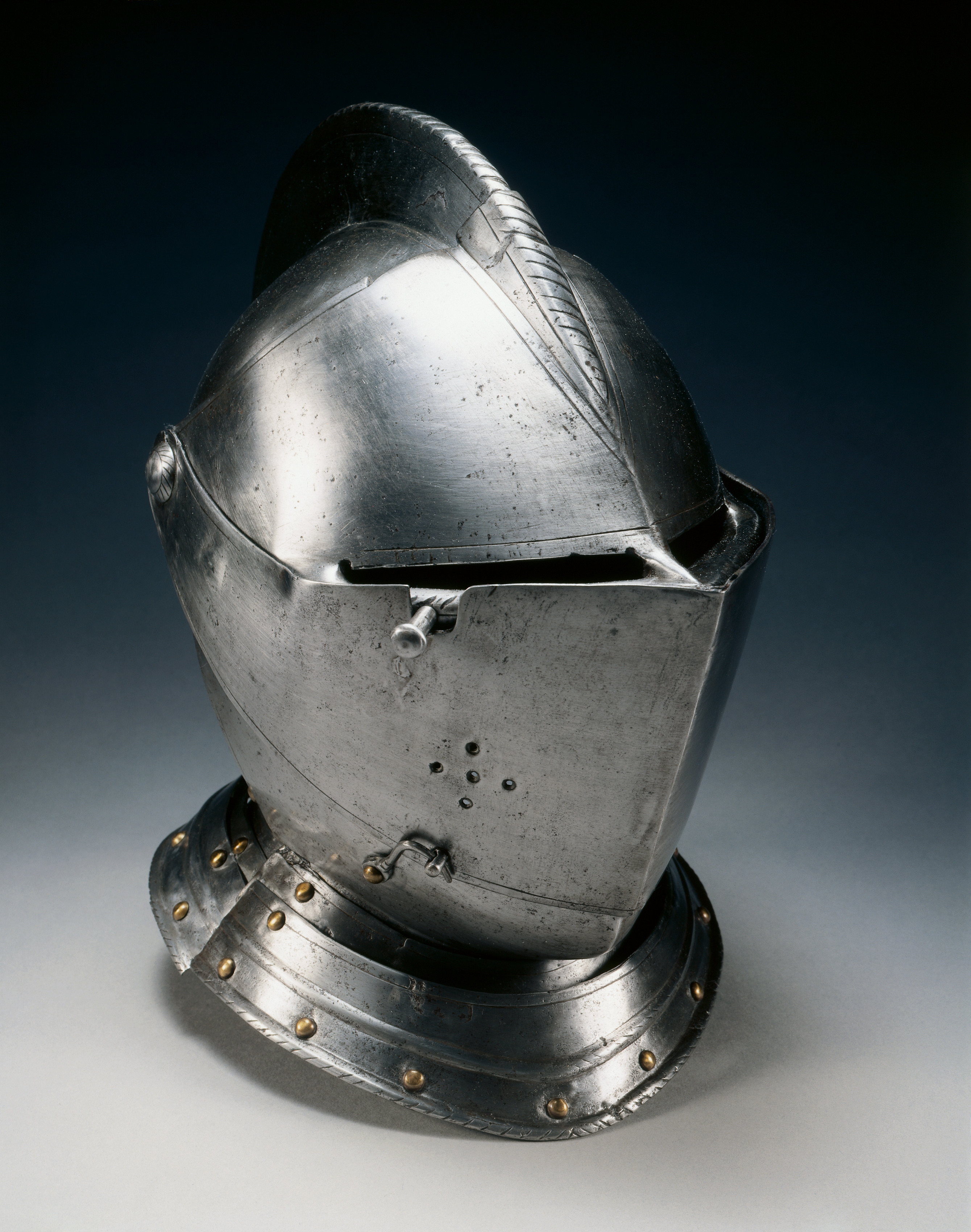
Deconstructing the Teutonic Exoskeleton: An Avant-Garde Analysis of the German Suit of Armor
At Zoey Fashion Lab, our mandate transcends the mere examination of textile and silhouette. We engage in the forensic deconstruction of garments as cultural artifacts, decoding their structural DNA to inform the future of wearable expression. This analysis turns its focus to a formidable subject: the German Suit of Armor, circa 16th century. More than a protective shell, this object is a masterclass in ergonomic engineering, material hierarchy, and psychological projection. For the avant-garde designer, it is not a relic but a blueprint—a complex lattice of rigid and flexible components that prefigures contemporary modular fashion. By dissecting its technical anatomy—iron, steel, leather, and brass rivets—we isolate a new design paradigm, one we term the New DNA Strand, which redefines the relationship between the body, the garment, and the environment.
Material Hierarchy: The Metallurgical Palette
The German armorers of the 15th and 16th centuries, particularly those of Augsburg and Nuremberg, operated with a metallurgical sophistication that rivals modern composite engineering. The choice of material was never arbitrary; it was a calculated response to ballistic and kinetic threats. The primary structure, the breastplate and backplate, was forged from low-carbon iron or mild steel, often hardened through quenching and tempering. This provided a rigid, deflective surface against slashing blows and projectile impact. However, the genius lies in the differential treatment of metal. The limbs, specifically the articulated pauldrons, coudières (elbows), and sabatons (feet), utilized thinner, more ductile steel. This allowed for a remarkable range of motion, transforming a seemingly monolithic shell into a dynamic, kinetic exoskeleton.
Critically, the integration of leather is where the armor transcends simple metalwork. Leather serves as the connective tissue—the ligament of the suit. The arming doublet, worn beneath the plate, was a quilted canvas of linen and wool, but the straps that secured the cuirass to the torso were thick, vegetable-tanned cowhide. This leather was not merely functional; it acted as a shock absorber, distributing the immense weight of the steel (often 20-25 kilograms) across the shoulders and hips, preventing pressure points and enabling sustained mobility. The brass rivets are the final, crucial element. Unlike iron rivets, which would corrode and seize, brass offered a low-friction, non-ferrous solution for articulation points. Each rivet is a micro-joint, a pivot point that allows for the rotation of overlapping steel lames. In our lab, we view these rivets not as fasteners, but as mechanical synapses—discrete points of articulation that enable complex, multi-axial movement.
Structural Articulation: The Kinetic Skeleton
The suit’s true avant-garde relevance lies in its modular construction. The overlapping plates, known as lames, are the original form of dynamic layering. Each lame is a rigid segment, yet when riveted in an overlapping sequence, they form a flexible, continuous surface that can compress and expand. This is the fundamental principle of scale armor, elevated to a high art. Consider the gorget (neck defense). It is composed of several horizontal lames that allow the head to turn, nod, and tilt, all while maintaining a seamless barrier. This is not a single piece of metal; it is a series of interlocking, articulated segments that respond to the body's biomechanics.
This principle of segmented rigidity offers a profound lesson for contemporary fashion. We are moving beyond static textiles. The future of avant-garde design lies in reactive structures. By applying this German armor logic, we can create garments that are not draped but assembled. Imagine a coat where the sleeves are constructed from a series of 3D-printed polymer lames, connected by flexible, high-tensile cords. The garment would offer the structural definition of a tailored jacket while providing the unrestricted movement of a knit. The brass rivet, in this new context, becomes a metallic snap-lock or a rotating magnetic joint, allowing the wearer to reconfigure the garment’s silhouette in real-time. The armor becomes a system, not a single object.
The New DNA Strand: From Protection to Projection
We define the New DNA Strand as the transfer of structural intelligence from historical protective gear to contemporary expressive fashion. The German armor’s DNA is not its steel, but its logic of articulation. It is a system of hard and soft, rigid and flexible, static and dynamic. In our deconstruction, we isolate three core genetic markers:
Marker 1: Exoskeletal Silhouette. The armor creates an exaggerated, powerful silhouette—broad shoulders, a wasp-like waist, and a pronounced chest. This is not a passive reflection of the body; it is an imposition upon it. Avant-garde fashion must reclaim this aggressive architectural stance. We propose garments that use internal boning, carbon-fiber stays, and sculpted foam to create a second skeleton that alters the wearer's posture and presence. The garment becomes a prosthetic for confidence, a physical manifestation of psychological armor.
Marker 2: Articulated Joints. The elbow and knee defenses are the most complex components of the suit, requiring a compound hinge mechanism. For our lab, these joints are the blueprint for a new category of kinetic eveningwear. We envision gowns with articulated, fan-like structures at the shoulders that expand and contract with arm movement, or trousers with segmented, armored panels that shimmer and shift with each stride. The garment is alive, responding to the wearer's kinetic energy.
Marker 3: Material Contrast. The German armor masters understood the power of contrast: the cold, polished steel against the warm, organic leather; the hard metal against the soft textile of the arming doublet. This juxtaposition is a core tenet of avant-garde aesthetics. We translate this into a fabric language that pairs high-polish, metallic-coated neoprene (our modern steel) with raw, unbleached canvas or deerskin leather (our modern leather). The brass rivet is reimagined as a decorative yet functional grommet, a visible signifier of the garment's construction and its mechanical origins.
Conclusion: The Armor as a Living System
The German Suit of Armor, when stripped of its martial context, emerges as a masterpiece of wearable technology. It is a testament to the human desire to merge with our environment, to augment our physical form through intelligent design. For Zoey Fashion Lab, this analysis is not an archaeological exercise. It is a call to action. We must stop designing garments as mere coverings and begin designing them as interactive ecosystems. The iron, steel, leather, and brass are not obsolete materials; they are the foundational vocabulary for a new language of form, movement, and identity.
Our avant-garde collections will not imitate the armor's literal form, but will channel its structural intelligence. We will build garments that protect not from swords, but from the psychological exposure of modern life. We will create silhouettes that command space, joints that liberate movement, and material contrasts that provoke the eye. The New DNA Strand is a bridge from the armorer's forge to the fashion atelier, proving that the most radical future is often forged from the most resilient past. The armor is not dead metal; it is a dormant system, waiting to be reanimated by the hands of the modern designer.