The Architecture of Absence: Deconstructing the Strip for SS26
In the relentless churn of seasonal fashion, the notion of the "strip" has long been relegated to the utilitarian—a binding agent, a trim, a mere afterthought of construction. For Spring/Summer 2026, Zoey Fashion Laboratory repositions this elemental component as the primary protagonist of a new sartorial syntax. We are not merely removing fabric; we are interrogating the very concept of surface, volume, and the void. The strip, in our hands, becomes a line of force, a vector of intention that redraws the human silhouette against the coming decade's horizon.
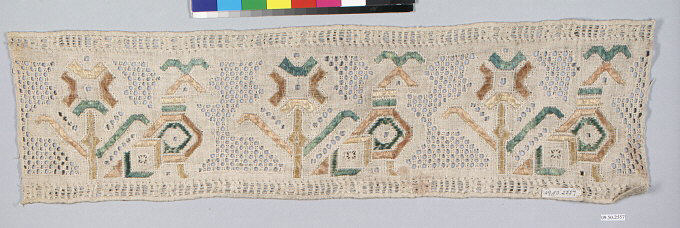
This study, titled "Global Frontier," is a standalone investigation into the dialectic between structure and dissolution. It is a deliberate departure from the soft, draped romanticism that has dominated recent runways. Instead, we propose a future where clothing is not a second skin but a secondary skeleton—an exoskeleton of engineered tension. The raw materials—drawnwork and silk—are not chosen for their pliancy alone but for their capacity to be disciplined into radical geometries. Drawnwork, with its inherent logic of removal and retention, becomes the philosophical blueprint; silk, with its liquid luminosity, provides the counterpoint of sensuality against the rigid mind.
Deconstructive Lineage: From Lingerie to Load-Bearing Architecture
The historical strip, often associated with the delicate straps of undergarments or the fringed edges of flapper-era dresses, carries a coded memory of constraint and revelation. Our SS26 iteration obliterates this lineage. We are extracting the strip from its subservient role and elevating it to a load-bearing element. Consider the Dermal Tension Harness: a series of interlocking silk strips, treated with a micro-crystalline finish, that traverse the torso in asymmetrical diagonals. This is not a corset; it is a structural truss. Each strip is meticulously tensioned to create a negative space that visually "lifts" the body, creating a silhouette that appears to hover slightly above its own physicality. The drawnwork technique is applied to the silk before cutting, allowing for a precise grid of perforations that reduce weight without compromising tensile strength. The result is a garment that breathes like a lattice, casting intricate shadows that shift with every movement—a living study in light and absence.
Furthermore, the deconstruction here is not an act of destruction but of analytical precision. We have dissected the traditional dress form into its constituent linear elements and reassembled it according to a logic of directional flow. The Meridian Split Gown exemplifies this. The front panel is a masterpiece of drawnwork, where threads are pulled to create a topographic map of ridges and valleys. From this textured plane, a series of silk strips detach and arc backward, forming a cantilevered train that does not drag but suspends, held aloft by an internal framework of carbon-fiber-reinforced polymer, invisible to the eye. This is not a dress; it is a mobile sculpture that challenges the static nature of couture.
Futuristic Silhouettes: The Silhouette as a Field of Energy
For SS26, we abandon the static "A," "H," and "X" silhouettes in favor of what we term "Dynamic Asymmetry" and the "Orbital Profile." The former is achieved through the strategic placement of strips that create a visual torque around the waist and shoulders. A single, wide band of silk, drawnwork-embroidered with a geometric fractal pattern, wraps from the left hip, crosses the sternum, and terminates in a sharp, angular point at the right clavicle. This creates a diagonal axis that propels the eye forward, suggesting motion even at rest. The body is no longer a passive mannequin but a generator of kinetic energy, with the strips acting as conductors.
The Orbital Profile pushes this further into the realm of speculative design. Here, strips are not attached to the body but are held in a state of permanent suspension around it. A series of concentric, floating rings—each constructed from a single, continuous strip of silk that has been heat-set into a rigid curve—orbit the model. These rings are connected by nearly invisible micro-magnets embedded in the drawnwork, allowing for a degree of controlled movement. The wearer steps into this architecture, which then reconfigures itself around her, creating a volumetric sphere of fabric that never touches the skin. This is the ultimate expression of the strip: not as a fastener, but as a field of energy that defines a new personal space.
Material Alchemy: Drawnwork and Silk in a Futurist Dialogue
The materiality of this collection is not a passive backdrop but an active agent in the design process. Drawnwork, historically a folk art of patience and precision, is reimagined as a high-tech process. We are using laser-guided extraction to remove specific warp and weft threads from the silk, creating not just decorative openwork but engineered zones of flexibility and opacity. A dress can be solid over the hips for modesty and structural integrity, yet dissolve into a web of micro-strips over the shoulders for breathability and visual weightlessness. This is a binary code of fabric—a language of "on" and "off" that allows the garment to adapt to its environment and the wearer's physiology.
The silk itself is a double-faced organza, chosen for its crispness and its ability to hold a sharp crease. When cut into strips and left raw-edged, it does not fray but instead develops a delicate, frayed halo—a controlled entropy that contrasts beautifully with the precision of the drawnwork. For key pieces, we have also collaborated with a textile lab to develop a bio-luminescent silk that, when charged under UV light, emits a faint, ghostly glow. The strips become lines of light, tracing the body's architecture in the darkness—a futuristic echo of the illuminated manuscripts of old, but written in the language of the body.
Structural Innovation: The Craft of the Invisible
The true innovation of this study lies in our approach to construction. We have developed a new joining technique we call "Tension Welding." Instead of stitching, which creates a point of weakness and visual noise, we fuse the silk strips using a high-frequency sonic wave that molecularly bonds the fibers. This creates a joint that is seamless, flexible, and incredibly strong. It allows for strips to be joined at acute angles, creating sharp, architectural points that would be impossible with traditional sewing. The drawnwork grids are then applied over these welds, creating a pattern that is both decorative and functional, concealing the joints while reinforcing them.
Moreover, the internal structure of the garments is a study in negative space. We have eliminated the lining. Instead, the body is intended to be seen through the gaps between the strips, making the skin a part of the composition. This is not about nudity but about a radical honesty of construction. The wearer becomes a collaborator, her form completing the design that the fabric alone cannot. The Void Corset is a masterclass in this principle. It is composed of dozens of individually tensioned silk strips, each attached to a minimal central spine of drawnwork. There is no solid fabric; the corset is entirely comprised of negative space, yet it provides more structural support than a traditional boned garment through the sheer tension of its lines. It is a paradox: a garment that is more structure because it is more absent.
In conclusion, the "Global Frontier" study for SS26 is not a collection of clothes but a manifesto. It declares that the future of couture lies not in adding more, but in the masterful orchestration of less. The strip, once a humble detail, is now the foundational unit of a new architectural language. By marrying the ancient craft of drawnwork with futuristic materials and construction techniques, we have created a silhouette that is at once stark and sensual, rigid and fluid. It is a vision of fashion where the garment is not a covering but a frame—a deliberate, intelligent, and breathtakingly beautiful structure that reveals the human form as the most avant-garde element of all. This is not merely dressing for the future; it is building it.