Deconstructing the Brescian Spark: The Snaphance as a Blueprint for Avant-Garde Form
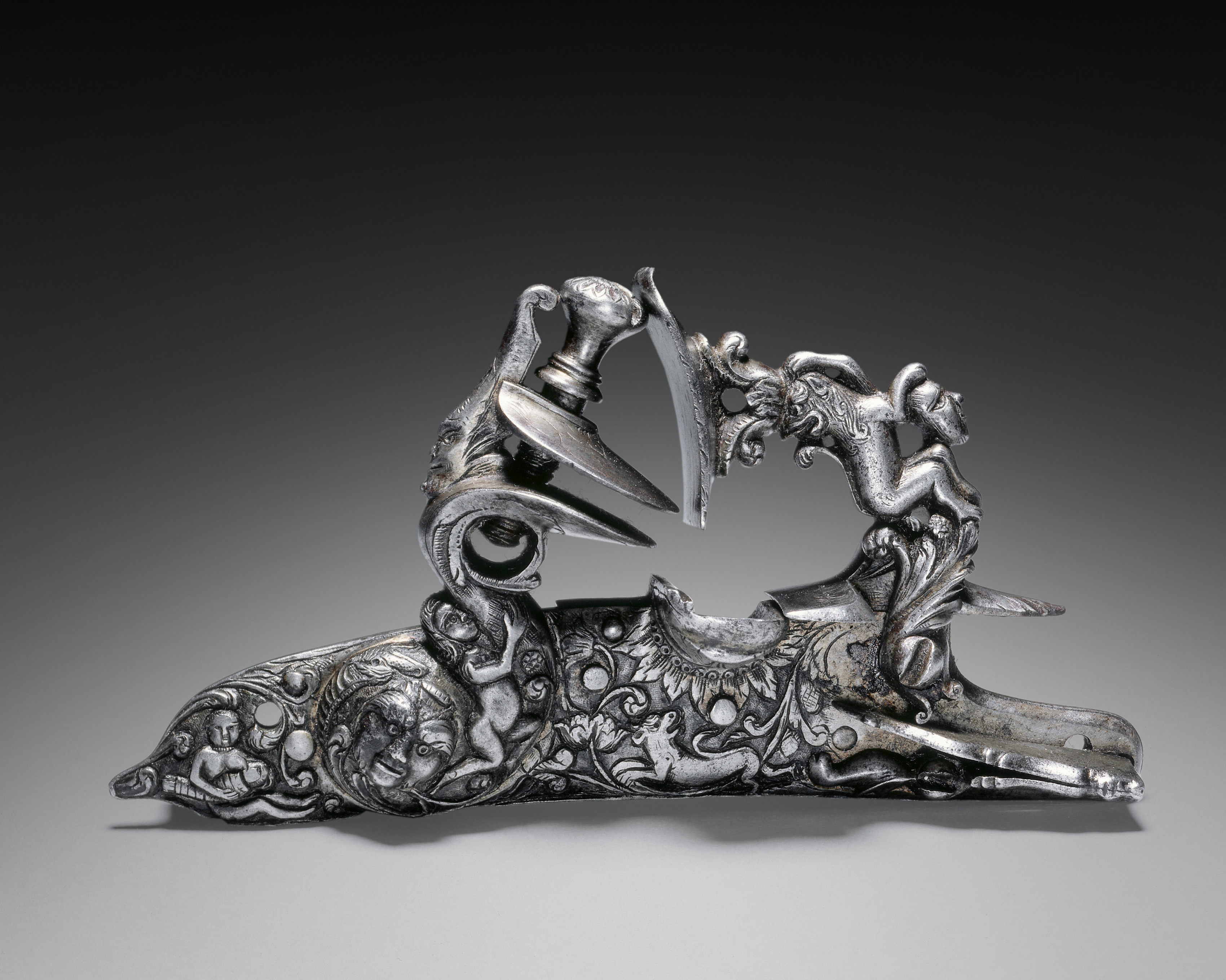
At Zoey Fashion Lab, our mandate extends beyond the mere draping of cloth; we excavate the very genetic code of material culture. The object before us—a 17th-century Italian snaphance gunlock, purportedly from Brescia, forged in chiseled steel—is not a weapon. It is a fossilized gesture of mechanical intent, a symphony of tension, release, and controlled chaos. When we dissect this artifact through the lens of our "New DNA Strand" methodology, we do not see a historical relic. We see a wearable architecture of defiance, a precursor to the most radical silhouettes in contemporary avant-garde fashion. This analysis will strip the snaphance to its core components—its materiality, its kinetic logic, and its ornamental violence—and re-sequence them into a new sartorial genome.
Materiality: The Poetry of Cold, Hard Steel
The snaphance is constructed from chiseled steel, a material that speaks a language of permanence, weight, and reflective hostility. In the context of haute couture, steel is typically relegated to structural boning or metallic thread. However, our deconstruction repositions steel not as a support system, but as the primary epidermis. The Brescian technique—meticulous, almost obsessive chiseling—creates a surface that is simultaneously brutal and delicate. The steel is not smooth; it is a topographical map of hammer strikes and burin cuts. For the Zoey Fashion Lab, this translates to a new textile language: embossed leathers that mimic the pitted surface of aged metal, or rigid organza treated with metallic resins to replicate the play of light across the gunlock's facets.
The patina of age—the subtle oxidation, the micro-scratches from centuries of handling—is not a flaw but a narrative. Our "New DNA Strand" approach embraces wabi-sabi, the beauty of imperfection. We translate this into garments that are pre-distressed, not randomly, but with surgical precision. Seams are left raw, edges are burned, and metallic finishes are applied in gradients to simulate the wear patterns of a weapon held in a gloved hand. The garment becomes an heirloom of imagined violence, a piece of armor for the modern psyche.
Kinetic Logic: The Architecture of Release
The genius of the snaphance lies in its mechanical sequence: the tension of the mainspring, the alignment of the frizzen, the spark from the flint. It is a study in potential energy. For our avant-garde designs, this translates into a focus on tension points and release mechanisms within the garment itself. We abandon static drapery for a dynamic, reactive silhouette. Imagine a coat with articulated shoulder plates that lock into place like a sear, only to release with a specific body movement. Or a skirt constructed with cable-laced seams that can be tightened or loosened, altering the garment's volume and silhouette in real-time, echoing the cocking of the hammer.
The profile of the lock—the curved serpentine cock, the rectangular lockplate—provides a geometric blueprint. We extract the sharp, angular lines and the unexpected curves, translating them into asymmetrical paneling and sculptural collars. A jacket might feature a single, exaggerated shoulder that mimics the cock's curve, while the opposite side is starkly minimal, creating a visual imbalance that is both unsettling and compelling. The trigger guard becomes a curved waistline seam, and the pan cover inspires a detachable, metallic chest piece that sits like a protective carapace.
Ornamental Violence: The Aesthetics of Threat
While the snaphance is a functional object, its ornamentation is pure theater. The chiseled details—scrolls, foliage, and abstract flourishes—are not merely decorative; they are a celebration of the maker's skill and a display of the owner's status. This is ornamental violence: beauty used to mask and amplify lethality. In our fashion translation, this manifests as embellishment that is aggressive, not passive. We reject delicate beading in favor of sharp metal spikes that emerge from seams, laser-cut leather filigree that mimics the gunlock's scrollwork, and hardware that is oversized and functional—buckles that could actually cinch a belt, zippers that pull with a heavy, metallic click.
The color palette is dictated by the object's surface: gunmetal grey, burnt umber, oxidized copper, and the stark white of a polished blade. We introduce a "spark" accent—a sudden flash of electric chartreuse or hot orange—to represent the ignition, the moment of fire. This accent is used sparingly, perhaps as a lining or a single, unexpected panel, to create a jolt of visual energy against the dark, metallic base.
The New DNA Strand: A Synthesis
Our "New DNA Strand" methodology is not about imitation; it is about extracting the essential code and recombining it into a new life form. The snaphance's DNA is composed of three primary sequences: Rigidity (the steel), Tension (the spring), and Release (the spark). In our collection, Rigidity is expressed through structured outerwear, corsetry, and architectural sleeves. Tension is embodied in the use of elasticized panels, drawcords, and adjustable closures that create a sense of latent energy. Release is the dramatic moment—a train that unfurls, a hood that is deployed, a silhouette that transforms from severe to fluid with a single gesture.
The final garment is not a costume; it is a philosophical statement. It questions the relationship between protection and aggression, between beauty and danger. It is for the individual who understands that true power is not loud, but quietly, precisely, and immaculately engineered. The Brescian snaphance, in our hands, becomes a muse for the modern warrior—not of the battlefield, but of the social arena. It is a suit of armor for the soul, chiseled from the same steel of intent, ready to spark a revolution with every step. This is not history; this is the future, forged in the fire of a 17th-century spark.