Deconstructing the Steel Exoskeleton: A New DNA Strand for Zoey Fashion Lab
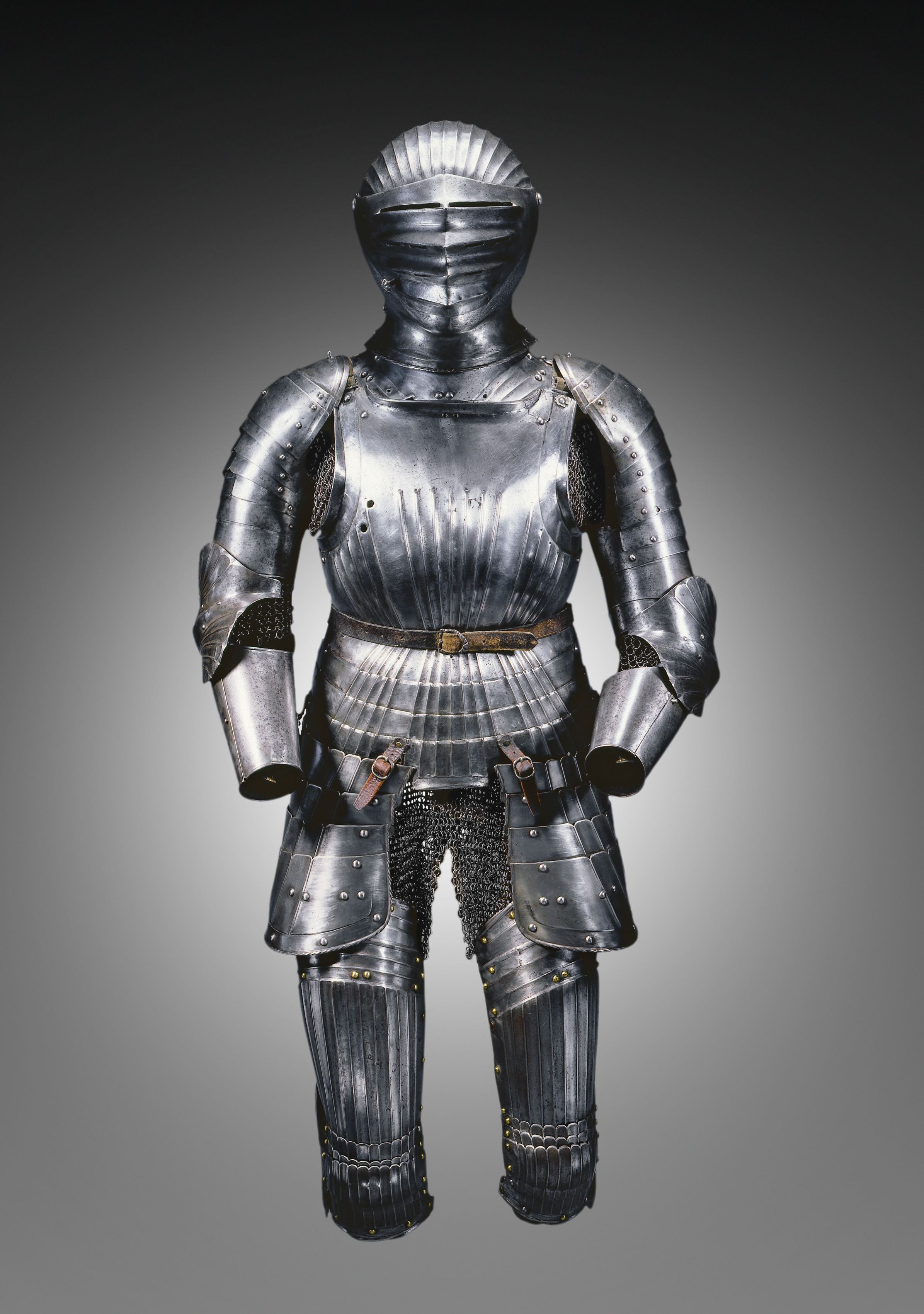
At Zoey Fashion Lab, our mandate extends beyond the mere draping of cloth. We are fabric deconstructionists, archaeologists of form, and alchemists of material culture. When we encounter a historical artifact, we do not see a relic; we see a blueprint. The subject of this analysis—a partial suit of armor in the Maximilian style, forged in Nuremberg, Germany—presents a particularly potent challenge and an exhilarating opportunity. This is not simply a defensive shell from the 16th century; it is a complex system of articulated geometry, a study in negative space, and a testament to the human body’s potential for transformation. Our task is to deconstruct its structural DNA and re-sequence it into a new, avant-garde fashion language for the contemporary silhouette.
I. The Historical Specimen: Anatomy of the Maximilian Form
The Maximilian style, named for the Holy Roman Emperor Maximilian I, is characterized by its distinctive fluted surfaces and rounded, almost bulbous forms. This was armor designed to deflect and dissipate impact, with ridges that channeled force away from the wearer. The Nuremberg provenance is critical; this city was the epicenter of European armor production, renowned for its metallurgical precision and artistic excellence. Our reference piece, a partial suit, would typically include the breastplate, backplate, pauldrons (shoulder defenses), and tassets (hip and upper-thigh protection).
From a deconstructionist perspective, the first thing we must strip away is the functional narrative. We are not interested in its ability to stop a lance. We are interested in its ability to sculpt light. The parallel fluting, known as Riefelung, creates a rhythmic pattern of high ridges and deep valleys. This is not random texture; it is a disciplined optical illusion. It visually elongates the torso, narrows the waist, and broadens the shoulders, creating an idealized masculine V-shape. This is the armor’s primary aesthetic DNA: the manipulation of perceived mass through surface modulation.
Furthermore, the articulation of the armor—the overlapping lames at the shoulders and hips—is a masterclass in kinetic engineering. These are not rigid plates but a series of interlocking slats that allow for a full range of motion. This reveals a second critical strand: the concept of modular flexibility within a rigid structure. The armor is simultaneously a fortress and a second skin, a paradox that is deeply resonant for avant-garde fashion.
II. Extracting the Structural DNA: Form, Line, and Texture
To re-sequence this artifact, we must isolate its core genetic markers. We identify three primary strands for our new design language.
Strand One: The Fluted Silhouette. The most immediate visual cue is the vertical, undulating line. In our avant-garde translation, we will not use steel. Instead, we will employ a high-resin, thermoformable polymer layered over a structural mesh. This allows us to create the same sharp ridges and deep grooves with a fraction of the weight, and more importantly, with a degree of flexibility that steel could never achieve. The silhouette will be elongated, but the material will behave like a second skin, moving with the wearer rather than against them. The fluting will be exaggerated, pushed to a sculptural extreme, creating a garment that is less about clothing and more about architectural adornment.
Strand Two: Articulated Modularity. The lames of the pauldron and tasset are our blueprint for a new system of garment construction. We will develop a series of interlocking, 3D-printed components that can be attached, detached, and reconfigured. This is not a fixed garment; it is a customizable exoskeleton. The wearer becomes the architect of their own look, choosing to layer protective "plates" over a base layer of sheer, liquid metal-finished silk. This modularity speaks to a contemporary desire for versatility and personal expression, moving beyond the static nature of traditional haute couture.
Strand Three: The Negative Space. The original armor was incomplete—a partial suit. This absence is not a flaw; it is a design feature. The gaps between the pauldron and the breastplate, the space between the tassets and the cuisses, are zones of vulnerability and exposure. In our design, we will deliberately exploit these gaps. The hard, fluted panels will frame areas of sheer, translucent fabric, or even bare skin. This creates a powerful dialogue between protection and exposure, between the armored past and the vulnerable present. The eye is drawn to what is not covered, making the exposed areas a focal point of sensuality and strength.
III. The Avant-Garde Synthesis: A New Collection Manifesto
Our new collection, titled "Nuremberg Echo," will not be a historical costume drama. It will be a brutalist, futuristic meditation on the human form. The color palette will be monochromatic: gunmetal grey, oxidized bronze, and a stark, bone-white. The materials will be a blend of high-tech synthetics, recycled metals, and bio-fabricated leathers, honoring the original's durability while rejecting its martial aggression.
The key garments will include:
The "Riefelung" Bodysuit: A full-length, sculptural bodysuit with exaggerated fluting running vertically down the torso and limbs. The ridges will be formed from a memory-retention polymer that can be heat-molded to the wearer's body, ensuring a perfect, bespoke fit. This piece is the purest expression of our first DNA strand.
The "Tasset" Utility Skirt: A high-waisted, articulated skirt constructed from overlapping, leather-laminated panels. Each panel is individually attached via magnetic closures, allowing the wearer to remove or add sections, transforming the skirt from a pencil silhouette to a full, armored cage. This is a direct, functional translation of the second strand.
The "Pauldron" Shoulder Graft: A standalone, asymmetric shoulder piece that appears to grow from the body. It will be constructed from 3D-printed titanium and carbon fiber, with the same fluted detailing, but scaled up to an almost absurd, architectural proportion. It will be worn over a simple, liquid-silk sheath dress, creating a jarring, yet beautiful, juxtaposition of hard and soft, old and new.
IV. Conclusion: From Relic to Revolution
The Maximilian armor is not a museum piece to be admired from a distance. It is a repository of design intelligence. By deconstructing its form, we have extracted a new DNA—one that values sculptural surface over flat textile, modular construction over static assembly, and strategic exposure over total coverage. For Zoey Fashion Lab, this is the future of fashion: a synthesis of historical engineering and futuristic materiality, creating garments that are not just worn, but inhabited. The steel is gone, but its ghost—its rigorous geometry and its powerful presence—will haunt our designs, giving them a new, and decidedly avant-garde, life.