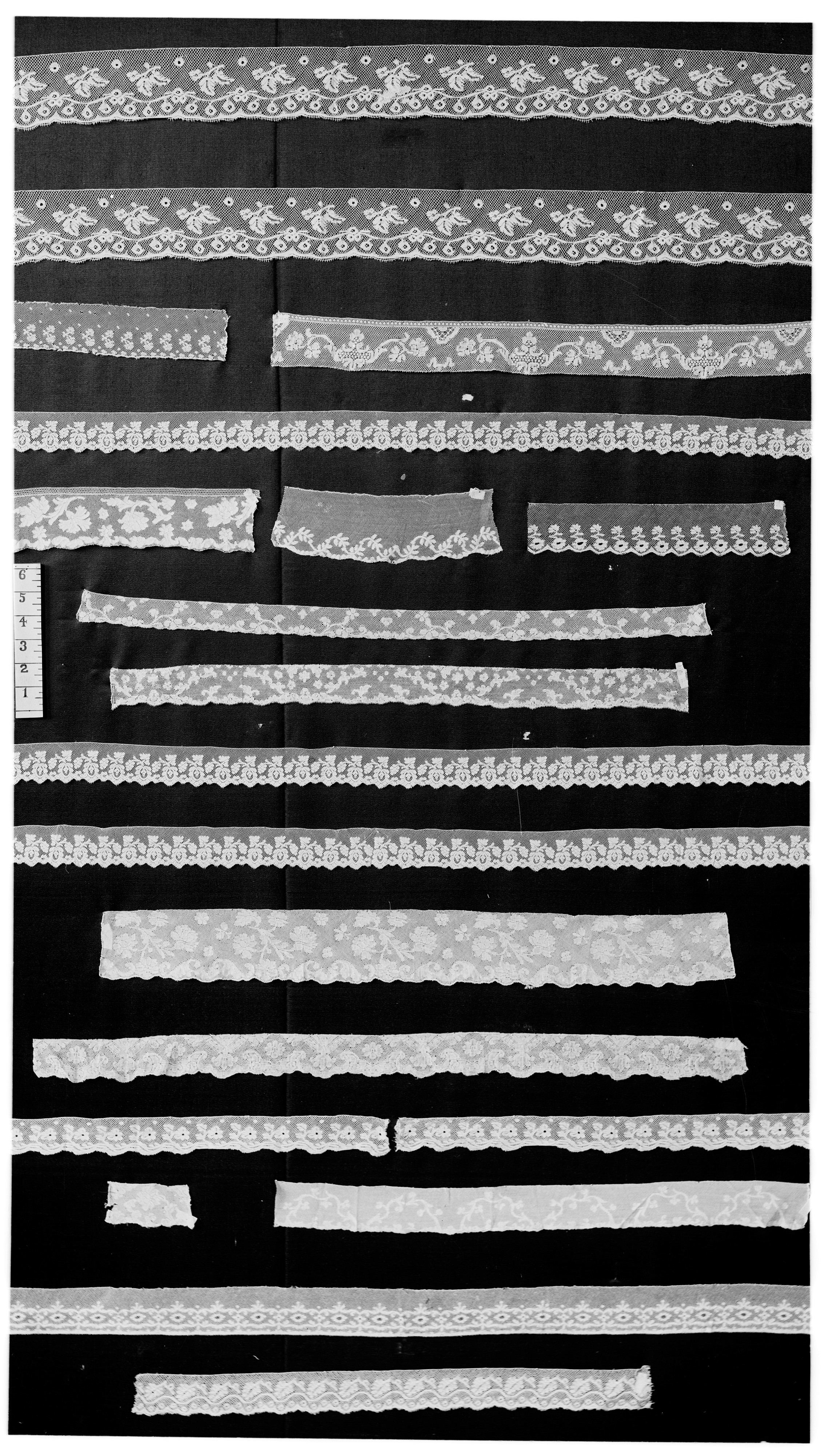
The Lace Anomaly: Deconstructing the Global Frontier Through Bobbin-Lace Architecture
In the relentless pursuit of the new, the avant-garde designer must often look backward to leap forward. For Spring/Summer 2026, Zoey Fashion Laboratory posits a radical thesis: the fragment is not a loss, but a genesis. Our definitive study, Fragment: Global Frontier, dismantles the very notion of the garment as a whole, rebuilding it from the ground up using the most paradoxically archaic and futuristic of materials — bobbin lace. This is not a nostalgic revival; it is a structural and conceptual reinvention, a standalone investigation into how the perforated, the partial, and the pieced can define the silhouette of tomorrow.
Deconstructing the Whole: The Fragment as Foundational Logic
The conceptual underpinning of Fragment rejects the tyranny of the seamless. A garment, in its traditional form, is a closed system—a fixed volume, a defined boundary. Our approach inverts this. We treat the human form not as a mannequin to be draped, but as a topological field upon which fragments of lace are plotted as discrete data points. Each fragment is a self-contained universe of thread, a micro-architecture of loops, crosses, and twists. When assembled, they do not merge into a homogenous surface; rather, they exist in a state of suspended tension, creating negative spaces that are as integral to the design as the positive ones.
This philosophy manifests in a series of silhouettes that appear to be in a state of deliberate, controlled decay. A sleeve is not a sleeve; it is a constellation of lace panels connected by invisible micro-magnets or articulated, 3D-printed joints. A bodice becomes a fragmented exoskeleton, with gaps that reveal the skin as a canvas, yet the eye is drawn to the intricate, hand-finished edges of each lace component. This is not the accidental rip of punk; it is the surgical precision of a new sartorial order. The garment breathes, moves, and exists in a fluid dialogue with the body, never static, always redefining its own perimeter.
From Thread to Structure: Engineering the Impossible
Our material investigation begins with the humble bobbin, traditionally used to create delicate, symmetrical patterns. At Zoey Fashion Laboratory, we have hacked this ancient craft. We employ a hybrid methodology: traditional hand-lace techniques are used to create bespoke, irregular fragments, while laser-cut, technical-grade synthetic lace is generated for structural load-bearing panels. The juxtaposition is jarring and beautiful. The handcrafted pieces carry the DNA of human error and artisan soul; the machine-made fragments offer uncompromising rigidity and precision. Together, they form a composite material system that is both fragile and formidable.
Consider the “Fractured A-Line” coat. Its silhouette is a classic, sweeping A-line, but it is built from hundreds of individual lace medallions, each affixed to a flexible, carbon-fiber filament lattice. The result is a garment that holds its architectural shape when static, but ripples and fractures into a thousand moving parts when the wearer walks. The light passes through the interstices, casting a hypnotic, ever-shifting shadow play on the floor. This is not mere decoration; it is a functional exploration of kinetic couture, where the fragment’s inherent instability becomes a source of dynamic expression.
Silhouette as Cartography: Mapping the Global Frontier
The Global Frontier is not a geographical location but a conceptual territory—a space of hybrid identities, digital nomadism, and cultural cross-pollination. Our silhouettes are cartographies of this space. We reject the monolithic, single-culture garment. Instead, each piece is a mosaic of global references, filtered through the lens of lace. A fragment inspired by the geometric precision of Islamic latticework meets a panel echoing the organic, floral motifs of European bobbin lace, which in turn is juxtaposed with a shard inspired by the abstract, asymmetric patterns of contemporary African textile art.
This is not cultural appropriation; it is a deliberate, academic deconstruction and re-synthesis. We are not borrowing motifs; we are abstracting structural principles. The result is a new, post-cultural aesthetic. The silhouette is often asymmetric, with a single, exaggerated shoulder pod crafted from stiffened, silver-coated lace, contrasted against a bare, fluid hip. This imbalance speaks to the instability of the modern identity, the constant negotiation between heritage and innovation. The waist is frequently redefined not by a belt, but by a negative-space corset—a series of lace rings that hover around the torso, connected by fine, almost invisible chains, creating an optical illusion of a cinched waist without any physical constriction.
The Palette of Absence: Materiality and Light
Color is treated as an afterthought; the true palette of Fragment is light and shadow. We employ a monochromatic base—optical white, bone, and a deep, almost black onyx—to allow the intricate textures to dominate. But the real innovation lies in the interplay of opacity and translucency. Some lace fragments are dipped in a liquid resin that hardens into a glossy, almost glass-like carapace, while others remain soft and matte. This creates a tactile and visual dissonance: a garment that feels simultaneously armored and vulnerable.
For evening, this translates into a devastatingly modern gown. The silhouette is a column, but it is a column in pieces. Large, sculptural lace panels—some as large as a dinner plate, others as small as a coin—are meticulously placed to follow the body’s contours, leaving deliberate gaps that reveal a second skin of iridescent, micro-pleated fabric underneath. The effect is of a garment disintegrating and reassembling in real-time, a living, breathing entity that captures and refracts light from every angle. This is the apotheosis of the fragment: not as a ruin, but as a prism.
Structural Innovation for SS26: A New Grammar of Dress
Our contribution to the SS26 landscape is not a mere collection of clothes; it is a new grammar of dress. We have developed a proprietary system we call “Lace-Link”, a series of modular, magnetic connectors that allow the wearer to reconfigure the fragments of their garment in endless permutations. A skirt can become a cape; a bodice can be deconstructed into a series of scarves or belts. This is the ultimate expression of the frontier ethos: adaptability and agency. The garment is not a static object but a toolkit for self-expression.
Furthermore, our research into bio-fabricated lace promises a future where the material itself is grown, not woven. We are experimenting with bacterial cellulose cultured into intricate, lace-like patterns, creating a material that is fully biodegradable and uniquely textured. This is the final frontier: a fashion that is not only deconstructed in form but also in its very lifecycle, returning to the earth as a fragment of organic matter. The Fragment study, therefore, is not an end, but a beginning—a manifesto for a fashion that is intellectually rigorous, structurally audacious, and unapologetically futuristic. It is the sound of the old world shattering, and the blueprint for a beautiful, fragmented new one.