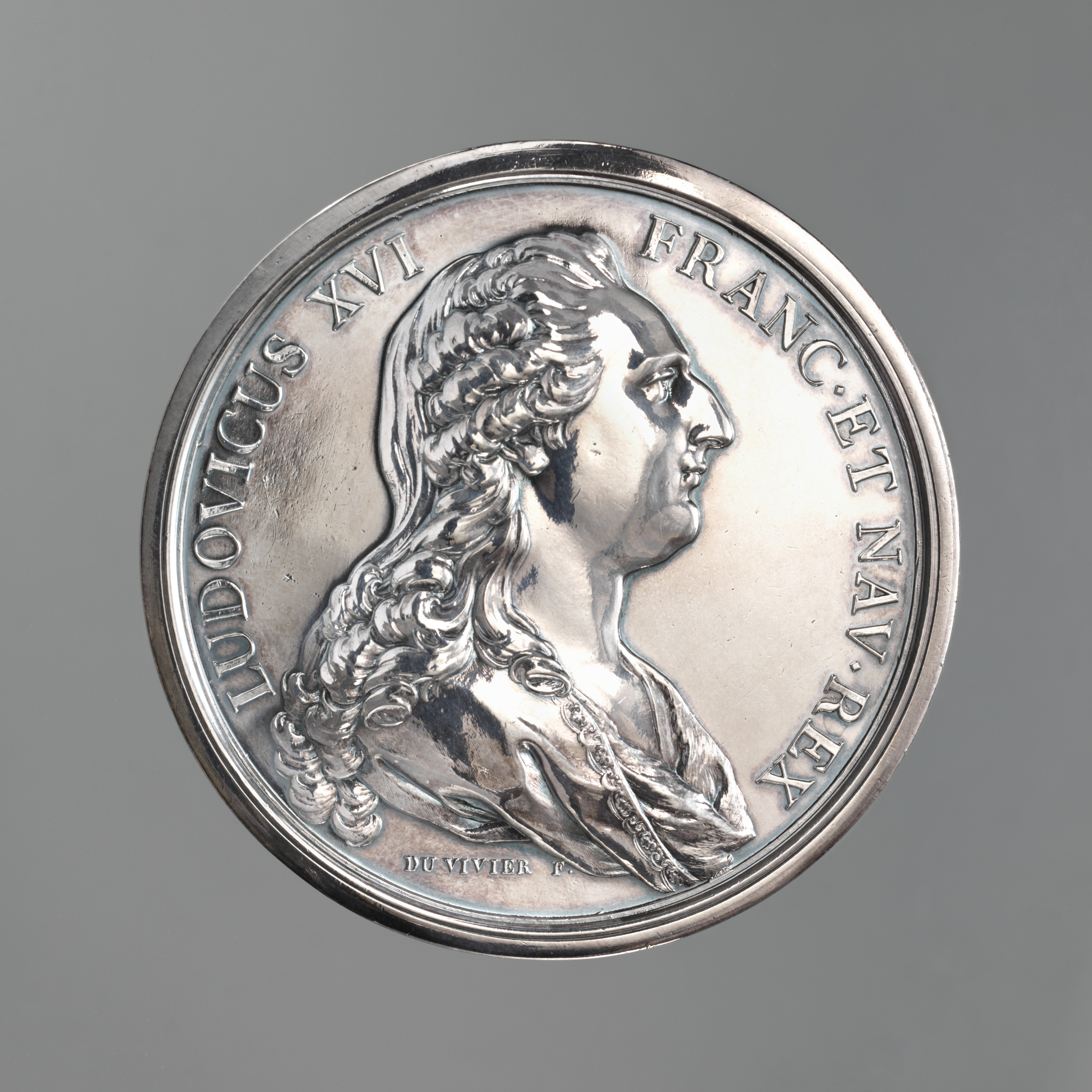
The Spectral Monarchy: Deconstructing Louis XVI and Marie Antoinette for the SS26 Frontier
The historical gravitas of the French monarchy, particularly the doomed reign of Louis XVI and Marie Antoinette, has long been a wellspring for romantic nostalgia and opulent pastiche. Yet, for the SS26 season, Zoey Fashion Laboratory rejects the gilded surface to unearth the structural and psychological bones of the Ancien Régime. We are not interested in recreating Versailles; we are interested in its archaeological residue—the tension between absolute power and imminent collapse, between rigid etiquette and chaotic desire. This analysis posits that the monarchical wardrobe, when filtered through a global frontier lens and executed in liquid, hammered, and oxidized silver, becomes a powerful metaphor for contemporary precarity. The result is a collection of futuristic silhouettes that do not merely reference history but weaponize it, offering a sartorial commentary on the architecture of control and its inevitable dissolution.
I. The Structural Grammar of Tyranny: The King’s New Armature
Louis XVI’s reign was defined by a paradox: a monarch who was both the absolute center of the state and a passive, almost mechanical, figurehead. His wardrobe, heavy with velvet, ermine, and gold embroidery, was a cage of protocol. For SS26, we translate this into an exoskeletal framework. The silhouette is no longer a body-hugging garment but a free-standing architectural volume that the wearer inhabits. Imagine a doublet constructed from milled silver mesh, not draped but suspended on a carbon-fiber substructure, creating a three-inch negative space between the fabric and the skin. This is not a suit; it is a portable monument to the weight of office.
The signature piece is the “Guillotine Collar”—a high, rigid neckpiece of brushed silver that does not frame the face but instead rises sharply, like a blade’s edge, to obscure the jawline. It is a direct, unflinching reference to the king’s fate, transforming a symbol of execution into a piece of high-tech jewelry. The shoulders, traditionally padded for power, are here replaced with articulated silver panels that move like a crustacean’s carapace, suggesting both armor and fragility. The palette is monochromatic: oxidized black-silver for day, evolving into a high-polish mirror finish for evening, reflecting the environment and forcing the viewer to see the chaos around them, not just the garment. This is structural innovation at its most narrative—a study in how power is physically borne and ultimately broken.
II. The Queen’s Dissolution: From Pannier to Plasma
Marie Antoinette’s contribution to fashion history is often reduced to the robe à la française and the towering pouf. But her true genius was in escapism as a form of rebellion. Her shift to the gaulle—a simple muslin dress—was a political act of shedding the court’s weight. For SS26, we extrapolate this into a dialectic between extreme volume and radical reduction. The pannier is not discarded; it is re-engineered as a kinetic sculpture. Instead of whalebone and silk, we use shape-memory silver alloy that can expand into a 1.5-meter circumference on command, then collapse flat against the body via a micro-electronic pulse. The garment is a shape-shifting entity, a metaphor for the Queen’s performative life and her desperate attempts to control her own image.
This leads to the collection’s most provocative piece: the “Ferme Ormolu” bodice. Constructed from woven silver thread that is digitally knitted into a gradient of opacity—solid at the sternum, translucent at the ribs—it mimics the decay of a gilded surface. The fabric is treated with a thermochromic finish, so that body heat causes the silver to bloom into a ghostly, iridescent rose-gold, a spectral echo of the Queen’s beloved Petit Trianon. The skirt, however, is a study in negative space. It is not a skirt at all, but a tornado of silver fringe, each strand tipped with a micro-prism, creating a shimmering, volatile aura that moves independently of the body. This is the Queen deconstructed: not a woman in a dress, but a field of energy—fragmented, luminous, and ultimately destined to scatter.
III. The Global Frontier: Silver as a Universal Solvent
The “Global Frontier” context is crucial here. This is not a Eurocentric retelling. By stripping the narrative to its base material—silver—we create a transcultural dialogue. Silver is not a European metal; it is a global currency of trade, adornment, and technology. From Andean ceremonial pieces to Japanese shibuichi alloys, silver carries a universal weight of value and mysticism. In our SS26 construction, we treat it as a liquid metal, a material that can be poured, hammered, spun, or vapor-deposited onto organic bases like bacterial cellulose. This allows for garments that are grown, not sewn.
Consider the “Ambassador’s Reliquary”—a long, sleeveless coat made of recycled silver mylar, laser-cut into a filigree pattern that echoes both French passementerie and Islamic geometric design. It is lined with a conductive polymer that allows the wearer to modulate its opacity. This is not mere costume; it is a functional interface between the body and the global data stream. The collection’s footwear continues this frontier logic: “Regicide Stilettos” with heels that are actual machined silver ingots, stamped with a new, fictional currency—a comment on the instability of modern value systems. The global frontier is not a place but a condition of flux, and our silver is the constant, mutable medium through which we narrate this instability.
IV. Conclusion: The Aftermath as Aesthetic
Zoey Fashion Laboratory’s SS26 study is not a lament for lost royalty. It is a surgical extraction of the structural principles of power—its rigidity, its ornamentation, its ultimate fragility—and their reconfiguration into a new, forward-facing language. The futuristic silhouettes are not about science fiction; they are about applied philosophy. The silver is not a color; it is a state of mind—reflective, cold, and brutal in its honesty. By deconstructing Louis XVI’s armor and Marie Antoinette’s escape, we build a wardrobe for the contemporary sovereign: the individual navigating a world of collapsing institutions and hyper-visible performance. The garments are heavy, not in weight, but in meaning. They demand a wearer who understands that true luxury is not about comfort but about confrontation—with history, with structure, and with the self. This is the definitive avant-garde position: not to look back, but to reanimate the past’s skeleton and dress it in the armor of tomorrow.